The noonday demon – the ancient name for apathy and despair
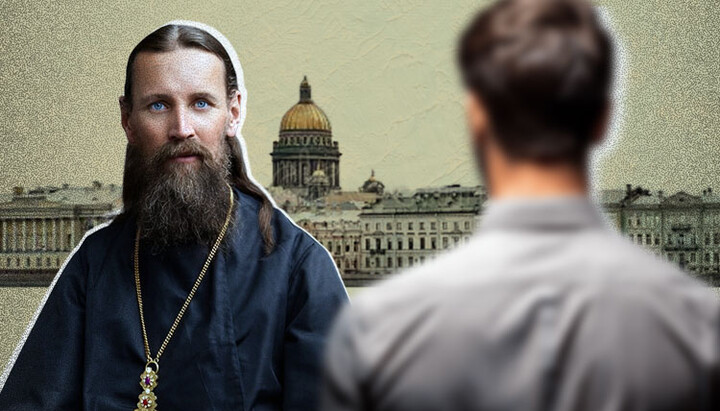
Conversation about despondency. Photo: UOJ
There are moments in our lives when an urgent task lies right in front of us, yet we simply cannot bring ourselves to begin. Willpower seems useless. We feel an irresistible urge to get up, walk to the window, stare outside for a moment, then wander to the refrigerator, eat something, and return to the window again. And then a quiet voice slips into the mind: Give up. This job, this life, even your spiritual struggle – none of it is working, and it never will. Walk away. Change everything.
Today we call this apathy, burnout, or emotional exhaustion. Almost always, we are ashamed of ourselves. We think: I’ve fallen apart. I’ve become weak. Everyone else is managing somehow – why can’t I? Yet this state has deeper causes, hidden far beyond the reach of our conscious thoughts.
An enemy known for fifteen hundred years
In the fourth century, the monks of the Egyptian desert, who spent days and nights in solitude, encountered a formidable adversary. Evagrius Ponticus called it the demon of despondency – acedia – and gave it a second name borrowed from the Psalms: the noonday demon (“the destruction that wastes at noonday,” Psalm 91:6). In his eyes, this enemy was more dangerous than all the others.
The Desert Fathers described its tactics almost minute by minute. Around noon, the demon approaches a person and first makes it seem as though the sun has stopped moving and the day has stretched into fifty endless hours. Then it drives him to the window to see whether anyone is coming and how much longer remains until evening. It fills him with disgust for his dwelling place and for his entire way of life. Finally, it whispers: Leave. Walk away. Change your surroundings. Somewhere else things will surely be different.
Fifteen hundred years ago, when someone suffered what we would now call burnout, no one shouted, “Pull yourself together!” Instead they said: You are under attack by an evil spirit, and this is exactly how it operates. The problem is not the weakness of your soul but the strength of the temptation.
It is worth inviting into this conversation someone much closer to our own era – the righteous John of Kronstadt. He was not a monk of the desert but a pastor in a bustling city, a man who spent himself daily in service to his flock and who knew the demon of despondency all too well.
“Father, it seems to us that discouragement comes naturally – from fatigue, disappointment, and difficult circumstances. But where does it really come from?”
John answers without hesitation. Sadness, he says, does not come from circumstances but from the enemy of our salvation. In his diary he wrote that the despondency that descends upon us after failure “comes from our bodiless enemy, who everywhere seeks to devour us like a roaring lion.”
“But if that is true, how do we fight it when we barely have the strength to resist at all?”
The saint’s answer is surprisingly practical.
“One must not give the enemy room,” he wrote. “Prepare yourself beforehand, remain steadfast in prayer and self-restraint, and never abandon service to others.”
As for the weapon against despair, the holy pastor pointed to the Cross of Christ.
“By the power of the precious and life-giving Cross of the Lord,” he wrote, “the passions are driven from the heart: despondency, faintheartedness, fear, and every demonic snare.”
Such was Father John. Through consolation, guidance, and encouragement, he knew how to transform a sufferer’s “bed of sorrow” into a bed of joy in the Lord. For him, the cure for despondency was almost always found outside oneself – in helping another person rather than endlessly dissecting one’s own pain.
Do not leave your cell
The ancient science of spiritual warfare developed one universal rule for combating despondency:
Do not leave your cell.
Do not trust the thought that urges you to abandon everything and run. What it really offers is escape from yourself – and wherever you go, you will carry yourself and all your troubles with you. Evagrius openly called fleeing one’s place of service under the pressure of despondency a sign of defeat in the struggle against the devil.
Victory looks far less dramatic than the heroic feats we admire. It means remaining where you are, putting your hands to whatever small task is possible, and enduring the temptation.
The noonday demon is powerful in its first assault. It is loud, frightening, and utterly convincing. It promises that the misery you feel now will last forever. Yet its endurance is weaker than that of the person who refuses to surrender.
It attacks at noon and weakens by evening – provided that during those hours a person has not followed its advice: quarreled with loved ones, abandoned a worthwhile task, or destroyed something that took years to build within the soul.
This is the trap of our own age. Once, despondency drove monks out of their cells. Today it drives people toward smartphone screens, endless scrolling, pointless arguments, cutting remarks, and the temptation to erase everything with a single impulsive decision.
The scenery has changed, but the strategy of the noonday demon remains exactly the same. Its goal is to pull a person away from the place where he belongs and provoke him into making disastrous choices while his heart is clouded and confused.
We should not naïvely believe that tomorrow everything will suddenly become easy, as if by magic. A demonic assault may last an hour, a day, or even a lifetime.
But one thing changes.
You stop mistaking the enemy’s voice for your own.
When a whisper rises from within – “Everything is meaningless. Give up. Run.” – you begin to recognize the handwriting of the devil.
Then there is no need to leap out of the pit of despondency through sheer emotion, nor to condemn yourself for having fallen into it. You simply refuse to believe the thought of escape. You remain where you are. You occupy your hands with the smallest useful task and wait out the noonday heat.
The enemy who relied on fear will retreat first.
He always has.
For he has never been able to overcome those who remained steadfast, unshaken, and faithful to God.
Read also
Honest atheism vs. spiritual hypocrisy
The 70th anniversary of Albert Camus’s Nobel Prize recalls an uncompromising challenge to Christianity. An honest unbeliever brings theology back to the mystery of the Cross.
The valley of trouble and the gateway of hope
One soldier buried an expensive cloak and some gold beneath his tent. Because of this, all Israel lost a battle. Why did one man’s sin bring disaster upon an entire nation?
From love spells to bishop's throne
Antioch’s most powerful sorcerer sent demons against a devout young Christian woman three times – and failed every time. In the end, a demon himself revealed the truth that led to his conversion.
The Weeping Queen of Blachernae
On the night of the Feast of the Protection, only two people witnessed the miracle in the Church of Blachernae. Everyone else prayed and saw nothing. Yet they, too, received grace.
Deadly spiral of human hatred
The tragedy of Lebanon's civil war lays bare how dehumanization and fear can turn human beings into monsters.
Woe to expectant mothers – or to those of little faith?
God commanded one prophet not to have children, yet told his people in exile to bear sons and daughters. What does this apparent contradiction tell us today?