Stories of the Early Church. Level of governance: bishop
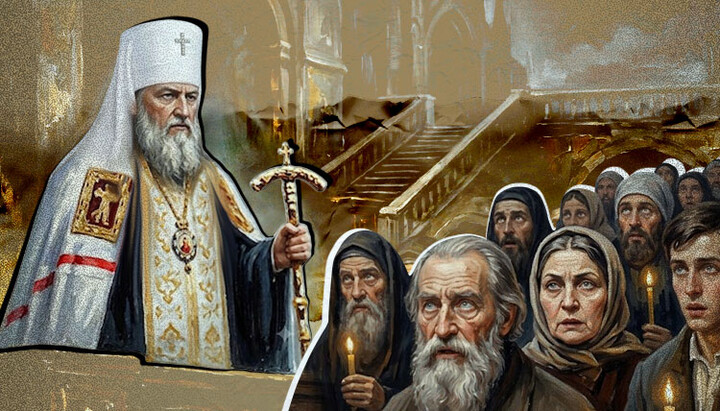
An archpastor distant from his people. Photo: UOJ
In previous articles, we have already discussed bishops. Now let us examine the three levels of Church governance – episcopal, metropolitan, and patriarchal. We begin with the first.
In the earliest period of the Church's existence, every Christian community, even a very small one, had its own bishop. The bishop personally knew every member of his flock, understood their circumstances, guided them, helped them, and cared for them.
Today, the situation is very different. In the Polish Orthodox Church, one bishop oversees an average of 38 parishes. In the Serbian Church, the figure is about 90. In the Russian Church, it reaches 125. And each parish may contain hundreds of faithful. The idea of a bishop personally knowing all of them is simply unrealistic. Knowing even all of his priests well would already be an achievement.
Why did this happen? How were dioceses governed in antiquity? Does the modern situation represent development or decline compared to the earliest centuries? The Church certainly grew and expanded. New communities appeared constantly. But why did the number of bishops not increase proportionally? Why did the presbyter gradually assume the practical role once exercised by the bishop within the local community?
Let us try to answer these questions.
A father's authority within the community
Within the community – not over it.
The Apostles went forth from Jerusalem into the cities of the Roman Empire, establishing Christian communities and ordaining bishops from among local believers. Typically, each city contained a single Christian community, usually a small one.
Church historian Professor Aleksei Lebedev writes that in ancient times "there were as many bishops as there were cities enlightened by Christianity." The bishop governed Church affairs directly, personally celebrated worship, and knew his flock "in an intimate and familial manner."
St. Ignatius of Antioch wrote in the second century that nothing pertaining to the Church should be done without the bishop. He described the true Eucharist as the one celebrated by the bishop or by someone authorized by him. In his Epistle to the Magnesians, Ignatius presents a model of Church life in which the bishop presides, the presbyters occupy the place of the apostolic council, the deacons perform Christ's ministry, and the faithful gather around "one altar."
The bishop was assisted by presbyters who formed a council known as the presbytery. Without this council, the bishop did not ordain clergy, administer Church property, or conduct ecclesiastical trials. Professor Lebedev cites an ancient rule stating that a bishop's judicial decision could not be considered legitimate unless it had the consent of the clergy.
In essence, the ancient Christian community functioned as a family. The bishop was the father, and the members were united through brotherly love in Christ. Administrative and bureaucratic concerns were secondary. The purpose of the community was communion with Christ and the fulfillment of His commandments.
At least, that was the ideal.
Over time, however, things began to change.
The fragmentation of a single family
During the first two centuries, parishes in the modern sense did not yet exist. All Christians in a city belonged to a single community and gathered for worship in one place – a church, a catacomb, or the home of a believer.
As Christianity expanded, gathering everyone together became increasingly difficult. Naturally, believers began meeting simultaneously in multiple locations.
This development would prove decisive for the future administrative structure of the Church.
The urban community did not split into several separate churches under different bishops. It remained one Church under one bishop. Instead, it was divided internally into parishes, sections of the same community overseen by presbyters acting on behalf of the bishop.
By the middle of the third century, this process was already taking place in major cities such as Rome, Alexandria, Antioch, Ephesus, and Corinth.
St. Optatus of Milevis wrote that in the early fourth century, during the Diocletian persecution, there were more than 40 churches in Rome.
St. Epiphanius of Cyprus wrote that in late-third-century Alexandria, “one presbyter was appointed for each church,” even listing their names: the churches of Caesarion, Dionysius, Theonas, Hieria, Serapion, Perseus, Disius, Mendisius, Annianus, and Baucalis.
The Christian community was beginning to evolve from a family into an organized hierarchical institution.
Growing distance between shepherd and flock
The division of the city community into parishes produced another profound consequence.
Ordinary Christians now saw a presbyter every Sunday rather than the bishop.
The bishop remained the center of unity, but the day-to-day spiritual life of believers increasingly came under the care of presbyters.
The presbyter did not replace the bishop. He was not the head of a separate Church. Everything he did was performed with episcopal blessing.
Yet the presbyter became closer to the people, while the bishop gradually became more distant.
The 39th Apostolic Canon states: "Let the presbyters and deacons do nothing without the consent of the bishop, for to him are entrusted the people of the Lord, and he will give account for their souls."
In practice, however, most Christians increasingly sought guidance from their local priest rather than their bishop. The priest celebrated the Liturgy, baptized, heard confessions, and ministered to the faithful.
The bishop's presence became increasingly symbolic – represented through the antimension, liturgical commemorations, blessings, priestly appointments, and canonical oversight.
Direct personal contact between bishop and people steadily diminished.
What happened to rural communities?
As the number of Christians in the cities grew, the community did not split into several separate communities, each with its own bishop. But why, when Christian communities began appearing in villages, did they not receive bishops of their own?
In reality, the situation was somewhat more complicated. There was an attempt in Church history to appoint bishops in villages, but it proved unsuccessful.
Until the fourth century, Christianity in the Roman Empire was primarily an urban religion. It began spreading into the countryside mainly after the Edict of Milan in 313. If a village was located near a city, its residents could attend services in the city church. If the distance was too great, or if the rural community was numerous, the bishop would send one of the presbyters there or appoint one permanently.
But why a presbyter rather than a separate bishop?
To a large extent, this arrangement was shaped by the civil structure of the Roman Empire. As a rule, free residents of the surrounding villages were considered fellow citizens of the urban community. Accordingly, rural Christians were also seen as part of the church community of the nearest city.
Still, there was indeed an attempt to appoint bishops in villages. These were the so-called chorepiscopi – rural or minor bishops. Church sources mention their existence as early as the mid-third century. Because the sources are scarce, it is impossible to reconstruct the picture with absolute certainty, but it most likely looked like this.
Christian communities that appeared in larger villages elected bishops for themselves by analogy with the city. At first, such bishops had the same rights as urban bishops, and this did not provoke any serious objections. But as Christian communities began appearing in smaller and smaller villages, questions started to arise.
The loss of rural independence
By the fourth century, the authority of chorbishops [rural bishops] was already being restricted.
The Council of Antioch in 341 ruled that chorbishops should not ordain presbyters or deacons without the consent of the city bishop. The Council of Laodicea in 360 determined that bishops should not be appointed in villages, and that rural bishops already appointed should do nothing without the consent of the city bishop. After the fourth century, references to chorepiscopi almost disappear. From then on, rural parishes were governed exclusively by presbyters.
The reasons for this were twofold. On the one hand, rural bishops were much poorer and less educated than urban bishops, and could not compete with them in terms of theological authority, preaching ability, organizational skills, or other qualities. If such capable men appeared in a village, the city usually took them.
But ordinary love of power should not be dismissed either. City bishops did not want independent centers of church authority emerging right beside them.
Church unity came to be understood more and more not as unity around Christ and His teaching, but as unity around a specific person vested with episcopal authority. Later, with the emergence of metropolitan and patriarchal levels of governance, this would become even more obvious.
From community to territory
Just as the meaning of the word “Church” gradually shifted from “an assembly of people” to “a church building,” so too did the object of episcopal governance change: from a community of believers into an eparchy – a territory over which a bishop’s authority extends.
This transformation is also logically understandable. When the one and only community in a city first divides into parishes and then grows to include rural communities as well, the concept of a canonical territory naturally appears – a territory on which all these church structures are located.
An episcopate, or eparchy, emerges as an ecclesiastical-administrative unit, with its own head – the bishop – and its own system of governance. Within the eparchy, there are dozens of churches, rural parishes, property, church courts, disciplinary rules, and people responsible for managing all of this.
In theory, the bishop remains the father and presiding shepherd. In practice, however, the form of his ministry changes. He is no longer so much directly shepherding his flock as administering and governing his eparchy.
The losses of the administrative age
Could things have developed differently? Or, as the number of believers grew, was the transformation of the Church from a family into an administrative structure governed by formal rules inevitable? We do not have an answer to that question. But we can say what the modern Church has lost compared with ancient times.
- First, the bishop has become not merely more distant from the people, but practically unreachable. Ordinary believers see him very rarely, let alone have close contact with him. In the ancient community, he took a direct part in the life of his flock. In our own time, the image of the bishop was most vividly described by Anton Chekhov in his story The Bishop: “Everyone felt shy in his presence... During all the time he had been here, not a single person had spoken to him sincerely... And the incoming and outgoing papers were counted in the tens of thousands...”
- Second, ordinary believers began to perceive the parish as an independent church world centered around the presbyter.
- Third, the role of the bishop came to be understood not so much in Eucharistic or spiritual terms as in administrative ones.
Some of the most zealous hierarchs tried to overcome these shortcomings – St. Nicholas of Myra, St. Basil the Great, St. Tikhon of Zadonsk, St. John of Shanghai, and others. We can now read about them in the lives of the saints. But unfortunately, they were the exception rather than the rule.
In the next publication, we will speak about the metropolitan level of Church governance.
Read also
Trial of a dead pope
Once in Rome, the body of a deceased pope was seated on the throne and put on trial. The accusation relied on a church canon that had once saved his see.
Monastery built in defiance of king
When Orthodox believers in Minsk were left with just one church, townspeople decided to build another – and even a royal decree did not stop them.
Young Mother and Sleeping Christ
Michelangelo carved a Virgin Mary who looks younger than her Son – and signed his name in marble for the only time in his life. Neither of these peculiarities was accidental.
Orthodox books from a Uniate printing press
In the 18th century, Uniate monks at Pochaiv printed books used in prayer by Orthodox Christians and Old Believers alike.
The story of the honey brotherhood
The Mogilev Brotherhood began with members pooling money to brew honey drinks for feast days – and eventually grew to have its own printing press.
Golgotha in the midst of a pogrom
In the autumn of 1938, the Jewish artist Marc Chagall painted the crucified Christ. Synagogues burn and refugees flee around the cross, while the Crucified One Himself is wrapped in a prayer shawl.