Hatred is free food for your offender
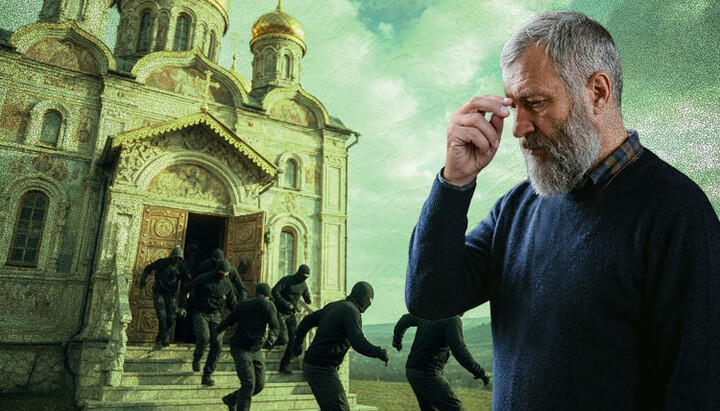
Prayer for those who persecute us. Photo: UOJ
Whenever we hear yet another sermon reminding us to forgive those who have wronged us, something inside often rebels. It can sound less like spiritual wisdom than like one more burden laid upon an already wounded heart. And the reaction is understandable. When another church is taken from the faithful, when UOC parishioners are buried under waves of slander on social media, being told to smile and wish your persecutors well can feel almost insulting.
It seems as though we are expected to excuse betrayal, justify cynicism, or concede that people have the right to shatter the lives of others. But that is a profound misunderstanding of what Christ's commandment actually means. Christ never called anyone to practice artificial piety.
Praying for an enemy is not a generous gift to the person who has hurt us. It is an act of spiritual self-defense – something we ourselves need if we are to survive in a world consumed by chaos.
The uninvited tenant in our mind
Pause for a moment and consider what happens to a person consumed by hatred. The one who lied to us, betrayed us, or caused us pain may be peacefully eating dinner, sleeping soundly, or planning a vacation. Chances are, they have not thought about us in a long time.
Meanwhile, we hand them the most precious thing we possess – our time. We replay old conversations over and over, invent cutting replies we will never speak, fantasize about divine punishment, and feed the fire of our own resentment.
In doing so, we invite that person into the very house of our soul. We give them a room, free of charge, and provide everything they need. They feed on our strength, consume our health, wreck our nervous system, and rob us of sleep.
Hatred turns us into lifelong hostages of someone else's sin. We no longer belong to ourselves, because our minds have become occupied with endlessly chewing over another person's evil.
Seen in that light, prayer for an enemy ceases to be an exercise in sentimental forgiveness. It becomes something far more concrete. It is an eviction notice served upon an unwanted intruder. Through prayer we walk to the door of our soul, open it wide, and show the destroyer the way out.
When we pray for the person who has wronged us, we hand the case over to the highest court. We tell God honestly: "Lord, I cannot cope with this person's hatred. My heart boils over, my mind has lost its peace. I place this person into Your hands. Deal with them as You know best, but do not let their evil continue poisoning my life."
And at that very moment something fundamental changes. We cease to mirror another person's cruelty, and we no longer allow ourselves to become executioners in return.
A lead shield against another person's poison
Someone who works with radioactive waste does not try to embrace it or carry it home. They put on a lead apron, protective gear, and set about neutralizing it. Hatred works in much the same way. It is a form of spiritual radiation. And if we absorb it with an unprotected heart, it can leave burns upon the soul that ache for years.
Prayer for our enemies is that lead shield. It prevents another person's malice from seeping into our hearts and reshaping us in its own image and likeness.
Evil's greatest victory is not that it has wounded us, but that it has persuaded us to answer hatred with hatred of our own.
The great teachers of the Church arrived at this truth not in times of comfort, but in the midst of life's fiercest storms. Consider St. John Chrysostom. He was persecuted, betrayed, and driven from his episcopal throne by his own brothers in the faith. The imperial court conspired against him, while jealous bishops plotted his downfall. Worn out by exile and nearing the end of his strength, he wrote:
"Whatever your enemy may have done, he has not harmed you nearly as much as you harm yourself by refusing to be reconciled with him and by trampling on God's commandments."
The saint saw straight into the human heart. He understood that outward blows destroy only the circumstances of our earthly life, while personal hatred cripples the eternal soul. An enemy may take away our possessions or strip us of legal rights, but only our own thirst for revenge can drive us away from God.
On the Holy Mountain of Athos, St. Silouan the Athonite, who lived through the upheavals of the twentieth century, expressed the same truth in different words: "He who has not acquired the Holy Spirit cannot pray for his enemies."
Indeed, when we refuse to pray for the one who has wounded us, we do not hurt them in the slightest. We merely cut off the oxygen to our own hearts, making them incapable of receiving God's grace.
Reclaiming our freedom
It is time to stop confusing Christian love with naïveté or cowardice. Praying for an enemy does not mean entrusting them with our secrets, welcoming them into our home, or offering our neck for another blow. We have every right to defend our families, protect our holy places through lawful means, and keep toxic people at a safe distance.
The Gospel does not forbid wisdom or civic responsibility. It forbids us from becoming wild beasts.
When we pray for the person who has wronged us, we are not asking God to reward their ambitions or overlook their crimes. We are asking Him to break the destructive chain of evil that has bound both them and us. We ask Him to enlighten their mind, heal their soul, and deprive them of the ability to harm others.
That is how we step out of the futile race of mutual curses. In a world where everyone is eager to sting back, the willingness to entrust justice to God is a remarkable act of inner strength. Today, when hatred has reached a fever pitch and the very air seems charged with conflict, we desperately need this kind of spiritual exorcism.
Every sincere prayer for the person who wishes us harm is a small victory over the chaos consuming our world.
By praying in this way, we stop adding to the darkness. Instead, we preserve our hearts in purity for eternal life.
Read also
The help God never asked for
Uzzah wanted only to keep the Ark of the Covenant from falling into the dust. Why did this well-intentioned act cost him his life, and who was really responsible for his death?
Freedom begins when there's nothing left to take
Fear of persecutors takes root in our attachment to possessions. We turn to St. Basil the Great to understand why the prefect's threats held no power over him.
The bride in the window frame
The author of the earliest account of St. Thecla’s life was defrocked. Yet it was his book that preserved the only ancient description of the Apostle Paul’s appearance.
Drinking priest, or the flip side of parish life
In his epistle, the Apostle Jude describes a scene familiar to anyone who has seen a church meal turn into a drinking party.
A lesson from a speechless donkey
The famous seer struck his donkey three times for refusing to go forward. All the while, she was saving his life – and seeing what he could not.
The time when the soul ripens
Modern society has turned youth into a cult and old age into a period of merely “living out one’s days.” The Christian perspective reveals the profound spiritual meaning of our later years.