The devil is defeated not by revenge, but by gratitude
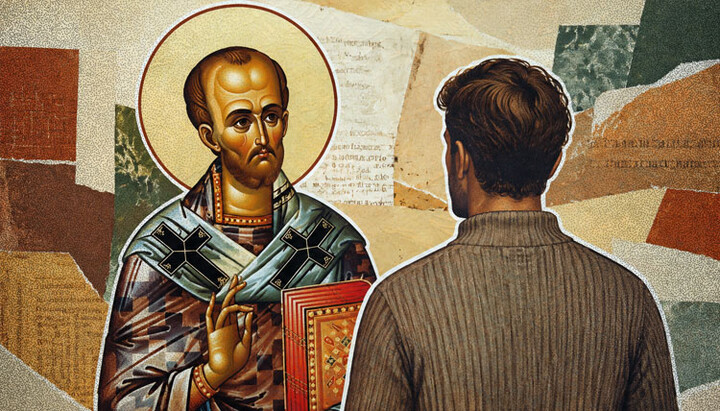
Talking about gratitude. Photo: UOJ
In June 404, the great preacher was escorted out of the Cathedral of Constantinople under armed guard. Less than a month later, that very cathedral lay in ashes, along with the Senate building beside it. Who set the blaze has never been established. Some accused the enraged supporters of the exiled hierarch. Others insisted it was nothing more than an accident. But for the faithful who still regarded the disgraced archbishop as their true shepherd, the question was different: What did this tragedy mean? Was it God's judgment upon his persecutors?
Within months, disaster struck again. An earthquake shook the imperial capital, and in October Empress Eudoxia, whose orders had sent Chrysostom into exile in Cucusus, died. Many citizens were convinced that God had finally risen in defense of His faithful servants.
Yet the saint himself, stripped of his episcopal throne, his health, and any hope of returning home, saw these same events in an entirely different light.
In the message he wrote to his friends in Constantinople, the archpastor neither explained what had happened nor blamed anyone. But that deliberate refusal to pass judgment struck a far heavier blow against the devil than any accusation ever could.
Today, we will not be speaking with the preacher whose sermons once moved the congregation in Constantinople to burst into applause during the Divine Liturgy. We will speak instead with a man who had been left with nothing except a pen and a few sheets of paper. He deprived the devil of his most powerful weapon – persuading people to trust their emotions instead of placing humble hope in God.
The strongest remedy for despair
– Your Eminence, news of the fire in Hagia Sophia reached Cucusus very quickly. What did you feel when you heard it?
"I could no longer stand beside my spiritual children," St. John Chrysostom replies. "The only way left to heal their souls was from afar. I wrote to them then: 'The word nourishes better than bread, heals better than medicine, cuts away a festering wound more effectively than iron – and without causing any pain.'"
– Your flock in the capital wanted to hear you declare that the fire was divine retribution upon your persecutors. You refused to give them that consolation. Why?
"Because the very question 'Why did this happen?' is already a trap," the saint says. "I warned them firmly: 'Do not ask why this happened or what purpose it serves.'"
Such curiosity is not zeal for God. It is ordinary presumption – the desire to sit in judgment over God's ways as though He were accountable to us.
If we carry the saint's thought a step further, we can see a subtle strategy at work. A fortress is rarely taken by direct assault. More often, attackers lure the defenders outside the gates under the pretense of negotiations, knowing that an open gate is almost the same as surrender.
Our question to God – "Why?" – resembles just such dangerous negotiations. The moment we demand an explanation, we step outside the shelter of divine protection to meet disaster halfway, and the fortress of the soul stands open before the enemy. Gratitude to God for everything He allows, by contrast, is a complete refusal to enter into such perilous negotiations.
Grateful righteous men and the battle plan
– But it is difficult to remain silent when the world you know is collapsing before your eyes.
"It is difficult," the archpastor agrees. "Remember Job, who lost his possessions, his children, and his health in a single day, yet never once murmured, 'Why has this happened to me?' Or Joseph, sold into slavery by his own brothers, falsely accused, cast into prison though innocent – and never once demanding that God explain why a righteous man should suffer so.
Trials are permitted not to break the strong, but to ensure that the courage of the steadfast grows no weaker."
– Then gratitude is a strategy for salvation?
"Certainly," St. John Chrysostom answers. "To give thanks in times of prosperity is easy; our very nature inclines us to do so. But it is truly remarkable when a person gives thanks while enduring the greatest hardships.
When you thank God at such a moment, first, you gladden Him; second, you put the devil to shame; third, you show that what has happened to you is of no real consequence."
The despairing soul allows the enemy to draw nearer, as though he has already won. The grateful soul sends him away empty-handed.
– And what if the reason for all these sorrows never becomes clear – not now, nor in the near future?
"Then wait for the end of the age," St. John says. "A farmer does not judge the seed when it is buried in the mud of winter; he waits for the harvest. So you also, my beloved, endure patiently and await the end. God's providence is boundless, and it is not for us to fathom it."
A reply to a suffering flock
The fire that destroyed Hagia Sophia has long since faded into history. Today, it is remembered mainly by historians.
Christians remember something else.
In 438, in that same city, on the very spot where the burned cathedral had once stood before being rebuilt, the relics of the exiled archbishop were solemnly welcomed home. By then, the faithful no longer needed an explanation for why the cathedral had burned.
Time itself had spoken. The glorification of the once-banished saint placed everything in its proper perspective.
"Do not pry into these things; do not ask why this happened or what purpose it serves," St. John Chrysostom says to us in parting. "Remember only this: 'He who endures to the end shall be saved' (Matthew 10:22)."
Read also
Honest atheism vs. spiritual hypocrisy
The 70th anniversary of Albert Camus’s Nobel Prize recalls an uncompromising challenge to Christianity. An honest unbeliever brings theology back to the mystery of the Cross.
The valley of trouble and the gateway of hope
One soldier buried an expensive cloak and some gold beneath his tent. Because of this, all Israel lost a battle. Why did one man’s sin bring disaster upon an entire nation?
From love spells to bishop's throne
Antioch’s most powerful sorcerer sent demons against a devout young Christian woman three times – and failed every time. In the end, a demon himself revealed the truth that led to his conversion.
The Weeping Queen of Blachernae
On the night of the Feast of the Protection, only two people witnessed the miracle in the Church of Blachernae. Everyone else prayed and saw nothing. Yet they, too, received grace.
Deadly spiral of human hatred
The tragedy of Lebanon's civil war lays bare how dehumanization and fear can turn human beings into monsters.
Woe to expectant mothers – or to those of little faith?
God commanded one prophet not to have children, yet told his people in exile to bear sons and daughters. What does this apparent contradiction tell us today?