
From love spells to bishop's throne
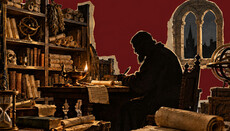
Antioch's greatest sorcerer sent demons against a humble Christian girl three times and was defeated three times. A demon himself led him to the truth.
There were not many such specialists in Antioch. Cyprian was a native of Carthage and had been dedicated to Apollo from childhood. As a young man he climbed Mount Olympus, served Hera in Argos, and in Egyptian Memphis studied "even greater sorcery." In his thirtieth year he went to the Chaldeans, the best astrologers of antiquity. When he finally settled in Antioch, he had no equal there. His Life calls him "the foremost priest and wisest servant" of the pagan gods.
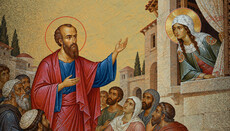
If someone was having trouble with enemies, health, or love, the road led to Cyprian. So one day a wealthy young man named Aglaides appeared on his doorstep.
An Order for a Girl
Aglaides was in love with a girl named Justina. She was a Christian and had firmly resolved to dedicate her life to God. The young man was refused. Then he tried to abduct Justina right in the street, but the neighbors fought her free.
The rejected suitor went to the sorcerer. He promised gold and silver if only Cyprian would make the girl fall in love with him. For the magician, this was routine work. How many such hearts he had already "bewitched"... Cyprian summoned a demon and sent it to Justina.
Three Demons, Three Defeats
The first demon returned empty-handed. It had seen "a certain sign" about the girl and was frightened. Justina had simply crossed herself and prayed.
Cyprian grew angry and sent a "fiercer" demon. But it, too, broke against the same wall of prayer, fasting, and strict asceticism. The girl did nothing out of the ordinary. She did not utter incantations or draw magic circles. She prayed and made the sign of the Cross over herself.
Then the magician resorted to the last measure. He summoned the "prince of demons" himself. The prince entered Justina's presence cunningly, in the form of a woman. A peaceful conversation about virginity began. The demon asked the saint: why deprive yourself of joys, is marriage a sin?
Justina listened to it attentively and suddenly realized who was before her. She made the sign of the Cross, and the visitor vanished.
Meanwhile, the demons tried to deceive Aglaides himself as well. One day a demon appeared to him in the likeness of Justina. But as soon as the young man called her by name, the phantom dissolved.
The Confession of the Defeated
Cyprian was furious. He, the master of spirits, could not cope with some slip of a girl! He demanded an explanation from the prince of demons. And the latter, unexpectedly for the sorcerer, told the truth: "We cannot look upon the sign of the Cross, but flee from it, for it scorches us like fire and drives us far away."
At that moment something turned over in Cyprian's mind. He, who had served these powers all his life, suddenly saw how weak they were.
And he put to the demon the question that decided his fate: "For if you fear even the shadow of the Cross and tremble at the Name of Christ, what will you do when Christ Himself comes against you? If you cannot overcome those who sign themselves with the Cross, whom will you tear from the hands of Christ?"
There was no answer. Instead of answering, the demons fell upon their former master and began to strangle him. And then the great magician, the master of all secret arts, did what no one had taught him. He crossed himself and cried out: "God of Justina, help me!" The demons retreated.
The Unbelieving Bishop
Cyprian goes to the local Christian bishop, Anthimus. Seeing the famous sorcerer, the bishop receives him without joy. He expects a trick rather than repentance, and asks his guest to leave the Christians in peace.
But Cyprian, in tears, tells him everything that has happened to him. He brings his books – a library of magic collected over decades – and they are burned before all the faithful citizens. Everything he learned on Olympus, in Argos, in Memphis, and from the Chaldeans goes up in flames.
From there, his path in the Church is a swift ascent. On the eighth day after his conversion he is a reader, on the twentieth – already a subdeacon, and on the thirtieth – a deacon. After a year he is a priest, and later a bishop. Justina becomes a deaconess and heads a convent of maidens.
In the kontakion of the feast, Cyprian is called a "most wise physician," converted "from the art of sorcery." The former magician ultimately became a healer of souls.
The Execution in Nicomedia
According to tradition, at the beginning of the 4th century, during the persecutions, Saints Cyprian and Justina were seized and brought to Nicomedia, one of the capitals of the empire. After being tortured, they were sentenced to death.
Before the execution, Cyprian asked for only one thing: that Justina be executed first. He feared that, seeing his death, she would be frightened. The man who had once sent demons against her now thought only of how to spare her from fear.
A man named Theoctistus stood nearby. He took pity on the martyrs – and shared their fate. All three were beheaded. For six days the bodies lay unburied, until pilgrims secretly carried them away.
The Magician Whose Person Was Turned into a Cult
The story of Cyprian's conversion to God proved so vivid and instructive that it survived the centuries and spread throughout the world. Scholars see in it the basis of the legend of Faust. The Spanish playwright Calderón wrote a play about the converted magician, The Wonder-Working Magician. And among the people there arose the so-called "Prayer of Cyprian," which was worn as an amulet. However, the Church has always regarded this text as apocryphal.
The result is a paradox. A man who burned his magic books and renounced the occult himself became an object of magical veneration. People tried to endow the former sorcerer once again with magical properties.
Scholars, incidentally, are still debating the story of Cyprian. Early lists of the bishops of Antioch do not mention the name of Cyprian, and some researchers consider his figure to be purely literary. The Church, however, preserves the memory of the martyrs and glorifies them on October 15.
The Power That Conquers Magic
The most important thing in the lives of the saints is not the miracles, but how divine grace acts in the world. Justina knew nothing about magic. She had no books, no teachers, no spells. She simply prayed, fasted, and made the sign of the cross. And that was enough to defeat the greatest sorcerer of Antioch.
The sign of the cross is the key element in this story. Justina fenced herself with the cross because she entrusted herself to Christ. And Cyprian, who had sought a secret power all his life, understood that its source lay not in secret knowledge, but in the simple faith of a young girl. And when he himself became afraid, he called for help not on his spirits, but on "the God of Justina."