Sviatohirsk Lavra tragedy: A confession of faith or not?
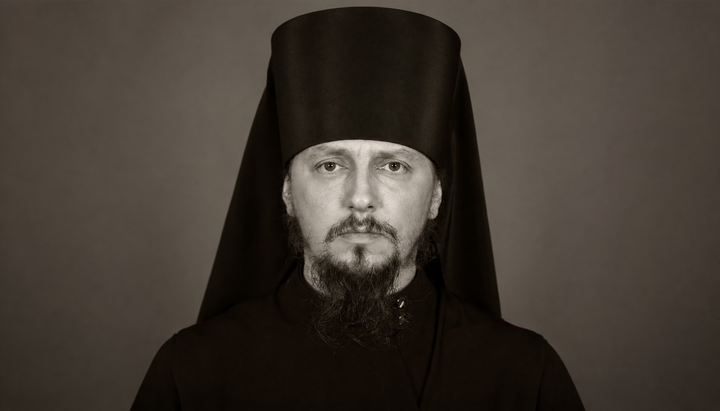
Monk Varsanofiy. Photo: Sviatohirsk Lavra
A debate is now unfolding among Orthodox Christians over whether the death of Sviatohirsk monk Varsonofiy should be regarded as an act of confession of faith. It intensified after wounded novice Andriy Kyriienko said that before the attack, men in uniform demanded that he give the “correct” response to the slogan “Glory to Ukraine!” Andriy answered: “Glory to our Lord God. Save and protect us.” He survived only because, after stabbing him several times, the attackers assumed he was dead and threw him into a ravine.
According to UOJ information, a similar exchange took place with another wounded monk, Grigory. In his case, however, the choice was stated plainly before the attack: either he responded “correctly” to “Glory to Ukraine!” and lived, or he died.
We have no reliable evidence that slain monk Varsonofiy was given the same ultimatum. But the last words heard by the brethren who found him shortly before his death were: “Glory to the Lord Jesus Christ!.. I am a monk.” It is reasonable to assume that he said the same thing to his killers. Otherwise, Father Varsonofiy would have remained alive.
And yet many now object that things are “not so clear-cut”: the attackers have not been identified, their motive still has to be investigated, it is unknown whether Father Varsonofiy was explicitly ordered to renounce Christ, whether the attack was driven by religious hatred, and so on.
But consider what other motive the killers could have had.
Personal hostility? Kyriienko said he had never seen the attackers before. Most likely, the same was true of the other monks who were attacked.
Revenge? The same problem applies: people do not take revenge on complete strangers. There is simply nothing to avenge.
Robbery? Kyriienko said nothing about any attempt to rob them. And what valuables could a novice or monk realistically have in his pockets? That explanation does not withstand scrutiny either.
That leaves one motive: religious hatred.
The killers came to an Orthodox monastery and, after hearing “Glory to our Lord God” in response, began to kill. And the crucial point is that the victims were given a choice: give the “right” answer – and live.
For us, the word “confessor” carries enormous weight. It evokes the spiritual courage of the confessors and martyrs of centuries past. That is only natural, and it means the term must be used with great care.
But neither should we refuse to see what is right in front of us.
Read also
Shoulder straps or a cassock: who writes the script for UOC "fighters"?
Everything indicates that both Veliar and Pshenychny are ordinary performers of someone else's script. There is only one question – does the scriptwriter wear shoulder straps or a cassock?
Why is it legal to kill a person before birth but not after?
Children are the most privileged members of society. Yet that same society officially permits children to be killed – and on a massive scale.
Honoring the Bolsheviks’ successors at Kyiv Lavra
It was under the Reserve that the relics of the saints were desecrated, Lavra churches were turned into an atheism museum, and toilets were installed in sanctuaries.
"Degenerates" and "stupid animals": anti-UOC activists turn on children
Future historians will wonder how a vast country’s information agenda could have been shaped for so long by people so petty, vicious, and utterly contemptible.
Zelensky sees murder of Polish priest but not of Sviatohirsk monk
Why does Zelensky react so emotionally and swiftly to the murder of a Catholic cleric while remaining completely silent about the murder of an Orthodox monk?
UOC vs. OCU numbers: pollsters count, social media recount
Official polling suggests Dumenko’s structure has an overwhelming lead in the number of parishioners, while social media polls paint a very different picture. Which should we believe?