When shame puts on the mask of repentance and deceives us
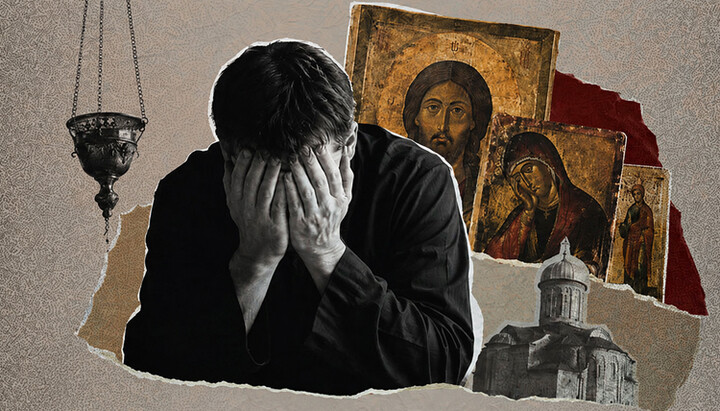
Spiritual self-flagellation. Photo: UOJ
It is a situation familiar to many. A person walks out of church after confession. The priest has just read the prayer of absolution, every sin has been named – yet a storm is still raging inside. The mind spins in circles: I didn’t mention this. I forgot that. And that wasn’t really a sin at all – I was just making excuses. The peace that was supposed to enter the soul together with grace somehow never comes. All that comes is the conviction that “you’re not good enough.”
What do we mean by guilt?
Modern psychologists have long recognized that what we call guilt is actually a many-sided phenomenon. June Tangney, who has studied the subject for many years, put the distinction this way: guilt usually says, “I did something bad,” while shame says, “I am bad.” The first focuses on an action. The second condemns the entire person.
That difference matters.
Guilt pushes a person to make things right – to apologize and act differently next time. Shame pushes a person to run – to hide, make excuses, or, more often than not, simply withdraw into themselves. Guilt looks at a specific act and at the person who was hurt. Shame looks only at its own reflection.
And this is where a strange paradox of church life emerges. We come to confession seeking freedom from guilt, but leave burdened with even deeper shame – and confuse the two, mistaking shame for profound repentance.
The speech the father cut short
In the Gospel parable of the Prodigal Son, after enduring hunger and the misery of the pigsty, the son rehearses his speech of repentance in advance. We know it word for word because he goes over it again and again: “Father, I have sinned against heaven and before thee, and am no more worthy to be called thy son: make me as one of thy hired servants” (Luke 15:18–19).
The prodigal son’s reasoning is simple and, in its own way, perfectly logical: I sinned, so I deserve to be demoted. If I can no longer be a son, then at least let me be a servant.
But when the father sees him from afar, he rushes out and runs to meet his suffering child. The son manages to deliver only half of his prepared speech. He never gets to the part about becoming a hired servant – his father is already ordering the servants to bring the best robe and preparing a feast (Luke 15:20–22).
Love has already wiped away the guilt.
We very often replay the prodigal son’s speech within ourselves during and after confession.
We name our sins – and immediately declare that we no longer deserve salvation, sentencing ourselves to spend eternity as hired servants of our own conscience. Yet in the parable, those words are never actually spoken aloud. For the father, the fact that his son had come home was enough.
Even humility can turn out to be pride
We tend to think that the more mercilessly we punish ourselves, the humbler we are. But there is an episode in the life of St. Silouan the Athonite that calls this logic into question.
For a long time, Silouan was tormented by demonic thoughts, and he asked God what he should do to make them go away. The answer came: “The proud always suffer like this.” Silouan was astonished and asked again: how, then, could he humble his soul? And he heard the crucial words: “Keep thy mind in hell, and despair not.”
The saint’s exhausting, relentless torment of conscience turned out, contrary to what he expected, to be rooted in pride.
Silouan was speaking specifically about demonic thoughts, but the principle can be understood more broadly: obsessive self-flagellation remains a counterfeit of humility even when it dresses itself in the robes of repentance.
Here, unexpectedly, theologians and psychologists converge. Toxic shame is focused entirely on the self. It is concerned not with assessing the harm done to another person, but with endlessly contemplating one’s own corruption as though doing so were itself a virtue. It remains a form of egoism – one that has simply put on the mask of a penitent.
True repentance works differently
The Greek word for “repentance” means a “change of mind.” It does not mean intensifying self-punishment. It means changing the direction of one’s gaze. Before, a person looked at sin and at themselves within that sin. Now they look toward God and the needs of their neighbor.
In practice, the difference is easy to test. After confession, ask yourself: Where is my attention focused right now?
If it is focused on a specific action and the harm done to a specific person, that is healthy guilt – the kind that moves you to act: make the call, ask forgiveness, change your ways.
But if your mind keeps circling around a single thought – what a terrible sinner I am – that is no longer repentance. It is proud shame masquerading as repentance.
The Apostle Paul distinguished between these two states in terms strikingly similar to those used by psychologists today. He wrote to the Corinthians: “Godly sorrow worketh repentance to salvation not to be repented of: but the sorrow of the world worketh death” (2 Cor. 7:10).
Today, when almost everyone carries a heavy burden in their soul, this confusion between guilt and shame becomes especially dangerous. Some blame themselves for leaving the country because of the war. Others blame themselves for staying. Others simply feel guilty because they smiled at someone they loved while missiles were flying overhead.
War does not ask permission before leaving wounds on the soul. And in times like these, conscience can easily turn toward self-punishment, as though suffering in itself could somehow make things right.
But suffering by itself fixes nothing. What changes things are specific acts done for the good of a specific person.
So if, after confession, you once again catch that inner voice demanding punishment, remember this: the father reached the prodigal son before he could finish his speech of repentance.
You can say that you are unworthy – those words can be sincere. But to pass sentence on yourself after the Father’s arms have already closed around you is to impose a needless penance upon yourself.
Read also
The Weeping Queen of Blachernae
On the night of the Feast of the Protection, only two people witnessed the miracle in the Church of Blachernae. Everyone else prayed and saw nothing. Yet they, too, received grace.
Deadly spiral of human hatred
The tragedy of Lebanon's civil war lays bare how dehumanization and fear can turn human beings into monsters.
Woe to expectant mothers – or to those of little faith?
God commanded one prophet not to have children, yet told his people in exile to bear sons and daughters. What does this apparent contradiction tell us today?
The help God never asked for
Uzzah wanted only to keep the Ark of the Covenant from falling into the dust. Why did this well-intentioned act cost him his life, and who was really responsible for his death?
Freedom begins when there's nothing left to take
Fear of persecutors takes root in our attachment to possessions. We turn to St. Basil the Great to understand why the prefect's threats held no power over him.
The bride in the window frame
The author of the earliest account of St. Thecla’s life was defrocked. Yet it was his book that preserved the only ancient description of the Apostle Paul’s appearance.