Archbishop Job of Shumsk on the light of faith amid the storm of trials
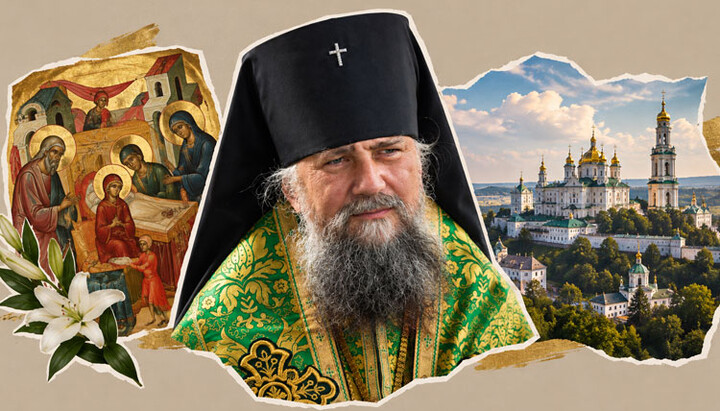
Interview with the rector of Pochaiv Theological Seminary. Photo: UOJ
– Your Eminence, a new academic year has begun at all UOC theological schools. What particularly distinguishes Pochaiv Seminary this year? How does pressure from state authorities, including what is happening with the Pochaiv Lavra, affect the educational process? And what is the proper Christian response to it?
– One distinctive feature of the new academic year at our seminary is that we have a good number of young men enrolling – motivated students who understand why they have chosen our theological and pastoral school and what they are preparing themselves for.
First, because of pressure from the authorities, a kind of natural selection takes place even while applications are being submitted: those who enter the seminary are courageous young men of genuine faith. They are prepared to follow the way of the Cross after our Lord and Savior Jesus Christ not merely for a week or two, but for their entire lives. They are not afraid of anyone and remain steadfast in the Orthodox faith and Christ’s commandments.
Second, trials and persecution teach both faculty and seminarians fervent prayer and wise use of time. From the very first day, they learn to take their studies and obediences seriously, to love their Mother Church, and to serve the Lord Jesus Christ sincerely.
Transformation through the Cross Procession
– Not long ago, as in previous years, thousands of pilgrims took part in the cross procession to the Pochaiv Lavra. How important are such processions in these difficult times, and what do they bear witness to?
– The cross procession to the Pochaiv Lavra for the feast of the Dormition of the Mother of God can be compared to the miraculous gathering of the Apostles in Jerusalem for Her burial and to the apostolic funeral procession, accompanied by Angels, from Zion to Gethsemane. It is a spiritual parade celebrating the great victory of Life over death! It is a solemn procession into a spiritual paradise where the peace of God reigns!
The cross procession transforms those who take part in it, strengthening them spiritually and physically. Some are even healed, while others find that difficult problems resolve themselves. That is the secret of why this year there were twice as many participants as last year. Most were women and children – even babies in strollers – as well as elderly people and young people. And how graceful and beautiful all our Christian women become by the end of the procession – radiant, gentle, almost angelic, worthy of first place in a “heavenly beauty contest.” The grace of God rests upon them all.
A cross procession is the transformation of a people through repentance before the Lord God. After every procession, our land becomes holier, purer, more beautiful...
A cross procession means six days of unceasing prayer – a great prayer service offered by the people for the strengthening of Christ’s Church, for peace and tranquility, and for victory over the chief enemy and adversary of the human race and all his deceitful servants.
During the procession, the seminarians work like angels, preparing the Lavra to receive such a multitude of pilgrims. They also help at the stops where pilgrims rest and regain their strength.
A celebration of spiritual victory
– Two great feasts of the Mother of God – the Dormition and the Nativity – are separated by only about a month. Can this period be regarded as something special?
– The Dormition of the Mother of God concludes the Church year, while the Nativity of the Virgin Mary begins it. The Dormition is Her birth into Eternity. The Dormition is the Pascha of the Mother of God.
It is deeply symbolic that the cross procession in Pochaiv concludes with the singing of Paschal hymns and the triumphant proclamation, with tears of joy in people’s eyes: “Christ is Risen! – Truly He is Risen!”
The Mother of God lives eternally, and we, Her children, will likewise live forever in heavenly blessedness.
On the icon, above Her Most Pure Body, Christ is depicted appearing in glory. In His arms He holds the soul of His Mother in the form of an infant. This symbolizes Her birth into the Kingdom of God. It is no coincidence that Western Christians also call this event the Assumption of the Mother of God into heavenly glory and Her coronation as Queen of the Christian people in the Kingdom of Heaven.
It is then that She speaks words of great importance and joy for us: “I am with you always, even unto the end of the age!” Her constant protection over our Church and our people confirms this promise. All Her miracles resound as a thunderous “Amen!”
And the Nativity of the Virgin Mary is the feast of hope – hope for salvation and for victory over the devil, sin, and death.
The tempered iron of the Pochaiv hegumen
– Every Tuesday, with your participation, an Akathist is served at the relics of St. Job, your heavenly patron. How does the saint’s intercession manifest itself in these anxious days of trial?
– Prayer before local holy shrines and the veneration of heavenly patrons are traditions of all theological schools. From them we draw divine inspiration for our work and studies. They teach us what matters most – the transformation of our souls according to the image of God – and they show us how through their own example.
St. Job is an example of both a diligent student and an outstanding teacher and mentor. As a young man, he entered a monastery to study the greatest science of all – salvation and deification. He learned the Psalter and the divine services and fulfilled obediences as an altar server, reader, and singer. He loved reading Holy Scripture and the works of the Holy Fathers and made excerpts for sermons. He became hardened both spiritually and physically. True to his secular surname, Zhelezo – “Iron” – he became iron that had truly been tempered.
As abbot, he constantly preached and instructed the brethren and pilgrims both by his deeds and by the living word. It was not without his counsel that in 1618 the first textbook of Dogmatic Theology in our Church, The Mirror of Theology, was printed in Pochaiv.
He defended his monastery by appearing personally in civil courts, participated in Church councils, and defended it through unceasing prayer, the heights of his spiritual life, and even through construction work.
Thanks to his labors and those of his successors, the Lavra became a shrine known throughout the world – one that, echoing the insane plans of the atheist Communists, some are now trying to turn into a lifeless museum.
His example, together with the feat of St. Amphilochius of Pochaiv, who defended the Lavra’s Holy Trinity Cathedral, is immensely valuable to us. In this difficult time of trial, all our hope and trust are in Christ and our heavenly patrons.
A guide for the Orthodox believer
– What should an Orthodox Christian focus on first and foremost in times of trial?
– On remaining with Christ always and everywhere – both on Golgotha and in the glorious Resurrection that follows. We must firmly believe that the gates of hell will not prevail against Christ’s Church, just as the Gospel promises.
We must learn to discern the will of God and to distinguish Christ – whose risen Body forever bears the wounds of Golgotha touched by the Apostle Thomas – from the Antichrist.
The Antichrist, despite his outward resemblance to the Lord, will bear no sacrificial wounds – no wounds of love for the human race. His false miracles will be devoid of love.
May God help us remain with Christ in His True Church, not be deceived, not fall away from the Truth, not betray Him, and not destroy ourselves!
And to do this, we must learn from Christ the Teacher, from the Holy Church, and from those whom the Church has called Her Fathers.
Read also
Weeping Queen at Blachernae
В ночь Покрова чудо во Влахернском храме видели только двое. Все остальные молились и не видели ничего. Но благодать досталась и им.
Deadly spiral of human hatred
The tragedy of Lebanon's civil war lays bare how dehumanization and fear can turn human beings into monsters.
Woe to expectant mothers – or to those of little faith?
God commanded one prophet not to have children, yet told his people in exile to bear sons and daughters. What does this apparent contradiction tell us today?
The help God never asked for
Uzzah wanted only to keep the Ark of the Covenant from falling into the dust. Why did this well-intentioned act cost him his life, and who was really responsible for his death?
Freedom begins when there's nothing left to take
Fear of persecutors takes root in our attachment to possessions. We turn to St. Basil the Great to understand why the prefect's threats held no power over him.
The bride in the window frame
The author of the earliest account of St. Thecla’s life was defrocked. Yet it was his book that preserved the only ancient description of the Apostle Paul’s appearance.