‘This is not how freedom is done’: Met. Theodosiy on secret Phanar report
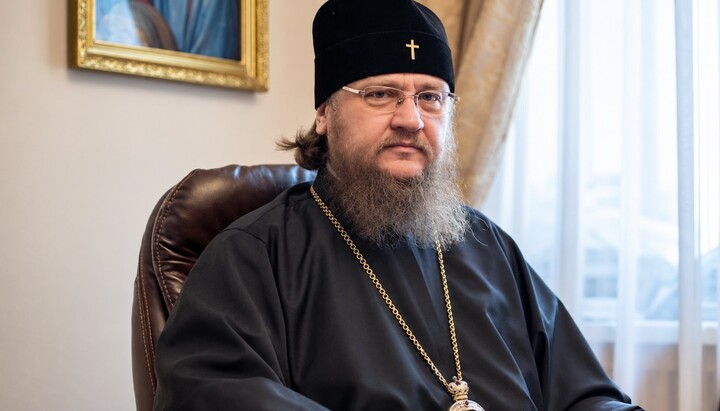
Metropolitan Theodosiy. Photo: Cherkasy Eparchy press service
The chronicle of the OCU’s creation, published by the American edition of the Union of Orthodox Journalists and compiled by a Phanar cleric for Patriarch Bartholomew, is the most candid account of how the structure came into being, Metropolitan Theodosiy of Cherkasy and Kaniv told the UOJ.
“First of all, I want to emphasize that the published chronicle is not an exposé written by the Phanar’s enemies. It is a report that a Constantinople cleric proudly wrote to his Patriarch. That makes his testimony all the more valuable: no one has given a more candid account of how the OCU was created than its own creators,” the hierarch said.
According to Metropolitan Theodosiy, the document paints a picture far removed from normal Church life: “What do we see? A delegation of the Church of Constantinople forced to communicate through written notes because the security services are monitoring every word. Bishops taken under police escort to the president and told that they are being detained. A telephone conversation in which the fate of ‘autocephaly’ is decided not by the canons, but through bargaining over one man’s signature and talk of a military threat.”
The metropolitan recalled that for years the OCU had been presented as the product of the Ukrainian people’s free will. “But this is not how freedom is done. This is how a political project is put together, with the Church needed merely as a backdrop. In fact, back in 2018, the political strategists working for the then president openly told us that the ‘united local church’ project was an election campaign strategy. The report that has now emerged merely confirms this,” he stressed.
Metropolitan Theodosiy drew attention to who, according to the document, was actually directing the course of Church events. The charter of the future “church” was revised in the presence of representatives of the Presidential Administration, while late-night negotiations with Filaret were conducted in the president’s office with the head of the security service taking part.
“When the ‘council’ itself runs into a snag, a man in military uniform approaches the president, and it is the president who restores order. Then it is he, rather than the Church assembly, who brings the elected ‘primate’ out to the people in the square,” the hierarch said.
He also pointed to an episode involving the Turkish ambassador, who asked the Phanar representatives whether such active state interference infringed on the rights of the Church. He was told in response that the president served as a “unifying” force.
“So it turns out that a Muslim diplomat – a secular man outside the Orthodox Church – saw the problem more clearly than those who were supposed to safeguard the Church canons,” the metropolitan said.
Another revealing detail, he noted, was that the delegation sent the Patriarch a draft of its official statement not simply to inform him of what was happening, but because its members knew that all telephone conversations were being monitored.
The hierarch noted that the author of the report candidly admitted to the Patriarch that he had managed to secure the key provision naming the Ecumenical Patriarch as the “guarantor” of the charter through “apparent concessions.” The Phanar cleric told Filaret’s representative: “She teaches, and you learn. We are not negotiating as equals with equals.”
“People were told they were being liberated from a ‘foreign center,’ while in reality the charter was establishing dependence on another center – and doing so in a way that made it impossible to challenge,” Metropolitan Theodosiy said.
According to him, the author of the chronicle also acknowledged that he had insisted on dissolving the structures of the UOC-KP and UAOC before the council even began so that their participants would have no “way to retreat” and would be “bound.”
“This is not how you treat brothers in Christ whom you are leading toward repentance and the healing of schism. This is what you do when you need to achieve a predetermined result at any cost,” the metropolitan stressed.
He also noted that the security services had assured the Phanar that “many” representatives of the UOC would attend the council, while promises of protection were conveyed to Ukrainian Orthodox Church clergy “in the strictest secrecy.”
“Two bishops came. Neither pressure nor promises could force the episcopate and the people of God to abandon their Church. Over the past eight years, the pressure has increased many times over, yet not a single additional bishop has joined the OCU. That is the best answer to the question of where the Church is in Ukraine and where there is merely a semblance of one,” Metropolitan Theodosiy said.
“Politics is politics, and canon law is canon law. When the two are mixed, what emerges is not a Church but a legalized schism,” the hierarch concluded.
He recalled that Patriarch Bartholomew himself acknowledged during the telephone conversation that Ukraine was “not ready for autocephaly.”
“And it became ‘ready’ only after the then president deceitfully wrested the coveted signature from the unfortunate Filaret Denysenko,” the metropolitan added.
“We bear no ill will toward any of those who took part in those events, and we pray that the Lord will show all of them the path to the truth. But the Church cannot pretend that nothing happened. However much unseemly details may be hidden or embellished, they will still come to light. Truly, ‘there is nothing hidden that will not be disclosed, and nothing concealed that will not be brought out into the open,’” Metropolitan Theodosiy concluded.
The “Unification Council” was held on December 15, 2018, at St. Sophia of Kyiv with the personal participation of then President Petro Poroshenko. The creation of the OCU was announced at the gathering, and Serhiy (Epifaniy) Dumenko was elected its head. Only two UOC bishops took part – Metropolitan Simeon (Shostatskyi) and Metropolitan Alexander (Drabinko).
On January 6, 2019, Patriarch Bartholomew presented Dumenko with the Tomos. In May 2019, Filaret Denysenko said that Poroshenko and Epifaniy had deceived him at the council by promising him leadership of the new structure, the OCU. Soon afterward, he announced the “restoration” of the Kyiv Patriarchate.
As the UOJ previously reported, before the OCU was created in 2018, Patriarch Bartholomew told Poroshenko: “You are not ready for autocephaly; my people will leave.”
Read also
Shevchuk thanks Catholic cardinal for visit to Russia
The UGCC head called Catholic Cardinal Matteo Zuppi’s visit to Ukrainian prisoners held in Russia an extremely important step.
‘Won’t find a girl better than you’: UGCC clergy dance on church porch
In Ternopil, UGCC clergy danced to a wedding song on the steps of a church and tossed candy into the crowd.
‘This is not how freedom is done’: Met. Theodosiy on secret Phanar report
The Cherkasy hierarch said the Constantinople cleric’s report on the 2018 “council” shows that the fate of “autocephaly” was determined not by the canons but by the authorities and security services.
UOC lawyer urges police to prevent provocations at upcoming court hearing
The next court hearing in the case seeking the dissolution of the UOC Kyiv Metropolia is scheduled for October 7.
UOC hierarch consecrates new bell tower at church in Behendiatska Pastil
In Transcarpathia, a vicar bishop of the Mukachevo Eparchy celebrated the Liturgy and then performed the rite of consecration of the new bell tower.
Metropolitan Onuphry calls for prayers to Mother of God for peace in Ukraine
On the feast day of the “She Who Is Quick to Hear” icon, the UOC Primate spoke of the Mother of God’s maternal care and urged the faithful to live by the laws of holiness and love.