
Temple or prison? How St. Gregory Palamas defended the human body
The teachings of Gregory Palamas may seem like lofty mysticism, yet they concern every one of us. What is the human body – an idol, a prison for the soul, or a temple of God?
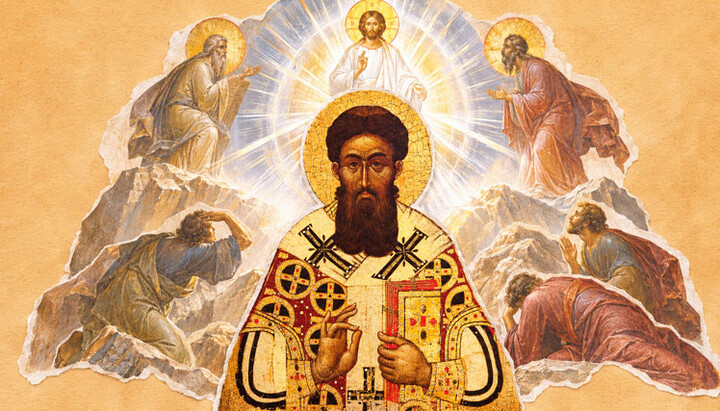
On November 27, the Orthodox Church commemorates the repose of St. Gregory Palamas, Archbishop of Thessalonica (1296–1359). The memory of Gregory Palamas is traditionally associated with the loftiest heights of Byzantine Hesychasm, with the teaching on the uncreated energies and the Light of Tabor.
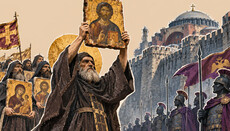
On November 27, the Orthodox Church commemorates the repose of St. Gregory Palamas, Archbishop of Thessalonica (1296–1359). His memory is traditionally associated with the highest achievements of Byzantine hesychasm, the doctrine of the uncreated energies, and the Light of Tabor.
To many Christians, Palamite theology may seem like lofty monastic mysticism, far removed from the realities of everyday life. Yet behind the theological terminology of the fourteenth century lies one of the most pressing questions of human existence: what is the human body?
Two extremes: the flesh as an idol and the body as a prison
To understand this question, we must examine the anatomy of two fundamental misconceptions about human corporeality. The first extreme is the perception of the flesh as an idol. Modern civilization is deeply preoccupied with the body, but its understanding of corporeality is distorted and divorced from the spirit. In postindustrial society, the body has ceased to be a mystery and a temple; it has become a tool and an object of consumption.
The secular world offers two approaches to the flesh: either ruthless exploitation for hedonistic pleasure or equally ruthless conditioning – the cult of six-pack abs, the beauty industry, biohacking, and transhumanism. Within this paradigm, the body is valuable only as long as it remains young, attractive, functional, and capable of providing pleasure. As soon as the flesh grows frail, falls ill, or begins to wither, the secular world rejects it, plunging the individual into a hell of loneliness and fear of death.
The second extreme is the religious temptation of Gnosticism within the Church, where the body is perceived as a prison for the soul. In reacting against the pagan cult of the flesh, religious thought has repeatedly fallen into the opposite heresy – Platonic and Gnostic dualism. As far back as ancient Greece, the philosopher Plato articulated the Orphic formula soma – sema (the body is a prison and a tomb). The Gnostics of the early Christian centuries maintained that the material world and the flesh had been created by an evil demiurge and that the spiritual person’s task was to escape the confines of the flesh.
Unfortunately, this Neoplatonic virus has penetrated deeply into popular Christian consciousness.
How often, under the guise of "spirituality" and "asceticism," is a concealed hatred of one's own flesh preached!
Religious literature sometimes portrays the body as nothing more than a “bag of bones and filth,” while any manifestation of corporeality is regarded as inherently shameful and sinful. But if the body is merely an incidental and harmful “garment” of the soul, then the Incarnation loses its meaning, the resurrection of the flesh becomes unnecessary, and the Eucharist – Communion of the Body and Blood of Christ – becomes an absurdity!
The battle of the fourteenth century: prayer and the wholeness of the human person
This very question lay at the heart of the fourteenth-century theological controversy between St. Gregory Palamas and the humanist scholar Barlaam of Calabria. Steeped in Western scholastic rationalism and drawn to Neoplatonism, Barlaam ridiculed the Byzantine hesychast monks. The immediate target of his mockery was the psychosomatic prayer practice of the Athonite fathers. When reciting the Jesus Prayer, the hesychasts employed particular breathing techniques and prayer postures, focused the attention of the intellect within the heart, and maintained that they beheld the Uncreated Light that had once shone on Mount Tabor.
Barlaam protested: “How can one see the Divine Light? God is Spirit, absolute transcendence. The body cannot participate in the knowledge of God!” He derisively called the hesychasts “omphalopsychoi” (those who locate the soul in the navel), regarding their bodily approach to prayer as pagan madness.
St. Gregory Palamas responded to this attack with an argument that transformed Christian anthropology and defended the integrity of the human person.
The saint wrote that it is not the body that we call evil, but the carnal mind. If the intellect prays alone, without the body, its prayer is, as it were, incomplete, for God created the human person as a unified whole – soul and body. It is the whole person who must be saved, pray, and be transfigured.
Palamas demonstrates that the body is not an external appendage of the soul, its prison, or an incidental instrument, but an integral part of the human hypostasis. The human person is a complex unity of spirit, soul, and flesh, created in the image of God.
The Light of Tabor and the true meaning of asceticism
At the theological heart of Palamite thought lies the doctrine of the uncreated divine energies. Palamas draws a fundamental distinction between the inaccessible, incomprehensible Essence of God and His Energies, which pour forth into the world. In His Essence, God is absolutely transcendent to creation, yet in His energies He is fully accessible to personal communion. He permeates the entire world and enters into union with the human person. Divine grace deifies not only the human spirit but also the human flesh!
When Christ was transfigured on Mount Tabor, His apostles beheld a Light that was neither a created atmospheric phenomenon nor an illusion. It was God Himself, revealed in His divine energy. And the apostles saw this Light with their bodily eyes because their own senses had, at that moment, been transfigured by the Holy Spirit.
St. Gregory teaches that the grace of the Holy Spirit, bestowed upon the mind, is communicated through it to the body as well.
This theology radically transforms our understanding of asceticism: Christian asceticism is not the mortification of the body but the mortification of the passions. Asceticism is not the destruction of the flesh but its sanctification and transfiguration. A Christian’s eyes learn to behold the world with purity, the ears to hear the Word of God, the heart to love, and the entire body to become a willing and obedient instrument of the Holy Spirit.
The bodies of the saints, their myrrh-streaming relics, and their radiant faces are direct historical and physical evidence that the Light of Tabor can permeate the flesh even here, in this earthly life.
Three Mysteries that uphold the dignity of the body
Why does Orthodox theology defend the dignity of the body so uncompromisingly? Because the very foundation of our salvation rests upon it.
First, there is the Mystery of the Incarnation: “The Word became flesh” (John 1:14). The Second Person of the Holy Trinity assumes not merely a human “soul” – God takes on real human flesh, with its blood and nerves, its susceptibility to fatigue, and its capacity to experience pain and joy. Christ sanctified human flesh by assuming it. If the flesh were inherently evil or worthless, the Incarnation would be impossible, and the Savior would be nothing more than a phantom, as the ancient Docetist heretics claimed.
Second, there is the Mystery of the Eucharist: the Orthodox Divine Liturgy is not an intellectual act of remembrance or a symbolic ritual, but actual Communion of the Body and Blood of the risen Christ. The bread and wine are changed into the true Body and Blood of the Savior, and we receive Him into our physical bodies. Our flesh, at the physical and cellular level, enters into union with Christ’s holy nature, and we become, in the words of the Holy Fathers, “of one body” and “of one blood” with Christ.
Third, there is the Mystery of the resurrection of the flesh: in the Creed, we profess not merely the “immortality of the soul,” but declare, “I look for the resurrection of the dead.” At Christ’s Second Coming, our human flesh will rise again. It will be transformed, glorified, and freed from disease and mortality, like the Body of the risen Christ – yet it will be our own real flesh. We will enter eternity not as disembodied phantoms but as whole human beings – in the fullness of spirit, soul, and transfigured body.
A third way: an answer to the hedonist and the religious hypocrite
Palamite theology offers us a unique third way, saving us from two major spiritual catastrophes of our age. In response to the secular cult of the body (fitness, body positivity, and transhumanism), Orthodoxy tells the modern hedonist: “You value your body far too little! You have reduced its dignity to physiology, gym workouts, sexual pleasure, and its inevitable return to dust. We offer you something greater: your body is destined to become a temple of the Holy Spirit, a dwelling place of the Uncreated Light, and to inherit eternity!”
The Orthodox understanding of corporeality frees us from enslavement to beauty standards and the fear of aging. Our worth lies not in six-pack abs or the absence of wrinkles, but in the presence of God within us.
In response to pseudo-spiritual obscurantism and pseudo-ascetic self-destruction, Orthodoxy tells the religious hypocrite: “Stop hating God’s creation! Your body is not your enemy. Your enemy is your selfish will, your pride, your lust, and your malice. Care for your body, keep it pure, treat it when it is ill, nourish it, and offer it to God as a living, holy, and acceptable sacrifice (Rom. 12:1).” Orthodox fasting, prostrations, and night vigils are not acts of bodily torment born of hatred for the flesh, but ways of caring for it, healing it of the grave disease of the passions, and restoring it to its true purpose – to serve the spirit.
A view from the heights of Tabor
The feast day of St. Gregory Palamas, November 14/27, reminds us of what we are preparing for. We are preparing for an encounter with God, Who comes into the world to assume human flesh, to lie in the manger at Bethlehem, to sanctify our nature, and to grant our flesh the capacity to shine with Divine Light.
May the theology of St. Gregory Palamas become for us not an abstract theory but a rule of life. Look upon your body in the radiant Light of Tabor: it is an exquisitely intricate and beautiful instrument fashioned by the hands of the Creator. It is soil capable of receiving the divine flame and a dwelling place of the Resurrection.