
God’s pale knuckles: the secrets of Kramskoy’s painting
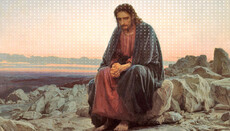
The artist could not create this image for five years. When he finished it, patron Tretyakov bought the painting without haggling.
The vision of Christ's face in this painting must be earned, and Kramskoy seems to have intended that: he submerged it in shadow, in the pre-dawn twilight, so that in the first few seconds we can hardly make it out. But we do see the Savior’s hands. The fingers are locked together in a clasp and clenched so tightly that the knuckles have whitened, and the veins on the wrists are swollen. Kramskoy placed them precisely at the geometric center of the canvas, on the horizon line, at the boundary between the gray earth and the pale sky. This is how hands are clenched when the body wants to rise and leave, but the will commands it to remain seated.
The artist himself described this in a letter to Fyodor Vasilyev: "At dawn, weary, exhausted, and tormented, He sits alone among the stones, sad, cold stones; His hands clenched convulsively and very, very firmly, the fingers dug in, His feet wounded and head lowered." Kramskoy uses the intensifier, repeating the word, because saying it once is not enough to convey the philosophy of the canvas.
Why the artist killed the sky
The first version, begun in 1867, was vertical. Christ's figure rose toward the upper edge of the canvas, much sky remained above the head, and this gave a sense of air. But Kramskoy destroyed this version. He turned the canvas horizontally – one meter eighty by two ten – and flattened the figure. Since then, the gravity of this painting works only downward. No space for flight is left.
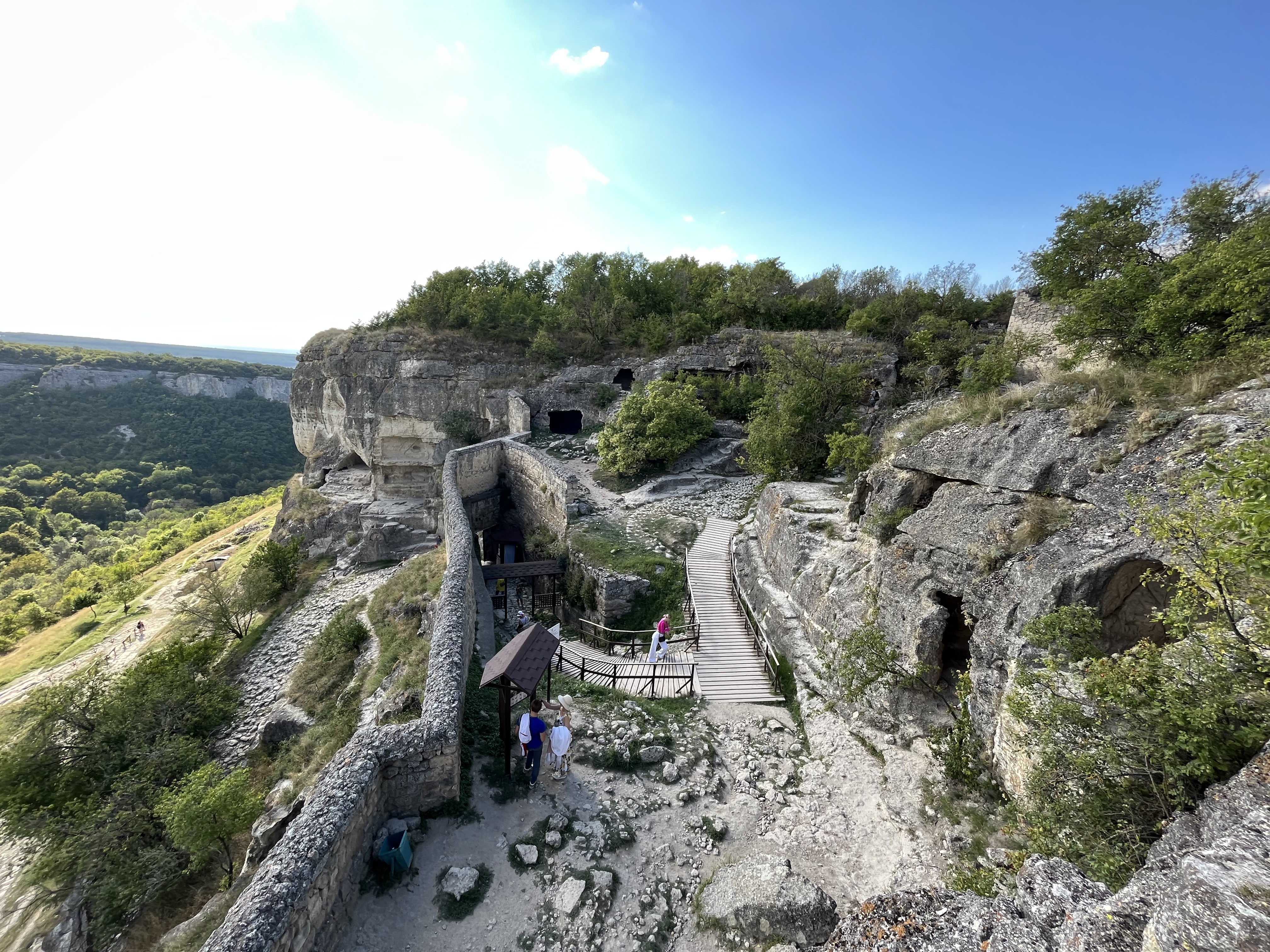
To find the right landscape, Kramskoy traveled not to Palestine, but to Crimea, to the vicinity of Bakhchisaray, to the cave city of Chufut-Kale. There he painted a study from nature in the icy morning wind, and this cold entered the painting forever. The stones on the canvas are not warm southern limestone, but gray, lifeless rock, resembling cracked skulls. The light does not warm; it illuminates every crack with the mercilessness of a surgical lamp.
A body in which war rages
Look at the Lord's shoulders – they are lowered, as if bent under an invisible press, and His posture breaks all canons of the victorious Messiah. This is not the majestic Pantocrator and the triumphant King. This is the Man upon whom, at this very moment, the weight of what He is about to endure has crashed, and His body has bent. The back is hunched as if gravity here is several times stronger than usual.
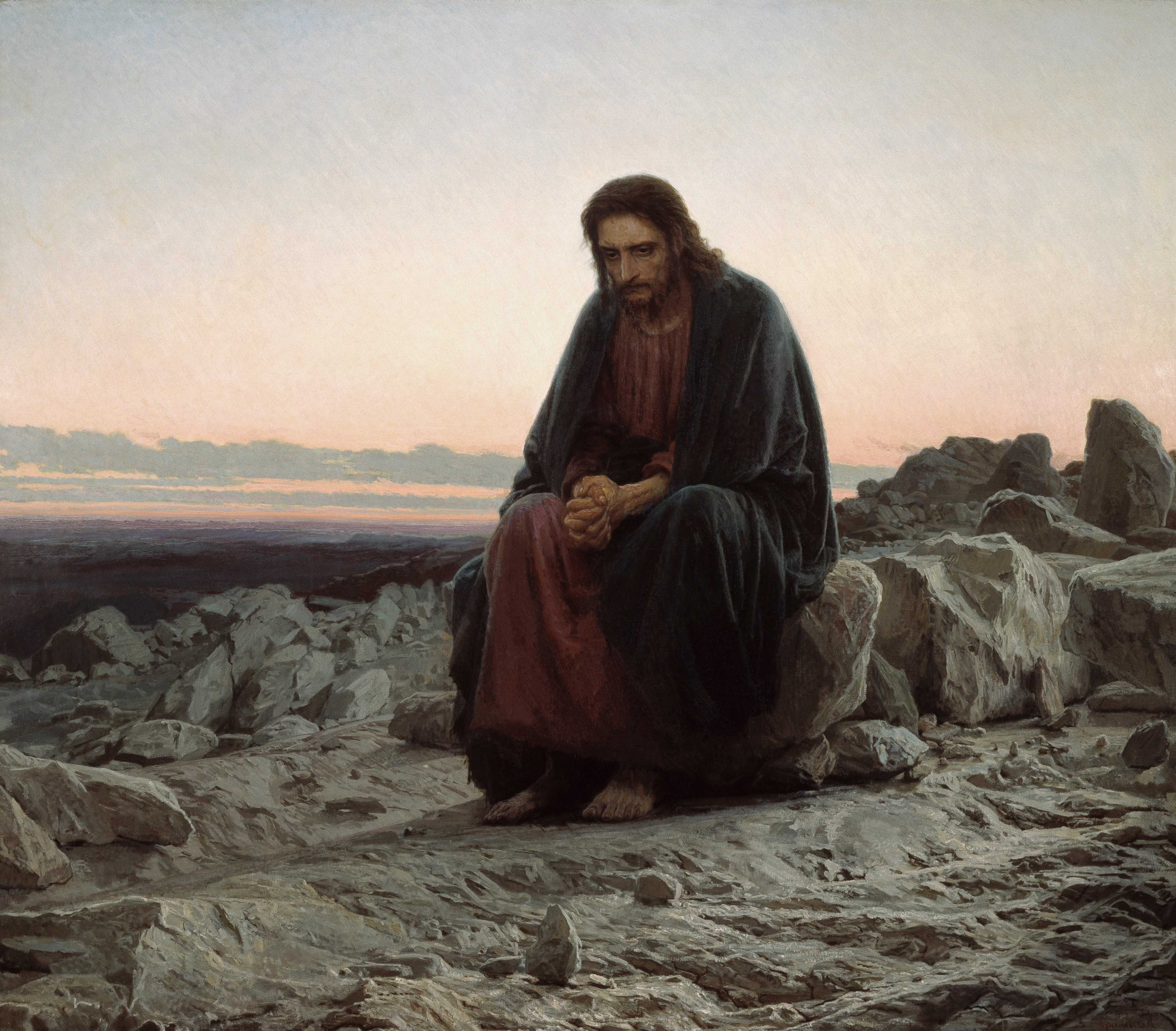
Below are His bare feet, covered in gray dust and scratched by the stones. After forty days of absolute fasting, His skin was stretched tight over the bones of His ankles, and Kramskoy depicts this with almost obsessive anatomical honesty. There are no angels in the painting, no horned devil offering to turn stones into bread. Not even a halo appears above His face. The temptation takes place within Jesus, in absolute silence, but experiencing that silence is incredibly difficult for Him.
Kramskoy later explained his concept as follows: “I see clearly that there is a moment in the life of every person, even slightly made in the image and likeness of God, when they are seized by a thought whether to go right or left, to give a ruble for the Lord God or to not yield a single step to evil.” He did not paint a biblical scene. He painted the crossroads of choice that exists in the life of each of us.
6,000 rubles for a masterpiece
When the painting was displayed at the second exhibition of the Wanderers (Peredvizhniki) in 1872, it divided viewers. Kramskoy recalled: “There aren’t three people who agree with each other. But no one says anything important.” He was offered a professorship at the Academy of Arts for it but he refused. The first person he named the price to – six thousand rubles, a huge sum at the time –was Pavel Tretyakov. Tretyakov came and immediately bought the canvas, without bargaining. Later, the patron admitted that Kramskoy’s "The Savior" became one of the most beloved paintings in his collection. And Tolstoy, upon seeing the canvas, said simply: “This is the best Christ I know.”
To viewers' questions "This is not Christ, how do you know He was like this?" Kramskoy answered boldly: “After all, the real, living Christ was not recognized either.”
Let us look Him in the face
Now we raise our eyes. The Savior's face is hidden deep in shadow, but the dawn light already reaches it. The eyes are sunken, beneath them dark circles from sleepless nights are visible, but there are no tears, panic, or hesitation in them. The gaze is directed not at the stones around nor at the viewer. It seems to pass through the space of the painting – to where we cannot look, but we guess that this gaze is directed toward Jerusalem, toward Golgotha. In this tormented, fasting-dried face, there is a clarity and calm determination so intense that it frightens. Because we understand: the decision has been made. He will rise from this stone and go to die for us.
Kramskoy dreamed of painting a continuation – the painting "Laughter", depicting the mocking of Christ after Pilate’s judgment. He worked on it for many years but never finished: commissioned portraits, failing health, and the deaths of two of his sons got in the way. "Christ in the Wilderness" remained forever his main and definitive artistic statement.