
Amulets beneath Lavra's bell tower
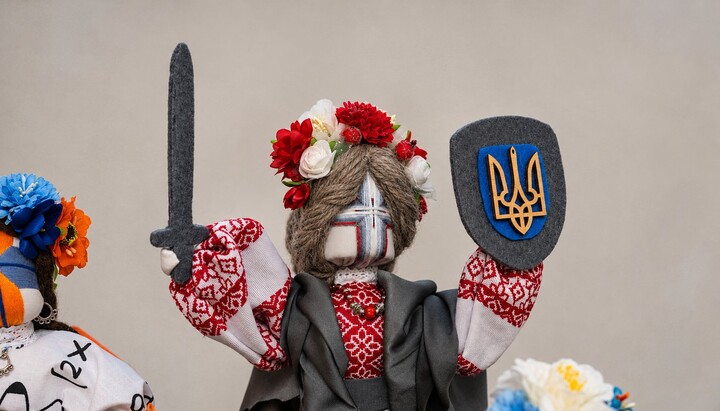
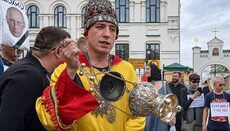
The Kyiv-Pechersk Lavra National Reserve has unveiled a collection of 36 motanka dolls.
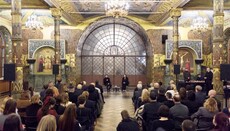
They were made by employees of Ukraine's State Treasury Service to mark the 35th anniversary of the country's independence. The presentation was attended by First Deputy Minister of Culture I. Verbytskyi, National Guard Commander A. Pivnenko, and representatives of the OCU. The collection will be displayed in the Great Lavra Bell Tower.
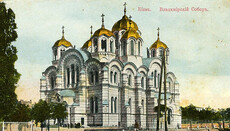
The intention to tell the country's story through traditional folk crafts is understandable. But the issue is not history – it is what exactly has been placed inside a monastery.
In folk culture, a motanka is neither a toy nor a souvenir. It is regarded as a protective amulet believed to safeguard the home and family. According to various accounts, motanka dolls served as a kind of "lightning rod" against evil. When a doll was placed in a baby's cradle or beside a sick person, people believed that evil spirits and diseases would mistake it for a living human being, "enter" the cloth figure, and leave the actual person unharmed.
So in a monastery where people have prayed for God's protection for nearly a thousand years, visitors are now being presented with objects that, according to folk beliefs – or, from a Christian perspective, superstitions – supposedly possess protective powers of their own.
Today the Church celebrates the Synaxis of the Archangel Michael and the Other Bodiless Powers, a feast established in the fourth century by the Council of Laodicea. That same council, in its 36th canon, prohibited clergy from making so-called "phylacteries" – protective amulets – placing them in the same category as sorcery and astrology, and ordered that those who wore such objects be expelled from the Church.
The Church's position on amulets remains unchanged today: belief in their protective powers is superstition, incompatible with Christian life. Significantly, during those same days, in the very same Lavra, a different answer was given to the question of who truly protects a person.
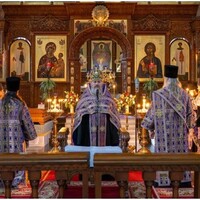
At the Church of St. Agapitus, His Beatitude Metropolitan Onuphry spoke about guardian angels in his sermon. "A guardian angel accompanies a person throughout their earthly life and helps them attain eternal blessedness," the Primate said. According to him, an angel can "prompt, advise, ask, and plead," but will never violate a person's free will.
As we can see, the faith professed by His Beatitude and what passes for faith at the Reserve are two very different things.
In one, protection comes from a doll that must be wrapped in a particular way. In the other, God protects a person through His angel, while the person is called to live according to His commandments.
The two cannot be reconciled, and a monastery bell tower is the last place where they should be mixed.
That leaves a question for the OCU representatives who attended the presentation. If they consider themselves a Church, they had every reason to say what any priest would say: amulets are superstition and have no place within monastery walls. Yet the report on the presentation contains nothing of the sort.
And that silence speaks volumes about what is being taught by those who now consider the Lavra their own property.