Antiochian Church explains why it did not attend Council of Crete

An Antiochian hierarch says allegations that his Church boycotted the 2016 Council of Crete under pressure from the Russian Orthodox Church are slanderous.
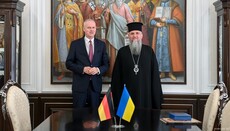
On February 23, 2022, Metropolitan Isaac (Barakat) of Germany and Central Europe of the Antiochian Orthodox Church explained why the Patriarchate of Antioch declined to participate in the 2016 Council of Crete, according to Romfea.
Commenting on the crisis in contemporary Orthodoxy, which has divided the Church and prevented its hierarchs from meeting, the metropolitan noted that its “roots go back to a time long before the Council of Crete.”
The crisis began, he said, “when the disputes over the Church in Qatar, fueled by our brothers in the Church of Jerusalem and causing us pain in the Church of Antioch, were not addressed seriously and collectively,” because the head of the Phanar “refused to include the issue on the agenda of the 2014 meeting of the Primates of the Churches.”
Metropolitan Isaac recalled that at Chambésy in 2016, the Antiochian Church made concessions “in good faith, in an effort to restore communion within Orthodoxy.” Unfortunately, however, these concessions were met with “a lack of seriousness, relativism, and indifference on the part of Jerusalem and the other brother Primates.”
“This led us to refuse to sign the charter of the Council of Crete and subsequently to boycott the Council. To this day, we are accused of having boycotted the gathering in Crete under pressure from the Russian Church. This is simply untrue – nothing more than slander, with no basis whatsoever except in the minds of those who promote it,” the hierarch wrote.
He explained that the Holy Synod of Antioch had decided not to attend the Council because “our participation would have been incomplete, as we would not have been able to concelebrate the Liturgy due to our dispute with our brothers in Jerusalem.”
As the UOJ previously reported, an Antiochian Church hierarch identified the main cause of the crisis in Orthodoxy.