
Archaeologists uncover new evidence of Holy Sepulchre’s origins
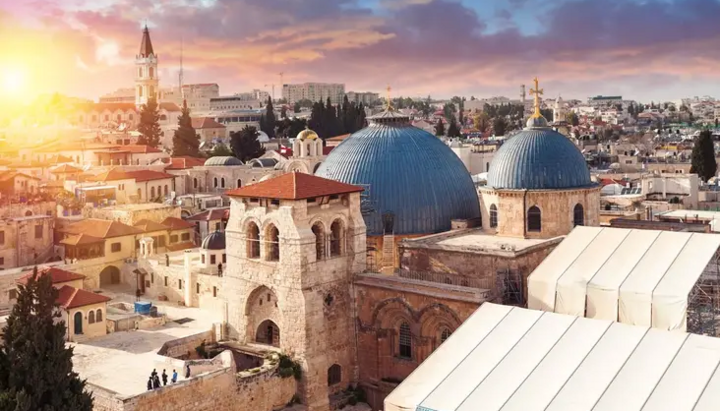
The site of the Church of the Holy Sepulchre was originally an ancient stone quarry.
Excavations conducted by archaeologists from Sapienza University of Rome have uncovered new evidence about the origins of the Church of the Holy Sepulchre in Jerusalem, Heritage Daily reports.
According to findings presented at a press conference attended by representatives of the Greek Orthodox Patriarchate of Jerusalem, the Catholic Custody of the Holy Land, and the Armenian Church – the three principal custodians of the Church of the Holy Sepulchre – the site originally served as an ancient stone quarry. Evidence includes deep cuts in the bedrock and traces of stone block extraction.
Quarrying activity followed a northeast-to-southwest direction, with some excavated sections reaching depths of more than five meters. The quarry was abandoned during the Iron Age and later repurposed for agriculture, including the cultivation of olives and grapes.
Following the siege of Jerusalem during the Jewish–Roman wars, Emperor Hadrian established the Roman colony of Aelia Capitolina and built a pagan temple on the former quarry site. The temple remained in use until the fourth century AD, when Constantine the Great demolished it and replaced it with a Christian church.
Macarius I, Bishop of Jerusalem, had asked Constantine for permission to excavate the site believed to contain Christ's burial place. During the excavations, a rock-cut tomb was discovered, which Macarius identified as the burial place of Jesus.
The recent investigation also uncovered evidence of a Roman religious structure dating to Hadrian's reign, along with traces of extensive leveling of the rocky terrain to accommodate monumental buildings.
The fourth-century complex was described as an elaborate sanctuary containing spaces for worship and veneration, multiple locations for liturgical celebrations, and designated routes for visitors.
Its layout was designed to accommodate pilgrims, allowing them to move among the sacred sites and find shelter beneath porticoes – an arrangement familiar from both pre-Christian and early Christian sanctuaries.
Excavations are now focused on the church's northern passageway to investigate the Roman religious structure and its subsequent history in greater detail.
Additional work includes documenting the entire basilica and its adjoining structures, as well as analyzing archaeological materials to better understand the site's historical development and its role within Jerusalem.
As the UOJ previously reported, archaeologists believe an ancient Babylonian tablet may contain a map leading to Noah's Ark.