
Kosmach residents accuse OCU monks of supporting "Russian world" ideas
Parishioners of the OCU stated that the monastery residents near the village of Kosmach use pro-Russian rhetoric, preventing them from switching to the "new calendar".
In the village of Kosmach, Ivano-Frankivsk region, a conflict continues around the Holy Apostles Peter and Paul Church of the OCU, which has escalated into accusations against parishioners and monks of the Bania-Bereziv Holy Trinity Monastery. Some residents claimed that the monks allegedly promote ideas of the "Russian world" and hinder the community’s transition to the new calendar style. This was reported by the local outlet Firtka.
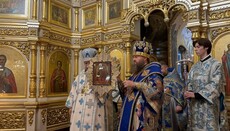
The reason for the accusations was a "divine service" on January 19, 2026, which was conducted in the Kosmach church by Afanasiy, the abbot of the Bania-Bereziv Monastery. According to local resident Maria, he served according to the Julian calendar and, as claimed, did not mention the war and Ukrainian military in prayers. This was perceived by some parishioners as a "non-Ukrainian position."
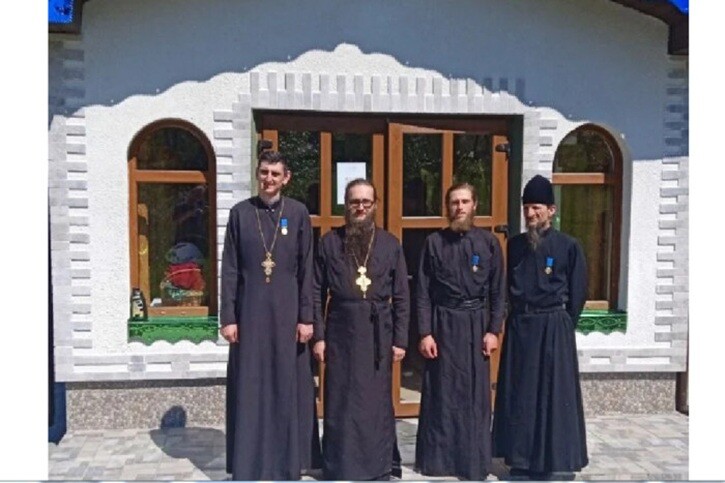
At the same time, the OCU monastery itself in the village of Bania-Bereziv had previously officially and publicly opposed the calendar reform of Dumenko's structure. In August 2023, the monastics published a statement announcing that a decision was made at the spiritual council not to support the transition to the new style and to continue liturgical life according to the Julian calendar.
In the document, the monks emphasized that the so-called New Julian calendar is actually "New Gregorian" since most holidays coincide with the Gregorian style. According to them, the Julian calendar had been for Ukrainians not only a church tradition but also a marker of religious and national identity for centuries.
“When Catholic Europe was switching to the Gregorian calendar and we remained on the Julian one, the Moscow Patriarchate did not yet exist,” the monastics noted, reminding that it was precisely the preservation of the church calendar that helped Ukrainians distinguish themselves from Catholic Poles, and that in Soviet times it became a form of resistance to the anti-church authorities.
The monks also stated that they perceive the calendar reform as a step toward a "new union", warning about the loss of fasts, holidays, customs, and traditions. They acknowledged in advance that, because of their stance, they would face pressure and accusations.
Against this background, in Kosmach some OCU parishioners regarded the monks’ adherence to the Julian calendar as a manifestation of “pro-Russian views”. There have also been accusations that representatives of the monastery allegedly organized meetings and actively interfered in parish life in an effort to preserve the old calendar style.
Earlier, the UOJ reported that the Kosiv District Court ordered police to open criminal proceedings due to obstruction of Christmas divine service on December 25, 2025, in the OCU church in Kosmach. The conflict around the calendar reform led to services not being conducted either in December or January. As a result, the police must enter information into the Unified Register of Pre-Trial Investigations (URPI) regarding the commission of a criminal offense under Part 1 of Article 161 and Part 1 of Article 180 in relation to the group of believers who opposed holding a service on December 25.