
ROCOR establishes new Russian-language theological institute in Europe
The ROCOR Synod will open the new theological school in fall 2027, while preparatory courses for laypeople and future priests will begin this fall.
The Synod of Bishops of the Russian Orthodox Church Outside of Russia (ROCOR) has established a new Russian-language theological institute and seminary in Europe. The new school will open to students in fall 2027, while preparatory Russian-language courses with a theological focus will begin as early as September 2026, UOJ in Germany reports.
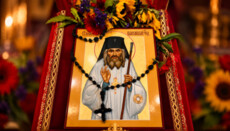
The institute will be organized jointly by two European ROCOR eparchies – the German Eparchy and the British and Western European Eparchy. The new theological center will complement the traditional English-language program at Holy Trinity Seminary in Jordanville, United States, and will offer theological studies for both future priests and laypeople. The institution will be dedicated to St. John of Shanghai and San Francisco.
The preparatory language program will begin online via Zoom in September 2026. Organizers are inviting students with A1, A2 and B1 proficiency levels to study the basics of Russian with an emphasis on theological terminology.
ROCOR’s German Eparchy also recommends that believers consider the Orthodox department at the University of Munich and the Orthodox Theological Distance Learning School, which operates with the blessing of Archbishop Tikhon of Ruza. The bishops of the two Russian-speaking Orthodox eparchies in Germany regularly coordinate their efforts to steadily expand opportunities for theological education in the region.
The institute’s patron, St. John of Shanghai, whose secular name was Mikhail Maximovich, served as a bishop in Shanghai, Western Europe and San Francisco. He became renowned for his ascetic life, advocacy for refugees, care for orphans and numerous miracles. The ROCOR Synod of Bishops canonized him in 1994.
As the UOJ reported, ROCOR recently approved rules of conduct for priests on social media.