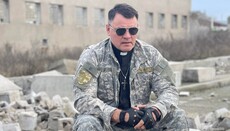

“Imperialist”: OCU cleric explains why Hieromartyr Vladimir is not venerated
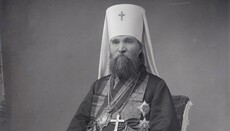
An OCU representative claimed that Hieromartyr Vladimir supported “imperial policies” and was killed over money rather than for his faith in Christ.
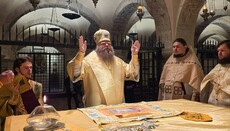
Mykhailo Karnaukh, an OCU “archimandrite” and representative of its “brotherhood” at the Kyiv-Pechersk Lavra, said that Hieromartyr Vladimir (Bogoyavlensky) is absent from the OCU church calendar because of his alleged support for “imperial policies” and because, according to Karnaukh, he did not die for his faith in Christ.
“The name of Metropolitan Vladimir Bogoyavlensky of Kyiv is absent from the calendar of the Orthodox Church of Ukraine,” Karnaukh said. “There are several reasons for this. The first is that he did not recognize the Ukrainian people as a distinct people – in other words, he supported, shall we say, imperial policies.”
The OCU representative cited the circumstances of the hierarch’s death near the Lavra walls in 1918 as the second reason. “He did not suffer for the name of Christ. He suffered solely because he refused to give money to the soldiers who came to him,” the “archimandrite” claimed. “He came into conflict with them and was killed as a result. In other words, there was no martyrdom for Christ here.”

Metropolitan Vladimir (Bogoyavlensky) of Kyiv and Galicia went down in Church history as the first hierarch to receive the crown of martyrdom among the New Martyrs of the 20th century. On January 25 (February 7), 1918, armed men led the Metropolitan outside the walls of the Kyiv-Pechersk Lavra. Before he was brutally shot and his body desecrated, the hierarch calmly prayed, blessed his killers with both hands, and said, “May the Lord forgive you.”
The holy relics of Hieromartyr Vladimir, uncovered in 1992, remain to this day in the Near Caves of the Kyiv-Pechersk Lavra. OCU representatives, who do not venerate Hieromartyr Vladimir as a saint, are now permitted by the authorities to hold their events there.
As the UOJ previously reported, the OCU removed from its calendar the commemoration of a number of icons of the Mother of God and saints “associated with the ROC.”