
Metropolitan Onuphry explains how to live so as not to grieve Mother of God
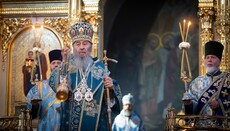
The Primate of the UOC said in a sermon on the Protection feast at the Intercession Monastery that one must live by God's commandments even when they are inconvenient for the modern world.
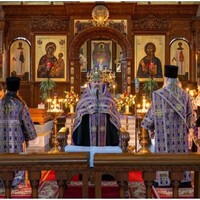
On October 14, His Beatitude Metropolitan Onuphry delivered a sermon on the feast of the Protection of the Most Holy Theotokos during the service at the St. Nicholas Cathedral of the Intercession Convent in Kyiv.
The Primate recalled that Christ came to earth to save man, and from the Cross entrusted the Mother of God to the Apostle John the Theologian. According to him, from that time the Mother of God became the protectress of the entire human race. Therefore, His Beatitude emphasized, a person always has a spiritual Mother, and no one remains a "complete orphan."
The hierarch spoke about the event that the feast commemorates. In the Blachernae church of ancient Constantinople, during the all-night vigil, the holy fool Andrew and his disciple Epiphanius saw the Mother of God in the air. She prayed with tears, and then spread her omophorion (protection, a head covering) over those praying. The vision vanished, but, according to the preacher, grace, joy, and peace remained in people's hearts.
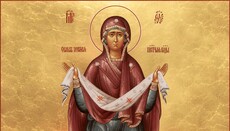
Metropolitan Onuphry noted that in sorrows and illnesses believers turn to the Mother of God, and she helps those who pray sincerely and humbly. To avoid grieving Her, people should build their lives on the commandments of the Gospel. The UOC Primate acknowledged that these commandments may be inconvenient for the modern world, but described them as salvific, emphasizing that God’s laws are eternal and founded on love. In conclusion, he urged the faithful to make an effort to do good, pray, and fast.
As the UOJ reported, Metropolitan Onuphry called on the faithful to pray to the Mother of God for peace in Ukraine. The feast of the Intercession (Protection) of the Most Holy Theotokos was established in memory of the appearance of the Mother of God in Constantinople, as recounted in the life of St. Andrew the Fool for Christ.