Czech scholar deciphers ancient inscriptions from biblical era


Czech researcher Jan Dušek has deciphered ancient inscriptions from Syria and Turkey that shed new light on the historical context of biblical events.
Jan Dušek, a researcher at the Protestant Theological Faculty of Charles University in Prague, has presented new findings from his study of inscriptions dating back approximately 3,000 years. The discoveries offer fresh insights into the historical and cultural setting of biblical events, UOJ-Czech Republic and Slovakia reports.
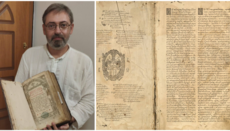
Dušek presented the results of his years of research in Prague on November 5, 2026. His findings have been published in two scholarly monographs by the international academic publishers Brill and Peeters. The researcher focused particularly on two eighth-century BC inscriptions found on monumental statues of the god Hadad and King Panamuwa II, discovered in what is now Syria and Turkey.
Through detailed examination of the original inscriptions and archival photographs, Dušek was able to interpret passages whose meaning had previously remained uncertain. The inscriptions provide information about royal succession, the political structures of ancient kingdoms, and their relations with the Neo-Assyrian Empire.
In his monograph Old Aramaic Inscriptions and Their Contexts, Dušek analyzed most of the known Old Aramaic inscriptions from the ninth and eighth centuries BC. Drawing on previously unpublished archival documents, he also shed new light on the circumstances surrounding the discovery of inscriptions from Sefire in Syria.
"Ancient inscriptions allow us to glimpse a world we know primarily through historical and biblical texts. Even after nearly 3,000 years, new analyses can reveal connections that were previously unknown," Dušek said.
Earlier, the UOJ reported that researchers had reconstructed 42 pages of lost letters attributed to the Apostle Paul.