"Cultural" Terror: How Officials in Volyn Region are Involved in the Persecution of the UOC Community
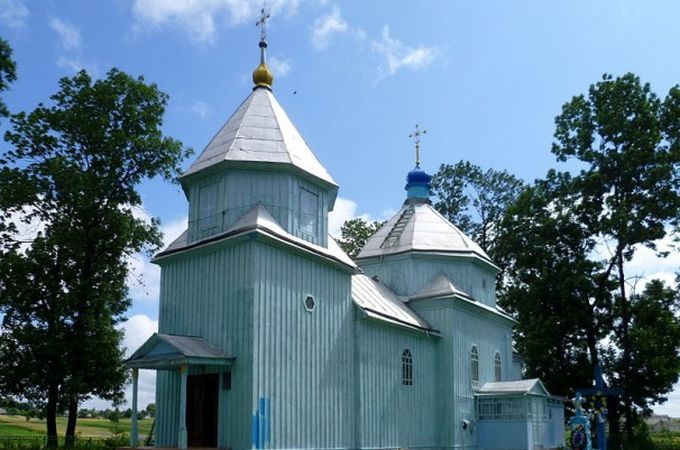
The seizure of the Holy Protection Church in the Volyn village of Hribovitsa put in a difficult position the cultural department of the local district administration. On the one hand, they had to turn a blind eye to the intrusion into the church of the representatives of the Kiev Patriarchate, who have been using it without any legal grounds since December 2015. On the other hand, the existence of a protection agreement with the UOC community in this situation does not let officials openly ignore the fact of the seizure.
Instead of implementing their authority in returning the church to the legitimate user, the RGA Department for Culture has literally "bombed" the UOC priests in Hribovitsa with regulations on the church premises – the documents far from being new. The officials for culture blame the priest, forcefully removed from his office, for inaction, saying that he has not addressed the present and past shortcomings in the church building, although the RGA officials are well aware of what is happening in the village.
In a document dated December1, 2015, and sent just a few days before the final seizure of the church by the Kiev Patriarchate, the Department for Culture refers to the decision of the commission, which came to the strange conclusion. It turns out that replacement of the entrance doors to the church during the repair work is a gross violation, which irreparably damaged the authenticity of the monument of architecture.
A repeat requirement dated January 5, 2016, was of the same content, and followed the "victory" visit to Hribovitsa of the head of the diocese of the UOC-KP.
The head of the Department for Culture Elena Shumik, who signed these documents, has recently been appointed to this position, but she has had enough time to get acquainted with the archive documents on the Holy Protection Church, or to understand that her department is simply used for persistent campaign against the UOC community in Hribovitsa. Here is a photocopy of the response in which the rector of the UOC church reminds that made all the reconstruction work in the church done by his community during the period 2002-2012 was agreed in all instances. The priest stresses that it, in fact, he is simply not allowed into the church and refuses to break a protection agreement while the case is under the investigation. There are no legal grounds for this. However, the Department for Culture, referring to the failure to comply with regulations, insists on breaking the agreement – for some reason only with the UOC community, but not with the Hribovitsa village council, which is also listed as the second user of the church.
An interesting fact is that for 17 years of Igor Margita’s service at the Holy Protection Church, the district Department for Culture has never shown such an increased interest in the status of the monument. The turnover of the documentation from the officials to the priest for the past few months has clearly exceeded the correspondence activity for all the years.
On the one hand, it’s great that the officials express concern and take charge of the cultural monument – at least one – entrusted to them. On the other hand, it is not clear why "cultural" attack on the community of the UOC strangely coincided with the illegal actions of the Kiev Patriarchate community in Hribovitsa. I would not want to admit the idea that the officials and the raiders work together.
Perhaps cultural figures from the Ivanichi RGA could share experience on the protection of monuments with their Horokhov and Lutsk colleagues? It cannot be that a complete unauthorized reconstruction of the church in the village of Uhrinov by the Kiev Patriarchate does not interest the local culture department. And, apparently, chipped walls and excavated area near the Holy Trinity Cathedral in Lutsk is less significant impairment than the replaced – with the approval of regulatory structures – windows and doors in the Hribovitsa church?
Read also
Yelensky’s plan: Why is DESS demanding what the UOC has already done?
DESS is demanding that the UOC take steps it has already taken, while offering no assurance that further demands will not follow. What is behind Yelensky’s ultimatum?
Why OCU hierarchy lacks canonical ordination: what Local Churches say
The OCU head refuses to address invalidity of his ordinations. But almost all Local Churches speak of it – even those that recognized the OCU.
Why nation-first advocates do not call for peace
Ukraine’s population is declining by nearly one million people a year, and experts are warning of the nation’s demographic extinction. Yet the leaders of the Orthodox Church of Ukraine (OCU) and the Ukrainian Greek Catholic Church (UGCC) continue to call for war and mobilization.
The deception that decided the fate of the Tomos
In 2008, the "Filaret problem" derailed Yushchenko's plan. In 2018, Poroshenko solved it in just one hour – with a police escort for the Greeks and verbal promises to Filaret.
Lawyers in the crosshairs: How UOC is being stripped of its right to defense
Activists harass UOC lawyers outside courthouses, call them “traitors” on air, and promise them a “warm welcome” at hearings. The Church’s right to a legal defense is at stake.
How to respond to persecution: Lessons from St. Silouan the Athonite
The Church can and should be defended, but without malice. Why love for persecutors is not weakness but the only way to preserve the Spirit of Christ in the midst of the struggle.