
“As for the OCU issue, we must find a solution that works for everyone”
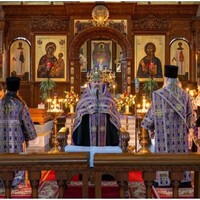
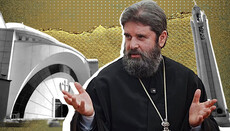
The UOJ in America interviews His Beatitude John, Archbishop of Tirana, Durres, and All Albania.
– Your Beatitude, Archbishop John, we are very grateful to be here with you in Albania. We've been traveling for the past couple of days, and it’s been extremely beautiful. Thank you for your time. To start, could you uh tell us a little bit about your background growing up? I understand you came from a Becktashi Muslim family. What was that like for you, and what factors led to your eventual finding and secret baptism into Orthodoxy?
– To understand better, it’s important to know the history of Albania. My ancestors were Christian. At the beginning of the 19th century, perhaps due to heavy taxes or something, they changed the names. If you became Muslim during the Ottoman Empire, you were excluded from certain taxes, so they joined the Sufi group, Bektashi, mostly in the south of Albania. But they weren’t converted in the sense that someone preached to them and they were convinced for another religion – it was mostly for economic reasons. Still, in their villages, there are churches, and some families took care of them.
By the time I was growing up, religion had been abolished. My first contact with religion was when I was 18 years old, when a friend of my brother brought a book, the Gospel, into our home. It wasn’t a matter of practicing another religion first; this was my first encounter. This is a common phenomenon in Albania: people grew up without religion and then went on a journey they were looking for. I and I believe that every human being is a seeking being. They are seeking something. The problem many times is that we don't understand what we are seeking.
So in one way I was lucky but it's not just luck. So God has another plan for everything, and I was given the chance to find the Gospel. In that time, it was very difficult to find the Gospel. If you are caught with the Gospel, at least it'll be 10 years in jail because it's called the propaganda against the Communist Party. So, my first real contact with religion was the Gospel.
– What was it about the Gospel that compelled you or made you feel as if this is something you should move toward?
– I came from a very large family, with eight children, and I was the youngest. And the large family sometimes is a lot of joy. You feel protected. Brothers, sisters... When I was a child there was plenty of joy. I liked to read different books, stories, legends and everything. After you've grown up a little bit, you start to think differently. You are more interested in some books in philosophy and history, and this but the joy was going off, it's not the same joy.
I was in the last year of the high school. I learned French in that time. And as I said this book, the Gospel, was in French. When I read the Gospel I felt something not strange but something shocking me a little bit. I felt the same joy that I had when I was a child, and in my mind I thanked God that he brought back me the joy. I believed for the first time that I read the Gospel. Sometimes I call the kind of psychological truth the way how somebody tells you something you believe that it's true without having facts. So, the same I felt when I read the Gospel. I was convinced that was
truth in this book, and so started my journey.
Baptism and the path to ordination
– What was it like for you in your early years being an Orthodox Christian? And then when did you think that ordination was possibly a path for you?
– At that time, the Church didn’t exist openly. There were only very small underground groups. I was in contact with a friend of my family who belonged to one such group, which had no more than ten people. I was the youngest of this group. We didn’t have a liturgy every Sunday. I was baptized in the village of Vora, because the priest lived over there. He was a hero: during persecution, he performed over 3,000 baptisms and marriages, all in secret. In fact, a priest in Shkodër, in northern Albania, was executed only for performing a baptism.
I was young and full of joy from reading the Gospel. I didn’t tell my parents, not because they were against but I didn't want them to be scared because the persecution was very hard; sometimes the whole family or even cousins could be condemned. My baptism was performed in a basement with my godfather, the priest, and his son guarding the house to ensure no one interrupted us. I experienced a joy during my baptism that I’ve never felt before or since. I was baptized on June 24th, the feast of St. John. This was the reason I have the name Ioann or John.
– After the fall of communism and the Church starting to be rebuilt, what were your next steps then? What did you feel your purpose was?
– It was like a dream to become a monk because then we didn't believe that the communism would fall. So in 1990, I had the chances to go outside of Albania. I first went to Italy, then the United States as a refugee, intending to become a monk or priest of the Albanian Orthodox Church in Boston. They paid my scholarship at the Holy Cross. I told them, however, that if the Church opened in Albania, I would return. They were sceptical, thinking nobody would come back from the United States.
In 1992, one of my professors and a friend of mine, Archbishop Dimitri, told me about Archbishop Anastasios, who had served as a missionary in Africa and could be a blessing for Albania. And I contacted the Archbishop. We had a very long discussion by phone, maybe two hours. And I told him that after I finished school, I would be back to Albania. He was very happy hearing this because, I thought, in the United States one priest more, one less will be the same. Here in Albania there was really a need because the Church was completely destroyed, with only 15 priests surviving out of more than 80.
I returned in 1993 and was ordained deacon, then priest. In 1998, I was elected Metropolitan of Korçë, a significant diocese in southeastern Albania.
Archbishop Anastasios
– Could you tell us a little bit about your relationship with the ever-memorable Archbishop Anastasios?
– From 1992 until his last days, we worked together. I thank God that I had the chance to know some wonderful people. First was my godfather. He was a well-known intellectual in Albania. He knew several languages, was a linguist and translator, and had a deep understanding of religion, not just as a believer, but as someone who truly lived it. He certainly had a profound impact in my life.
And Archbishop Anastasios. He was a living example of what a bishop should be, because it’s different to read about something than to see how a person acts in everyday life – his patience, his love for the people, the good spirit they spread. What he did was not only building infrastructures, which is important, but perhaps the best part of him was the way he spread a good spirit in the Church, teaching respect for every human being, regardless of this, because sometimes we judge the others. So, we have lost the feeling that we are not a courtroom. The Church is a hospital, and the doctor cannot fight with the patient while they are sick. Because they are sick, they come to hospital, and the Church is a hospital. We have to think how we can help them. And the Archbishop spread this good spirit, and I think maybe this is one of the best legacies of him. For sure we are thankful and for everything that he did, building churches and all schools but the most important are the people. The buildings are tools. The goal is the people and for me it was a very important and deep experience working with the Archbishop.
We were a few people at the beginning. So, the work was almost every day together. After I was in Korçë, we were still working together on many things, but I was a little bit more in distance. So, I have co-worked with him for more than 33 years.
Translations and theological education
– In your own personal work, you translated some of the writings of the Church Fathers into Albanian and wrote the first dogmatics textbook in Albanian. How did you choose which writings to translate to help the Albanian people understand the Orthodox theology?
– I thought what is most important for them. The first translation was “The Orthodox Faith” by Father Hopko. It was a good catechism because Father Hopko is talking to the people of today.
There are plenty of books for catechism but sometimes they have a different language addressed to different times or different people and, uh, in my experience from the confession mostly, I see that sometimes we have lost the communication with the young people. So, sometimes linguistic misunderstanding.
Let me give an example. If you say to young people now, “You are living in sin,” say nothing to them, or he will be upset and leave, or he thinks that you are coming from middle age. If you say to them that something is going not well inside of you, he accepts, and is open, and you discuss with him. You are saying the same thing, but the word “sin” is so much charged historically, and there are plenty of other words. So, we have to learn their language, and this was why I translated the book of Father Hopko because, in my understanding, it was a very good catechism for the modern man. So, he addressed real people, not hypothetical believers.
It's like in the hospital: you should have a real patient, not just only from the book you open and find the medicine. Maybe the people that are in front of you have other things.
I wanted them to know something else from the Fathers. In my understanding, I agree 100% with Father Florovsky who said the Church Fathers are more modern than our modern theologians because they speak the truth. And everything that is true is for every age. The Lord himself said, "My words are forever because they’re truth."
For the school, it is very important to have a textbook in dogmatics. At least we have to know our doctrine. In our life, we should have the doctrine, and we should have our personal experience with the Divine, because without this the doctrine would be a very dry philosophy. But the doctrine is very important because the human mind can go wild. Like St. Basil the Great said, “The dogmas are to protect us from our own mind.” So, we have to have both of these things, and the students, for sure, that will be future clergy should know the doctrine.
I try to write a book that is simple to be understood by all, to be cautious with the terminology because sometimes people cannot understand. You can say the right terminology, but they don't understand. So, this was why I prepared this book. I wanted to have a very large dogmatic book, but in 1998, I went to court as a metropolitan, and so I didn't have the time that I had when I was teaching in school.
But still, I have translated many other books and different articles. I explained all the Sacraments of the Church. This was mostly for the clergy, so not just only to explain, but to have a deep understanding of the Sacraments – baptism and all they have – and at the time it was a help for them. Now we have more books, we have translated other books, but still, our literature in Albanian should be richer. Now we have a lot of work to do.
Monasticism in Albania
– A lot of holy people, the Church Fathers that we read, were monastics. How do you see the role of monasticism in Albania today? And are you seeing a revival at all?
– As I said, the Church was destroyed completely. The first goal for us is to spread the values of the Gospel and the legend. So, to spread the Evangelium, the good news. And like it’s in the history from St. Paul to St. Anthony the Great, there were three centuries. So, our duty is to do so with the hope that something will come.
I see a movement that people are interested now in monasticism, but for sure we have to be very cautious because to become a monk is not like many times we misinterpret – it’s a romanticism, a mysticism. It’s not like this. Becoming a monk is a deep decision to live a different kind of life. I say to many people who think that they’re candidates or want to become a monk – it’s not a choice. It is when you have no choice, when you cannot live another life. Because if you have other choices, maybe during the journey you will give up. So, it’s very important why.
In the ancient rite of tonsuring a monk, the abbot or the bishop would ask the candidate why they came here. And this “why” is very important – why you want to become a priest, why to become a monk. This is also for missionaries, because we have seen, in the missionaries, sometimes people came not for the people here, but for themselves. They had this romantic idea… If you go for yourself, maybe you will be disappointed. If you go for their sake, you have chances to succeed. The same is for monks and the same is for priests. So, it’s not only for ourselves; it’s for them. The Church is sent, and the clergy should be like an apostle. You are sent for something. You’re sent to these people, not for yourself only.
We have now some (fruit), but it will take time. I think it will take time. We were more focused to spread the faith because we were a generation that didn’t have access to religion.
Youth and the question of joy
– You mentioned the why, how that is important at a time when many young Albanians are immigrating abroad or trying to figure out their why. How does the Church keep them connected to their roots, connected to their faith as they're kind of searching?
– For sure. It's not enough just to say to them, because there are different reasons for different people. Some people have a real reason. There are people, maybe, who don't know what they want, and there are many like this. I heard recently that from Italy, 200,000 young people have left. The people are looking for something, but I have the impression that many times they are not clear about what they are looking for. And they see it in Albania now: we have many young people in the church, and sometimes the majority of the people that are in the church are young. They're looking for something. It's our duty to explain to them what they are looking for, because they see now that they are not happy only with the bread.
So, you cannot live without bread, but not only by bread.
In recent years, something has changed: people are looking for something beyond the bread. Life is not full only because you have some wealth – you can be rich, let's say, but you can be empty inside. We are created according to the image of God, and we cannot find rest in other things.
It's a global issue, not only in Albania. In most of the eastern countries of Europe, all the villages are empty: in Bulgaria, Serbia, in Greece.
The young people now are in a crossroad and it is the duty of the Church to reach them, to talk. This is not just to give them some orders, and, as I said before, we cannot be judges of them. The Church is not a courtroom, it’s a hospital, and we have to approach them with a language that they know and they understand when we are talking to them. We try to say to the people so they can build a life here, and the sacrifices that they will do will be for their own benefit, because sometimes as a Christian, not everyone understands the mystery of the Cross.
Why do we sing in the Church, “Through the Cross came the joy into the world”? What is the meaning of this? Many young people ask why we say this. If we don’t understand the mystery of the Cross, it will be very difficult for us to accept sacrifice. Sacrifices many times come from our love, and we may not immediately benefit from them. The etymology of the word sacrifice tells the truth about its meaning. Sacrifice comes from two Latin words: “sacra”, holy, and the verb “facere”, to make. Literally it means making holy, sanctifying. This is the meaning.
Today, unfortunately, sometimes people are looking for Christianity without the Cross. It does not exist. If we understand the mystery of the Cross, we will accept some sacrifices, and this will bring joy to us. I was talking once with the late Metropolitan Kallistos about joy. And he said something very important – that joy is not something related to the character or temperament of people. It is a gift from God.
God is inside us when we live a life according to the values that come from His teaching, and this will bring joy to us. A life without God will be a joyless life.
In the Prophet Isaiah, there is a verse that is very important. It says that there is no peace for the godless. In the Septuagint—the first translation, made because the Jewish diaspora had lost the Hebrew language and it was necessary to translate the Scriptures into Greek—the translators rendered the Hebrew word shalom in three ways. Most often, it was translated as peace. The second meaning was “soteria”, salvation. And in this verse, it was translated as joy: there is no joy for the godless.
So, joy cannot exist where evil exists. Our life has no joy because sometimes God is not present in our everyday life. And we see in today’s world a joyless life; it does not matter whether you are rich or poor, we miss joy. In the Gospel, we know that the reward Christ gave to the faithful servant was: “Well done. Enter into the joy of your Lord.” So joy is a synonym of life.
For young people, this is a very important theme, not only for Albania but for everyone. The Church should be more aware that we must help them and offer what they are really seeking. Every human being is created in the image of God, and all are seeking the same thing, but they are confused because there are many false prophets. Someone will say that you can find joy if you have a good life and become rich, and the categories have changed.
I remember when I was young in Albania, we had two categories: honest or dishonest. Now, new values are coming from the West. Not everything from the West is good.
Winner and loser. A winner is someone who becomes famous or makes a lot of money, and a loser is someone who does not succeed according to those categories. Before, there were only two categories: honest or dishonest. So, we have to teach our young people the real values.
– How does the Church maintain the tradition that has been passed down and at the same time speak to young people according to where we are right now in human history?
– I believe, at least in my experience, that if we teach them the truth, the truth is always modern. There is a quote from Florovsky that the Fathers of the Church are more modern than the modern theologians, because the Lord is always modern, always new. So, it is not something old that belongs only to the past.
The problem many times is the language we use when speaking to them. We can use modern language, but the eternal truth we teach will always be modern. The idea that we must be “modernized,” I believe, is wrong. Modernize what? The Gospel will be the same. We cannot change the Gospel.
Why should it have been easier to live, let’s say, ten thousand years ago and not now? In every time we face the same difficulties. But if we live devoutly in the Lord, our life will be changed. For sure, we will have troubles in our life, but we will have joy because we know that God conquered the world. As the Lord Himself said: “You will have troubles in your life, but have courage – I have conquered the world.”
So, the truth of the Gospel is always modern. It is for every generation. But sometimes we must understand the language we use, because we may use language that does not really transmit what we want to say to them. For example, you may know, let’s say, ancient Greek, but you must be able to communicate this truth in modern Greek. They will not understand it if you speak to them in ancient Greek. Maybe they will understand it if you speak to them in modern Greek, but the truth is the same.
This is what we have to do with young people: to speak in a language they understand. We cannot change the values. For the modern person, it is not a different religion; it is the same truth, the same Gospel, the same Christ. Yesterday, today, and tomorrow, it is the same Christ.
Identity of the Orthodox Church of Albania
– How has the Orthodox Church of Albania maintained its own identity? Obviously, the Church was rebuilt with some help from people outside Albania, and there are these great centers like Constantinople and Moscow.
– Well, the real identity is first the Christian identity, and here it is the Orthodox Church in Albania.
We are not a federation of churches. Sometimes we lose sight of this. In our Creed, we say, “I believe in One, Holy…,” but sometimes we do not feel this. We see the Church through the measure of nationalism. But there does not exist a Greek Church, a Russian Church, a Romanian Church, or an Albanian Church. There is one Orthodox Church – in Albania, in Russia, in Greece, in Romania, wherever.
The Church does not deny ethnicity, because denying ethnicity would mean denying God. But we cannot judge everything through the eyes of nationalism. Every human being is called to love the country in which he lives, the country where he was born and grew up. Of course, you will love it. But this does not mean that you must hate others. You can love them all.
And here, in Albania, we believe that we are part of the One, Holy, Catholic, and Apostolic Church, but we also have our own identity – our own language and our own history. But this is not something that can separate us from others.
In pan-Orthodox meetings and in many other gatherings, there are different opinions. But this is not a reason to stop communication with others. That would be a mistake. We should always remain in dialogue with other people. In history, people have never all thought in the same way. Even at the Ecumenical Councils, decisions were made by majority, and not everyone always agreed. Many times, there were disagreements. So, discussions will always exist, and sometimes we may not agree, but still we must remain together.
I think this has been the way, at least in the Church of Albania, that we have responded to the modern problems of the Church. Perhaps you have read the letters that Archbishop Anastasios wrote to the other Churches. These were letters written with love, explaining what he believed to be true, while remaining open to dialogue with everyone.
We must stay together and maintain communion. In the diptychs, there will always be a protos, and it is the Ecumenical Patriarch. But Archbishop Anastasios once said at the meetings of the primates of the Churches that, of course, there is a protos, the first. But this does not mean that the second is less important, or that the third is lower, and so on. They are the same, but someone is first. Without this, the Church would lose order, and we would lose unity. And we must keep unity at all costs. It is very important, because it is part of our witness to the world. Unity always requires humility, truth, and love.
But this does not mean that we will change our identity. The core of the identity is Christian. If you are a Christian, that is what matters. You may speak different languages, but that does not mean that you are different.
This is how we think about our relations with others. We respect all other Churches. We want to live in peace with everyone, but this does not mean that we must agree on everything. Even if you have lunch together, you will not agree with everyone about everything, and even less so on more important issues.
Unity of the Church. The Tomos of the OCU
– We’re at a time right now in the worldwide Orthodox Church where it seems people are pressured to either be on Constantinople’s side on certain issues or Moscow’s side on certain issues. But, as you said, we are One, Holy, Catholic, and Apostolic Church.
– The same Church. And this is not about taking sides. One side is always the truth in Christ, but there are different opinions, and we have to resolve these through love and dialogue. If you create sides, you create conflict.
– The Albanian Church has stood firm on the decision regarding the Tomos given to the Orthodox Church of Ukraine. But you still maintain good relationships…
– …. with all to find a solution that is for all. Taking sides is always wrong if it implies that one is good and the other is bad. If we talk about these categories, they always divide. We are all brothers, and we have to find a way to solve the problem together. Expressing different opinions does not mean that you do not love the other. To solve a problem, there may be different approaches.
So, Archbishop Anastasios was a very wise man and a true Christian. For him, the goal was to keep the unity of the Church and to speak the truth in love, as St. Paul says: to say the truth, but in love. In one family, it is not correct to say “presides”; sometimes we can deform the family. There are different opinions.
Dialogue with other religions
– The religious landscape in Albania is very diverse. There are other Christian denominations and non-Christians. How does the Albanian Church manage to maintain a balance and remain friendly with all of these groups?
– We have good relations with them. We have an interreligious council. If we have a problem, at least four or five times a year, we meet the leaders of the religious communities. We don’t have a theological dialogue; we have a dialogue for life. They visit us during our feasts, they come for Easter or Christmas, and we visit them for their feasts. We have many things in common, for example, ethical issues regarding family and other matters. We have common declarations and try to promote good relations with each other.
Because, as I said at the beginning, during communism, there were many intermarriages. So, they are cousins with each other now. If you want to divide, you cannot divide more. But everyone is free to choose what they think is theirs. We don’t have a problem, and there is no reaction when someone in a family joins another community. We have many families like this: the wife may be Orthodox, the father is Muslim, and the children may be in no Church. It’s a unique situation, and we have to find unique ways. The best approach is to keep good relations to have a dialogue.
Without the dialogue, there will always be divisions, fighting, fake news, and other things. So, if you have personal contact, you create another relation; you see a human being in front of you, the name does not matter. We should never forget this. Every human being is created in the image of God, and the saints were able to see this image in every human being, regardless of who they are.
As Christians, we have a theological support for this dialogue. We have to respect these others. We don’t compromise our faith. For this reason, I said we don’t have a theological dialogue; we have a dialogue of life. And thanks to God, there has been social peace. We didn’t have conflicts between different communities. They don’t complain, or one member will come to church from them. He can decide. We have to respect the freedom of every human being.
The World Council of Churches and ecumenical experience
– How has your own background – a Becktashi family – and your missionary work, when the Church was being rebuilt here in Albania, impacted your work with groups like the World Council of Churches and similar organizations?
– Most of my family now in the Church are Christians, as I mentioned, because of our history. But we grew up together, went to the same schools, from different backgrounds. At that time, there were no backgrounds because religion was not practiced, and this has helped to create a relationship with them.
We are open not only in dialogue with other Christians but also with other faiths. So, this helped us be part of the World Council of Churches and the European Council of Churches. We did not feel that we were doing something strange. The dialogue with others is very important.
If someone has genuine faith, they are not afraid of losing it, and we must give a witness of Orthodoxy to other Christians. If we believe, let’s say, that we have a treasure, this treasure is not only for us. The Church is not only for itself; it is for the whole world.
I believe that all our hierarchs and priests who were part of all these dialogues did not compromise their faith. They gave a witness of Orthodox faith to other Christians.
Conversions to Orthodoxy in America
– We are at a time now in America, in the U.S., where many people are discovering this treasure. We’ve had widespread conversion in many regions of the United States. People are coming from all backgrounds, no religious background, different denominations. They turn to the Orthodox Church, and they think, you know, “I want to give this a try. I want to see if this is the truth.” What will be your advice to those in America who are coming into the Church and finding the Church, and those of us who are trying to welcome them into the Church and help them to understand Orthodoxy?
– The Church should always be open. It’s not our church, the Church of Christ. We are stewards. We can be good or bad stewards. So, we have a responsibility. The Church belongs to Christ, and Christ is calling all humanity. It's not a special group. Sometimes we have the impression that it is our church. It's not ours; it's the Church of Christ, and we should not only welcome people but go and find them. “Go and teach all the nations,” that is the last commandment. Unfortunately, as Archbishop Anastasios called, the forgotten commandments. The Church is always in mission. I will quote another saying of Archbishop Anastasios: a church without missions is a church without mission.
What is our mission? We have to go and teach them, to expose this treasure.
If we believe that we have the light and we don’t share it with others, our light will be extinguished, and we will lose it. A real-life light grows only by spreading and sharing with others.
The light will be increased and to us, because it does not belong to us only. It is a gift from God, so we have to share it with the whole world. The mission is not just an option. The church cannot exist without a mission. The mission does not mean just going to other countries. The mission is in your family, with your friends, with everyone. We have to share, as what the Lord said to the man He healed from demons: he wanted to stay, and the Lord told him, “Go and tell them what God has done for you.” So, if someone has discovered this, they have to share it with others, not keep it only for themselves.
A church that is closed in on itself has no future. We must be open and keep this always in mind: we are not the owners of the Church. God is the owner. We are stewards. It is not ours. Sometimes we feel this is ours, and we can accept this, but they don’t. The Church should always be open. For sure, the stewards have a duty to take care. We have to teach the right faith to them. But always keeping in mind that the Church is the Church of Christ.
Advice to new converts
– What's your advice to those who are coming into the Church and finding Orthodoxy to make sure that they don't lose their zeal or maintain the discipline of the faith?
– Yes. Because, like everything at the beginning, it's a kind of enthusiasm, as the Lord said in the parable of the sower. It depends on the soil. Maybe after a while, the enthusiasm will go. It's not the same, but we have to keep this always: this is a marathon, it's not a 100-meter sprint. So, it's a long journey to be. And if they really find what they are looking for and if they have the experience of this, they will stay forever in the Church because in no other place you can find this kind of joy, this feeling. They will feel fulfilled in this. The other things will not fulfil you or do it for a while, and thereafter you lose.
To keep the people in the Church, there are many factors. First, we should give a good example because sometimes we can be an obstacle like the Lord criticized the Pharisees: “You do not enter, and you do not allow the others to enter.”
And there is a beautiful story, a true story about King Louis IX of France. He was on a crusade in the Middle East, and he converted the Tartars into Christianity. He was so enthusiastic that he wanted to go to Rome to kiss the foot of the Pope, showing his devotion. His companions tried to stop him from going, fearing that if he saw corruption in Rome, it could shake his faith.
So, we have to be cautious for the same thing. They can come to our church with enthusiasm, and maybe we can be an obstacle. We can scandalize them. All of us need to have a good witness. Like St. Paul criticized them, “Are you the cause that for many people the name of God is a blasphemy?” Because they will judge the faith after our behavior.
And we have to teach our people, to train them and to understand that all of them are missionaries. All of them are sent for this, and they accept them with love. They're doing a mission. It's not only the priest; everybody has to do something. St. John Crysostom, in one of his sermons, said to the people: “If you see a poor man in the street, don't say why the priest doesn't help him. You are called for the same thing.”
All the people who come to our churches should be welcomed by all. If they see a living faith, for sure, they will stay in the Church. If not, it's a big sin. So, we have to be cautious for this. We have a responsibility for our neighbor. We cannot say that I am not the steward of my brother, as Cain said, we are stewards of them, keepers of them. We try as much as we can to do the same thing here – to welcome them because many people come. To welcome them and to share the same faith that we think that it's good for us and for them. But it's not only for us, because sometimes in the Orthodox church, we have this like “it's ours”. It's not ours. It’s not only ours, it’s for the others.
It is the same like the wrong doctrines that we spread now. Many people say, “It's my life. I do what I want.” First, it's a lie. It's not yours. It's a gift from God. And the second, it's not only yours because the life of parents affects the life of children. And the life of children affects the life of parents.
Christians understand the human being as a communitarian being. Our existence is not only for ourselves. It's for us, but not only. It's for the others around us. We are affected by each other. And this is the Church. It's a community. It's not individuals. And we have to teach people and to live what we preach because sometimes this is the tragedy. We can preach very well, but our life is not according to our words. And we see from the Gospel for what things God criticized Pharisees, “Do what they tell you, but don’t do what they do, for they do not practice what they preach.”
The treasure is very good, but it's a big responsibility. So, you cannot have privileges without responsibility and no freedom without responsibility. A well-known psychiatrist Victor Frankl said something beautiful: in the United States, a statue is missing. They have built the Statue of Freedom on the East Coast. They should build the Statue of Responsibility on the West Coast. They are together.