2016 Nobel Peace Prize awarded to Colombian President Juan Manuel Santos who stopped 50-year-long civil war
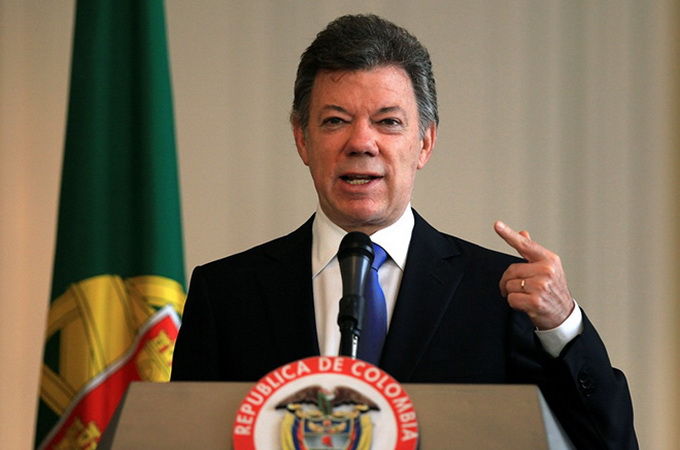
President Santos initiated the negotiations that culminated in the peace accord between the Colombian government and the FARC guerrillas, supporting Marx and Lenin’s ideas, and he has consistently sought to move the peace process forward. The civil war in Colombia is one of the longest civil wars in modern times and the sole remaining armed conflict in the Americas. It has cost the lives of at least 220 000 Colombians and displaced close to six million people.
It is the Norwegian Nobel Committee's firm belief that President Santos, despite the "No" majority vote in the referendum concerning the peace accord , has brought the bloody conflict significantly closer to a peaceful solution, and that much of the groundwork has been laid for both the verifiable disarmament of the FARC guerrillas and a historic process of national fraternity and reconciliation. His endeavors to promote peace thus fulfil the criteria and spirit of Alfred Nobel's will.
Read also
Mobilized priest of Volodymyr-Volynsky Eparchy of UOC killed
A funeral service for Fr Andrii Korynchuk, a priest killed in the war, to be held at UOC Resurrection Cathedral in Kovel.
TRC officers draft UOC priest in Chernihiv
TRC officers have detain Archpriest Pavlo Tovstohon of the Christ's Nativity Church.
Patriarch Bartholomew and Shevchuk discuss obstacles to ecumenical unity
The head of the UGCC said that replacing Christian patriotism with the idea of loyalty to a "warring god" is an obstacle to ecumenical dialogue.
Ukraine’s Foreign Ministry plans advocacy visits abroad for UCCRO
Members of the All-Ukrainian Council of Churches and Religious Organizations have planned advocacy visits abroad following a meeting with Ukraine’s deputy foreign minister.
UOC priest detained by recruitment officers in Kyiv sent to training ground
UOC priest Maksym Kostiuchenko, who was detained on his way to a church service in Kyiv, has been sent to a military training ground in Chernihiv Region.
25 tons of humanitarian aid from Volyn reach Sviatohirsk Lavra
Around 25 tons of food donated by believers of the UOC Volyn Eparchy arrived at Sviatohirsk Lavra on October 22.