Uniates talk about the possibility of returning Pochaev Lavra to UGCC
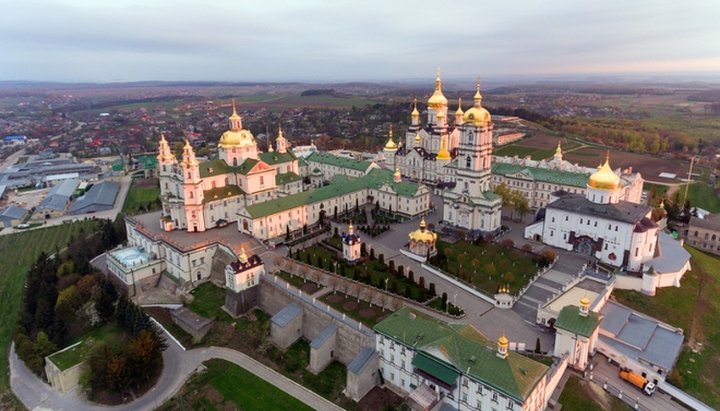
Pochaev Lavra
Greek Catholics joined the discussion of the fate of church property after the Single Local Church in Ukraine is created. The monk of the Greek-Catholic Bucha Monastery Theodor Dutchak wondered on his Facebook page if the Pochaev Lavra could be returned to the UGCC, which owned it for more than a century.
“From 1713 to 1832, the Pochaev Monastery belonged to the UGCC, namely, the Basilian Order,” the monk said, “It was the Basilian monks who built the monastery complex, in particular, the Holy Assumption Cathedral, created a printing house. It seems that in Europe, according to the laws, temples are always transferred to their owners?”
Earlier, a UOC KP “priest” called to quickly take away Lavras from the UOC. As the UOJ reported, the abbot of the Pochaev Monastery Met. Vladimir reported threats against the shrine, asked for prayer support, and urged, if necessary, to protect the monastery.
Read also
Khust Eparchy honors memory of St. Job of Uholka
A Liturgy is served in Mala Uholka, a birthplace of St. Job of Uholka, on the saint's feast day.
UOC parish in Cologne donates ultrasound machine to Kharkiv region hospital
In Cologne, UOC believers raised funds for an ultrasound machine for the Kehychivka district hospital in the Kharkiv region.
Shevchuk tells Pope Leo of Ukraine's preparations for "another harsh winter"
The head of the UGCC expressed "special gratitude" to the Pope for his phone calls with Putin and Zelensky.
Berlin hierarch comments on Phanar document published by UOJ-USA
Metropolitan Mark called the information about the 2018 "Unification Council" alarming if confirmed, and expressed hope that Patriarch Bartholomew will reconsider his position.
UOC marks Synaxis of All Saints of Volyn Land at Lutsk cathedral
Metropolitan Serhiy of Ternopil and Kremenets led the Liturgy on the feast day of the Lutsk cathedral of All Saints of the Volyn Land.
SBU detains OCU cleric who organized draft evader's escape for money
In Transcarpathia, law enforcement officers detained a clergyman of the OCU who arranged for a draft evader to be smuggled into Slovakia for $15,000.