Media: There is no official registry of communities’ transfer to OCU
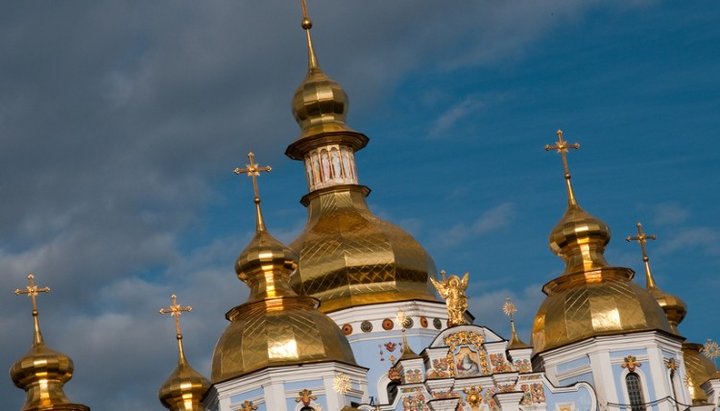
St. Michael's Golden-Domed Cathedral in Kiev. The Cathedral of the OCU
Representatives of the Ukrainian government, the OCU and the UOC call a completely different number of communities that have changed jurisdiction in the past few months. President Petro Poroshenko announced the transfer of 300 communities to the OCU, and the Ukrainian Orthodox Church – about 60, reports BBC News Ukraine.
The journalists talked with several officials and representatives of the OCU, who were responsible for the religious direction, to find out if there was an official list of parishes that had changed jurisdiction.
“But there isn’t any. One of the interlocutors acknowledged that even senior officials, voicing certain numbers, cannot refer to official figures,” the media said.
Journalists received the same answer from the representative of the OCU – the latter do not have their own official registry.
“There are no official data on the list of parishes that have transferred to the OCU,” said Andrei Yurash, the head of the state committee on religious affairs. But he argues that "all are tracking general trends and an approximate number".
At the same time, all of them in one way or another refer to the interactive transfer map, which has been updated for several months by the religious information portal RISU.
One of the developers of the RISU map, Dmitry Gorevoy, in a conversation with journalists, explained that the map is formed on the basis of monitoring information – mainly local media and social networking pages of local bishops of the OCU.
At the same time, the director of RISU, Taras Antoshevsky, admitted that "there were several cases when we published information about the transition, but this did not happen in reality".
Earlier, the head of the Legal department of the UOC Protopriest Alexander Bakhov stated that the UOC communities, although nominally transferred to the OCU, are registered in the registry of the Ministry of Justice as parishes of the Kiev Patriarchate.
We recall that the Chairman of the Synodal Information and Education Department of the UOC, Archbishop Clement (Vecheria), during a press conference "UOC in 2019: Facts, Forecasts, Answers" held on February 21, 2019 , said that despite unprecedented state pressure on UOC communities, only 36 of over 12 thousand communities have changed their confessional affiliation. Another 24 were re-registered by force, and these cases will be appealed in court.
“There are still about 250 cases in which forceful confrontation occurs, which has not yet led to any results, so we cannot say that these communities have changed their affiliation,” said Archbishop Clement.
As the UOJ reported, in connection with numerous cases of violation of human rights and the threat of escalation of religious conflicts, the UOC has called upon international institutions to influence the situation in Ukraine.
Read also
UOC hierarch takes part in consecration of Serbian monastery in Germany
Bishop Veniamin of Boyarka took part in the consecration of the restored monastery of the Serbian Orthodox Church in Hildesheim.
International conference on theology and Church history held in Kharkiv
On October 9, the V International Conference on Theology and Church History, attended by guests from Europe, was held at the Kharkiv Theological Seminary of the UOC.
UOC Boryspil Eparchy priest's brother killed in war
In the village of Perevolochna, Chernihiv region, a funeral service was held for the soldier Roman Povkh, the brother of the rector of a UOC church in the village of Sadove.
TRC detains rector of UOC church in Mali Puzyrky village
A priest of the Khmelnytskyi Eparchy with a heart condition was forced to undergo a medical commission and taken away to an unknown destination.
OCA renews fundraising for Ukrainian refugees in Poland
The Primate of the OCA has called on the faithful to show Christian mercy in practice and support Ukrainian displaced persons in Poland.
Kyiv residents split over renaming alley after Filaret
Forty-six percent of respondents opposed renaming an alley in central Kyiv after Filaret Denysenko.