Difficult testament of St. Sergius of Radonezh
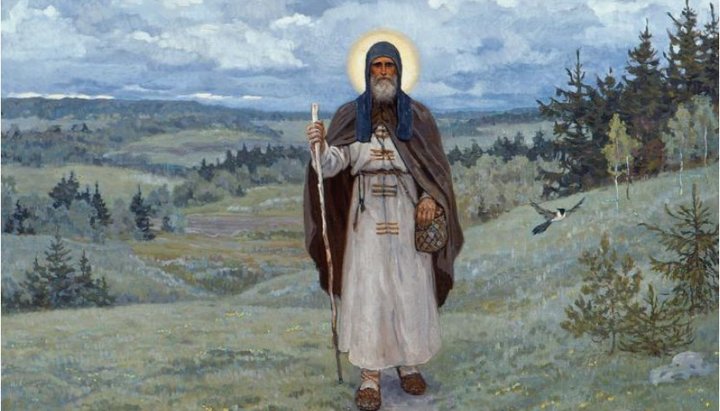
St. Sergius, Abbot of Radonezh. Photo: pravme.ru
Today we prayerfully commemorate the uncovering of the relics of St. Sergius of Radonezh. Thirty years after the saint’s repose, his disciple – Abbot Nikon – became a witness to the glorification of his spirit-bearing teacher.
This miracle was preceded by a large-scale invasion of Tatar hordes. During the enemy’s advance, the churches of the Trinity Monastery were burned to the ground. Before the attack, the abbot and the brethren managed to evacuate all icons and holy objects connected with the monastery’s founder. Soon the desolated monastery began to be rebuilt, revealing to the world its renewed appearance. The time was approaching when the memory of its founder, St. Sergius, would also be revived.
That moment came when the first works began on constructing a new building of the Trinity Church. The saint appeared to a pious layman, revealing that the coffin containing his body had become too cramped for him. When Abbot Nikon learned of this supernatural vision of his teacher, he ordered that the relics of the saint be taken out of the grave. When the coffin was opened, everyone was astonished to see that the saint’s body and clothing had remained perfectly preserved, untouched by decay.
In 1426, the relics of the glorified abbot were transferred to the newly consecrated Trinity Cathedral, where they remain to this day.
A mentor and a companion of angels
In the magnification sung during the services in honor of every monastic saint, the honored one is called “a mentor of monks and a companion of angels.” Such qualities can belong only to one who has renounced all earthly goods and devoted his life to spiritual perfection.
But it was not only these qualities that made St. Sergius one of the pillars of Russian monasticism. As abbot of the Holy Trinity Monastery, he was not only a wise spiritual guide but also a loving father to his disciples and brethren. Filial affection for him was felt not only by those close to him but even by high-ranking officials. It is known that St. Sergius had a close relationship with St. Alexis, Metropolitan of Kyiv. When the metropolitan was searching for his successor, he chose the abbot of the Trinity Monastery. Yet Sergius, out of monastic humility, declined the prospect of an ecclesiastical career, remaining in the monastery he had founded until the end of his days.
St. Sergius never left the monastic estate he had established, for a true spiritual father must always remain close to his children, sharing with them both sorrow and joy. Even after the Trinity–Sergius Lavra was closed by Soviet authorities for twenty-six long years, and the relics of the saint were removed to prevent desecration, he did not abandon his monastery or his flock.
The intercessor and guardian
There is a preserved account of an event that took place one night during that difficult time. Soldiers patrolling the deserted Lavra suddenly witnessed a miraculous vision. Out of nowhere, an old monk appeared in the monastery square. The patrol stopped him and, looking closely at his face, asked who he was. The monk replied sternly: “I am the abbot of this monastery.” To their astonishment, he turned and walked swiftly toward the Trinity Cathedral, where he vanished as suddenly as he had appeared.
Later, upon recalling the old monk’s face, the soldiers learned that they had seen none other than St. Sergius of Radonezh himself – the figure they saw matched exactly his likeness on icons.
This miraculous event is nothing other than a sign that even in those dark years the saint protected his monastery from final destruction. It also gives us hope that St. Sergius will not abandon his monastery or his land until the end of time.
The testament
The culmination of his entire life and labor was the testament St. Sergius gave to his disciples shortly before his death:
“Take heed to yourselves, brethren,” said the saint. “Above all, have the fear of God, purity of soul, and sincere love.”
This brief and seemingly simple admonition proves to be quite difficult to fulfill in practice. To “take heed to oneself” means to withdraw from daily vanity and turn to self-knowledge. To have the fear of God is to live in responsibility before the Creator for all one’s thoughts, words, and deeds. Purity of soul and unfeigned love have likewise become great rarities among modern people. In an age when chastity is mocked and love is often confused with carnal passion, the fulfillment of these commandments becomes a true feat for a Christian.
St. Sergius of Radonezh remains for us a healer of soul and body, a good shepherd, and a wise teacher. Though he left behind not a single written sermon, he became renowned as a radiant preacher of Christ’s Truth. Each time we reread his life, let us strive to emulate his faithfulness to God and to our own calling in life.
Read also
Faith is not a checker piece in a spectator sport
Arguments about faith on social media increasingly resemble no-holds-barred fights. We turn to a saint who, sixteen centuries ago, knew how to speak to those interested only in turning theology into a combat arena.
The metropolitan who fought with a pen
St. Cyprian of Kyiv was robbed, expelled, and barred from his see. He answered with letters, books, and canons – and before his death, forgave everyone.
Loneliness under one roof
Spouses can share a home for years, raise children, and faithfully attend church – yet remain strangers to each other.
The cross – the deepest healing of the human soul
Emotional exhaustion and anxiety have become a way of life. Ancient Christian tradition offers an unexpected way out – embracing one's own cross.
The Prophet Elisha and the mystery of the Bethel massacre
The story of the prophet Elisha and the two bears seems to be the harshest in the Bible. But in reality, it carries a profound theological meaning.
Why does God remain silent in times of trial?
After months of praying for a loved one’s healing and salvation, we hear nothing from the Creator but agonizing silence. How can we endure the long wait for an answer?