UOC hierarch urges Ministry of Health to explain quarantine exit stages
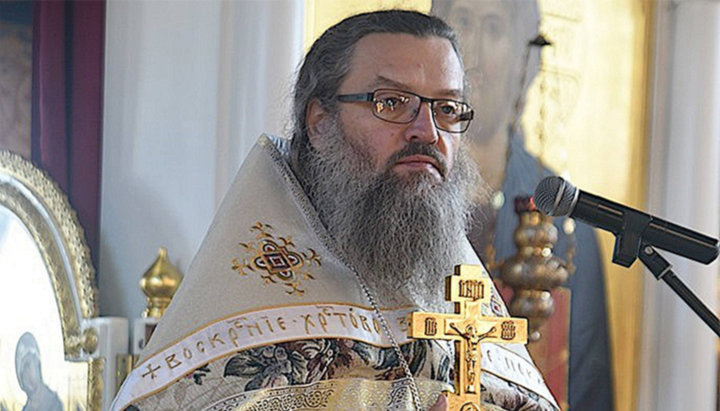
Metropolitan Luke (Kovalenko) of Zaporizhia and Melitopol. Photo: hramzp.ua
On May 13, 2929, Metropolitan Luke (Kovalenko) of Zaporizhia and Melitopol called on the Minister of Health of Ukraine Maxim Stepanov, who was once the hierarch’s course mate, to justify the quarantine exit steps proposed by the Cabinet of Ministers of Ukraine.
“I would like to turn to my former fellow student – the Minister of Health Maxim Stepanov, the person with whom we used to study and listen to lectures of the same professors so that he, as the leader of the medical community and the representative of the government, would justify the stages of quarantine exit initiated by the Cabinet of Ministers,” he wrote on his Telegram channel.
Metropolitan Luke also proposed organizing a round table with the participation of doctors, virologists and epidemiologists, clergy and MPs, state agents and law enforcement agencies. Such a round table necessary to discuss the expediency and rationale of the requirements at each stage of quarantine exit, the hierarch upholds.
“We need to understand whether all these measures are really aimed at human health care or whether it is a matter of streamlining the crowd, whereby all mental abilities should be atrophied. Reading the decisions on coronavirus, one gets the impression they are designed for the people who can't think,” he said.
According to Metropolitan Luke, it is important that citizens of Ukraine understand the rationale and expediency of quarantine measures at each stage.
“When it comes to an epidemic in which all people are equal, there must accordingly be an equal attitude to all people and organizations operating in the legal field of the state in terms of overcoming this crisis,” he added.
The UOC hierarch emphasized that he, as a person with a higher medical education and academic degree in this field, has "a lot of perplexities and questions".
“For example, why can’t more than two people (or one if the room is small) go to temples, if more than two people can be in a hairdresser’s or in a beauty salon?” ...> From the point of view of medical science, such discrimination is absurd and completely incomprehensible,” he noted. “If there is a risk of infection in a temple, why then isn’t there such a risk in a restaurant? Or does the virus choose specifically only places of worship?”
Earlier the Council of Churches had submitted proposals to the government to ease quarantine.
Read also
Upper Lavra court hearing postponed
The next court hearing in the Upper Lavra case has been scheduled for November 3.
UOC priest blesses ambulances at Kamianske medical center
A UOC priest in Kamianske blessed ambulances for a medical facility and wished its doctors God's help in their work.
Dumenko to German ambassador: Law targeting UOC also applies to other groups
Epifaniy Dumenko sought to defend Ukraine’s law restricting religious organizations during a meeting with the German ambassador.
Activists bused to court hearings in UOC cases, media say
A minibus has been spotted transporting protesters to and from courthouses where UOC cases are being heard.
Firefighters save historic UOC church from fire in Zakarpattia
A fire broke out at a UOC church in the Tiachiv district, damaging the altar and church furnishings.
Volyn Eparchy faithful collect six tons of aid for Sviatohirsk Lavra
Believers in Volyn collected food and warm clothing for people displaced by the war who have found shelter at Sviatohirsk Lavra.