A study on UOC and OCU in modern Ukraine published in Switzerland
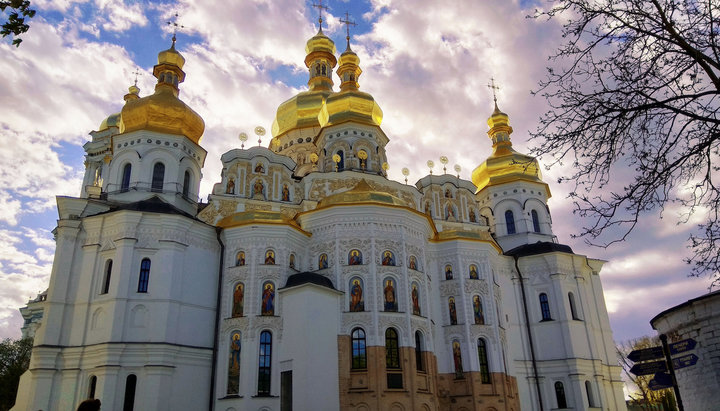
The Assumption Cathedral of the Kyiv Caves Lavra. Photo: 112.ua
The Swiss Center for Security Studies (CSS) has published an independent study, which described the results of “granting” the Tomos to the OCU and compared the position of this structure with the Ukrainian Orthodox Church, reports the “Religion Today” Telegram channel.
A study entitled “Strategy and Tactics of the Russian Orthodox Church towards Ukraine in the First Year of Volodomyr Zelensky’s Presidency” was carried out with the support of the German Research Society.
It says that the open pressure of Poroshenko’s supporters and his administration on the UOC had no effect.
“From December 2018 to April 2019, according to the head of the OCU, about 600 UOC communities (i.e. 5% of the registered ones) passed to it, and then the transitions practically stopped.6 According to the UOC itself, it lost about 200 communities (84 voluntarily transferred to the OCU and 122 were occupied), and the same number of churches were transferred to the OCU by local authorities, but remain under its control…. some 250 communities have split up and it is impossible to serve in their churches (but the priests have remained in the UOC); another 100 communities serve in the same churches as before, but are formally transferred to the OCU,” the document says.
The authors of the study note that all the transitions and “crossings” occurred in the regions of Western Ukraine or in the region that are adjacent to them.
At the same time, in other regions, including Kyiv, the transitions and the so-called “transitions” were of a single nature, and “in the Vinnitsky region, where the ruling metropolitan of UOC passed to the OCU, only 26 parishes out of a thousand are considered to have made the transition”.
The researchers emphasize that “the former ‘divisive’ communities were de facto legalized under the auspices of the Ecumenical Patriarchate”, which was officially supported by only three of the 14 Local Orthodox Churches.
At the same time, the study says that the UOC, despite strong pressure from the Ukrainian authorities, demonstrated unity and perseverance in defending its position. In practice, many more people go to UOC churches than to OCU churches.
In addition, the researchers stress that the UOC in the vast majority of regions continues to build churches more actively than its competitor. This fact was confirmed by the author’s field research in southern and right-bank Ukraine in 2015–2020.
It is noted that the defamation campaign conducted against the UOC by the Ukrainian media has decreased, and the authorities stopped fueling the campaign to transfer the UOC parishes to the OCU, as the President actually avoided resolving religious issues.
The document says that in the situation with Ukraine the Russian Orthodox Church also drew lessons for itself, substantially revising its strategy for inter-Orthodox relations, in particular, "by taking away from the Ecumenical Patriarchate the Archdiocese of Russian churches in Western Europe". This move, according to the experts, was a “punch on the nose” for the Ecumenical Patriarchate, which at the last moment changed its decision and invited the Archdioceses to seek forms of mutual cooperation”.
“The ROC may fight for the position of “major Orthodox” in some countries of the “non-Orthodox” world,” the authors of the study resumed.
As reported earlier, the head of the OCU, Epiphany Dumenko, complains to the Ministry of Internal Affairs about the weak police aid in seizing the churches of the UOC and believes that the authorities under Poroshenko treated his religious structure more responsibly.
Read also
Mobilized priest of Volodymyr-Volynsky Eparchy of UOC killed
A funeral service for Fr Andrii Korynchuk, a priest killed in the war, to be held at UOC Resurrection Cathedral in Kovel.
TRC officers draft UOC priest in Chernihiv
TRC officers have detain Archpriest Pavlo Tovstohon of the Christ's Nativity Church.
Patriarch Bartholomew and Shevchuk discuss obstacles to ecumenical unity
The head of the UGCC said that replacing Christian patriotism with the idea of loyalty to a "warring god" is an obstacle to ecumenical dialogue.
Ukraine’s Foreign Ministry plans advocacy visits abroad for UCCRO
Members of the All-Ukrainian Council of Churches and Religious Organizations have planned advocacy visits abroad following a meeting with Ukraine’s deputy foreign minister.
UOC priest detained by recruitment officers in Kyiv sent to training ground
UOC priest Maksym Kostiuchenko, who was detained on his way to a church service in Kyiv, has been sent to a military training ground in Chernihiv Region.
25 tons of humanitarian aid from Volyn reach Sviatohirsk Lavra
Around 25 tons of food donated by believers of the UOC Volyn Eparchy arrived at Sviatohirsk Lavra on October 22.