Iraq plans to lower marriage age for girls to nine
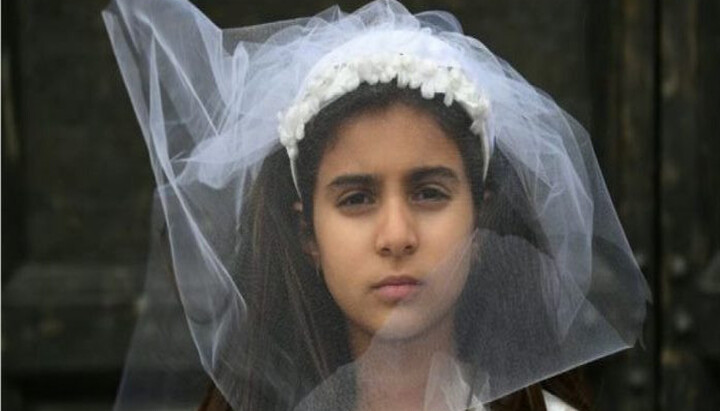
A young actress portrays a child bride during an Amnesty International protest against child marriage. Photo: rferl.org
Iraq is considering amendments that could drastically lower the legal marriage age for girls from 18 to nine. According to The Economic Times, the initiative is being advanced by Shiite parties that hold a majority in the Iraqi parliament.
Supporters of the amendments argue primarily that the changes are necessary to comply with Sharia law, which they regard as binding on all Muslims.
The bill, introduced by Iraq’s Ministry of Justice, seeks to amend the Personal Status Law, which currently sets the minimum marriage age at 18. If enacted, the bill would allow girls as young as nine and boys as young as 15 to marry. This change has raised concerns about increased child marriage and exploitation. Critics argue that it would reverse progress in women's rights and gender equality.
Advocates of the changes say the measure would bring Iraqi law into closer conformity with Islamic traditions and norms. Critics, however, describe the proposal as a violation of human rights and a major step backward in the protection of women and children.
Human rights organizations, women’s groups and civil society activists have strongly opposed the bill. They warn that it would harm the education, health and well-being of young girls, lead to more early pregnancies and increase domestic violence. According to UNICEF, 28 percent of girls in Iraq are already married before the age of 18.
“Passing this law would show that the country is moving backward, not forward,” said Sarah Sanbar, a researcher with Human Rights Watch.
Opposition to the proposed changes has come not only from international organizations but also from Iraqi politicians and human rights advocates, who argue that lowering the marriage age to such a level could lead to an increase in forced and child marriages.
The proposed amendment would reverse reforms introduced in 1959, when authority over family law was transferred from religious leaders to the state judicial system. The new bill would restore the application of religious rules, primarily those of Shiite and Sunni Islam, while leaving other religious and sectarian communities in Iraq unaffected.
As the UOJ previously reported, the Taliban earlier introduced punishments under Sharia law in Afghanistan.
Read also
OCU rep shows red-and-black flag with Savior Not Made by Hands icon and trident
A cleric of Dumenko's structure posted a photo with a unique flag on social media.
US Assembly of Bishops reports declining number of Christians in Ukraine
Participants of the Assembly of Canonical Orthodox Bishops of the USA highlighted the dangers facing believers in Ukraine and the Middle East and called for an end to the hostilities.
Phanar hierarch: Council of Crete decisions also apply to non-attendees
A hierarch of the Patriarchate of Constantinople stated that despite the absence of four Local Churches, the Council in Crete did take place.
Memorial service held for victims of Pryluky missile attack
A memorial service for the deceased residents, including four children, was held at the Transfiguration Cathedral of the UOC in Pryluky.
Vinnytsia Eparchy cleric suspended from ministry for spiritist practices
Archpriest Mykola Hryshchenko has been suspended from ministry in the Vinnytsia Eparchy of the UOC. The faithful are not blessed to attend his services.
UOC and Jerusalem Church clergy concelebrate at Church of Holy Sepulchre
During a pilgrimage trip, the UOC clergy concelebrated with clerics of the Jerusalem Church in the Holy Land.