How to attain hesychia
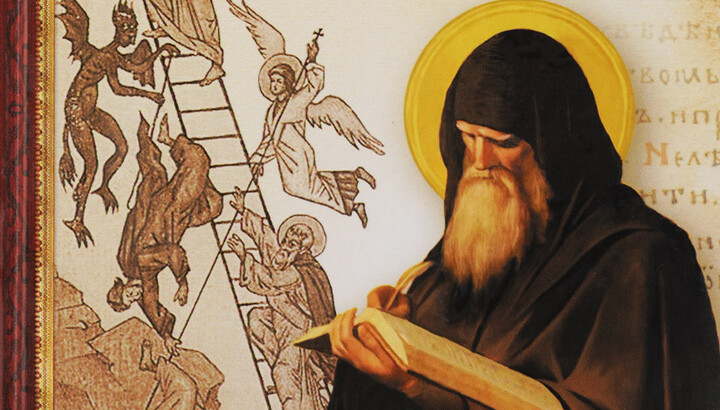
John of the Ladder. Photo: ekklisiaonline.gr
Today we celebrate the memory of St John Climacus (also known as St. John of the Ladder). His spiritual legacy belongs to the golden collection of patristic writings. His "Ladder" is one of the first attempts to systematize the ascetic experience of the Orthodox Church. Suppose we place this book on the same shelf with the books of questions and answers by St Barsanuphius the Great, St. John the Prophet, Abba Dorotheus, and Isaac the Syrian. In that case, we will have classic foundational textbooks on Orthodox psychology. All of them convey the ancient experience of the inner transformation of the soul and its struggle against the passions that live in the heart.
Everything around us in the church, i.e. the architecture of the temple, the liturgy, etc., is just decoration. Even the words of the Divine Scripture are symbols behind which lies a deep inner essence. All of this is given to us to find the core. If this does not happen, everything around us will remain mere decoration, without any inner content. The question is not about reading the Word of God and attending the liturgy. These are just means for the inner transformation or deification of the soul.
Why do we go to church for thirty, forty, or more years, but nothing happens to us? Why don't we change? We have many books at home, we know a lot, but inside, it is still as empty and dark as it was before.
Perhaps it is because there is no one to show us, by their example, how to walk this path properly. And those who are called to be spiritual mentors have turned into political commentators. In difficult and complex times of social change and upheaval, a priest must steer the ship towards Christ despite everything and against all odds and not turn into a political propagandist and agitator. This situation is a clear example of misunderstanding the essence and meaning of spiritual life. If the clergy do not understand this, what can we expect from the laity?
The essence of the work of St. John of the Ladder is an illustration of the experience of spiritual ascension, which the monasticism of that time had.
The first step on this path is finding the meaning of existence in this world. The penetration into the essence of oneself. Who am I? Where is my true self? I cannot identify myself with my thoughts, feelings, and desires because they constantly change and lack coherence. Where is the object that is to be saved? A person is fragmented, and within them, several centers work simultaneously, each trying to take the lead in guiding their life. Depending on which one prevails, that is where the person will go. The mind lives on its own. Emotions, feelings, and desires are not always controlled.
We often do what we hate and strive for what we do not want. Therefore, the first step is the ability to disidentify oneself from the mind, feelings, emotions, and desires. The consequence of this disidentification will be the soul's detachment from the world and the search for God in the spirit, which is our true self.
The first thing a monk must achieve on this path is the absence of desires and attachments. He is a wanderer and a stranger in this world; he needs nothing from it. We are mere passers-by, i.e., those who pass through this world. This is the first step of ascension. Everything in the world is just the lust of the flesh, the lust of the eyes, and the pride of life. The only desire that remains with the monk is to die to this world with his soul to be reborn in the heavenly world with his heart. When this happens, neither the world nor the devil will have any access to such a soul.
The most difficult thing in all of this is to cut off one's will. For this, obedience to the elder and unquestioning submission to him in everything is required. Even in matters that seem absurd. The elder might ask the novice to plant vegetables upside down, water a dry tree, or carry water from far away when there is a well nearby.
A person changes not because they do crazy things, but because they cut off their will, all the while not interrupting their prayer and living connection with God. External actions do not interfere with their inner prayer.
When a person thus breaks their connection with the external world, they begin to discover their true self. When our ego dies within us, the spirit, which had been paralyzed by our ego, comes alive in its place. The spirit is our true personality, through which we can find a direct connection with God. But this is still not salvation; it is only the very beginning of the spiritual path. The spirit, having awakened, discovers that its soul is in a very pitiful state. A person begins to see themselves as they truly are, not as they had imagined themselves to be. And this is a very terrifying sight. Every time we repeat St. Ephraim the Syrian's prayer during Great Lent.
But if we truly saw our sins, our hearts would not be able to bear such a sight. It could drive us mad. Therefore, by His mercy, the Lord keeps us from this. But when the spirit awakens, with it also awakens the vision of our sins. From this moment begins the path of true repentance. This is the night of weeping that the saints pass through. The most terrifying and difficult period. It seems as though this darkness will never end. The ascetic is often overwhelmed by the spirit of despair and sorrow. Here, the help of an experienced spiritual guide is essential. This type of repentance is radically different from the intellectual repentance that we carry out in church before the altar.
After the night of spiritual repentance, the dawn of blessed enlightenment begins. The soul ascends to contemplate the uncreated light of the Divine.
Of course, the book of St. John is written for monks. But let us recall the life of the Egyptian ascetics. The Lord showed that the life of a shoemaker or two married women could be higher in His eyes than the monastic asceticism of St. Macarius the Great. And all of them were simple laypeople. It turns out that to achieve such a state, it is not necessary to abandon one's family and retreat into solitude. Every person has their path, and everyone can achieve salvation.
Until one attains dispassion, only attachments will live in us.
And whatever we call love, it will be some form of attachment. In their natural state, a person should not have any uncontrollable internal movements: neither mental, nor emotional, nor irrational. If this is present in us, then we are still in an unnatural state of sinful illness.
When one has an uninterrupted inner peace, existing independently of what happens around, this is called hesychia. Dispassion and hesychia are the ground upon which true love for God and people is born. And the beginning of all this lies in deep humility and trust in God.
Read also
Prosphora notes replace loving embraces
На каждом венчании хор воспевает мучеников. Для семей, которых разлучила война, эти слова звучат по-особенному.
Honest atheism vs. spiritual hypocrisy
The 70th anniversary of Albert Camus’s Nobel Prize recalls an uncompromising challenge to Christianity. An honest unbeliever brings theology back to the mystery of the Cross.
The valley of trouble and the gateway of hope
One soldier buried an expensive cloak and some gold beneath his tent. Because of this, all Israel lost a battle. Why did one man’s sin bring disaster upon an entire nation?
From love spells to bishop's throne
Antioch’s most powerful sorcerer sent demons against a devout young Christian woman three times – and failed every time. In the end, a demon himself revealed the truth that led to his conversion.
The Weeping Queen of Blachernae
On the night of the Feast of the Protection, only two people witnessed the miracle in the Church of Blachernae. Everyone else prayed and saw nothing. Yet they, too, received grace.
Deadly spiral of human hatred
The tragedy of Lebanon's civil war lays bare how dehumanization and fear can turn human beings into monsters.