
Apostle John wanted to burn down a village and then wrote the Gospel of love
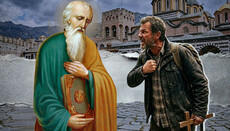
James and John asked Christ to bring down fire on the Samaritan village. Years passed, and the younger of them wrote a Gospel about the exact opposite.
In Chapter 9 of the Gospel of Luke, there is an episode that takes up only four verses. Christ, on his way to Jerusalem, sends his disciples to one of the Samaritan villages to prepare lodging. The Samaritans refuse for a simple and understandable reason: Jesus is going to the enemy Jews. Then James and John, two brothers whom the Savior called "sons of thunder" for their fiery temperament, turn to Him: "Lord, do you want us to command fire to come down from heaven and consume them, just as Elijah did?" (Luke 9:54).
The sons of Zebedee are not proposing anything unprecedented: they appeal to the prophet Elijah, who once indeed called down fire upon the soldiers of the wicked King Ahaziah (2 Kings 1:10–12). They have a biblical precedent behind them, and the most righteous foundation: people rejected the Lord Himself, and showed hostility to His mission. There is not even personal offense here, only defense of the Teacher's honor.
But Christ "turned and rebuked them, and said: 'You do not know what manner of spirit you are of. For the Son of Man did not come to destroy men's lives but to save them'" (Luke 9:55-56). This is one of the most sobering rebukes in the entire Gospel – a rebuke not of enemies among the Pharisees, but of the closest disciples, and precisely for their fervent faith, strangely enough. James and John were sincere, loved Christ, and were ready to stand up for Him. And yet it turned out that their spirit was not His.
"You do not know what manner of spirit you are of"
In this short phrase lies the core issue of almost all ecclesiastical controversy as we know it from two thousand years of history. A person holds to correct teaching, relies on Scripture (as the sons of Zebedee relied on Elijah's example), acts to defend the Church – and yet is completely not in the spirit in which the Lord asks him to abide.
Saint John Chrysostom, interpreting this passage, notes: the disciples do not yet fully understand how the Old Testament differs from the New one. Elijah lived in a different era, when harsh measures were permissible for the sake of preserving faith in the One God among a people constantly falling into idolatry. With Christ's coming, the very nature of the relationship between God and man changed. "The Son of Man came not to destroy but to save," – this is the new measure.
Anyone who, under cover of Christ's name, calls down fire on opponents' heads, remains in the old, pre-Christian logic.
The Apostle Paul would later write: "Knowledge puffs up, but love edifies" (1 Cor. 8:1). Knowledge by itself, even the most precise knowledge of God, puffs a person up like dough. A person bloated with knowledge is convinced that they are standing up for the truth, when in reality, they are standing up for themselves, using the truth as a shield.
The Apostle James, namesake of one of the sons of Zebedee, speaks even more sharply: "But if you have bitter envy and self-seeking in your hearts, do not boast and lie against the truth... This wisdom does not descend from above, but is earthly, sensual, demonic" (James 3:14-15). Defense of faith mixed with envy or desire to humiliate an opponent turns out to be dictated, according to the apostle, not by wisdom from above but from a completely different source.
Zeal as a disease of the soul
Saint Isaac the Syrian dedicated an entire homily to this topic in his Ascetical Homilies, titling it: "On the Harm of Reckless Zeal Which Cloaks Itself in the Guise of Divine Zeal." The very phrasing says much about how the great Syrian ascetic viewed this subject. He speaks of a zeal that merely disguises itself under a divine mask.
"Zeal," writes Saint Isaac, "is recognized in people not as one of the types of wisdom but as one of the soul's ailments, and is limitation in thinking and great ignorance." The theologian and desert ascetic, having endured years of silence and sober watchfulness over his own heart, places zeal not among the virtues but among the maladies, alongside the passions. “A zealous man never attains peace of mind, and he who is a stranger to peace is also a stranger to joy,” the saint adds. This is perhaps the most sobering answer to all disputes born of zealotry.
Saint Silouan the Athonite, a Tambov peasant who spent forty-six years on Mount Athos, comes to the same conclusion, but from another side. He speaks in everyday language, but behind this language stands personal experience that cannot be counterfeited. Grace, writes the elder, "is lost by us through pride and vainglory, through enmity toward a brother, through judging a brother, through envy... for all this grace departs."
Hence the conclusion: a person can courageously stand in dispute, speak completely right words about God, quote Scripture and the Holy Fathers – and at that very moment lose the presence of the One about Whom he speaks.
The same John who became the apostle of love
Here it is worth returning to John, the son of Zebedee. That very disciple who once asked for fire on the Samaritan village, several decades later would write the Gospel in which he would affirm: "God is love, and he who abides in love abides in God, and God in him" (1 John 4:16). The one whom the Savior called "a son of thunder" would become the apostle of love. According to ancient tradition, transmitted by Blessed Jerome, the Apostle John in deep old age said almost nothing at gatherings of believers except one phrase: "Children, love one another." When asked why he repeated the same thing, he answered that this contains the entire commandment of the Lord, and if it is fulfilled, this is enough.
John traveled an unusual path from truth with fire to truth with love. This, it seems, is the only right trajectory of a Christian life.
One may be right from the very beginning and yet remain outside the spirit of Christ. One may also, while remaining right, enter into His spirit; but for that, one’s rightness must pass through compassion for the other person, through those very tears that the Holy Fathers called “weeping for a brother.”
Saint Silouan, who wrote in simple words one of the deepest books about the Holy Spirit, said: "From love for a brother comes grace, and by love for a brother it is preserved; but if we do not love a brother, then God's grace will not come into the soul." This is the answer to the question we commonly ask differently: not "how to win in dispute," but "how to preserve in our soul the One for Whom we argue and Whom we defend."
The fire that the sons of thunder asked for remained in the Old Testament. Christ's disciples have a different fire – the one that descended upon them on the day of Pentecost. Fire that does not burn villages but warms souls. If we want to be disciples not of the sons of thunder but of the apostles of love, we need to kindle precisely this fire in ourselves.