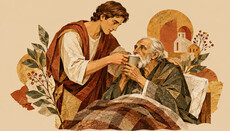

Humility begins by closing your eyes
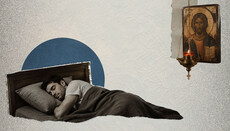
The Prophet Elijah begged God to let him die but was given bread and told to sleep instead. Here's why going to bed on time can be a genuine spiritual feat.
There is a particular kind of pride that rarely gets talked about. It disguises itself as zeal for God, tireless labor, or round-the-clock concern for others. But underneath it lies a simple refusal to admit the truth: we are not machines, and human beings are not God.
Many believers have turned sleep deprivation into a virtue. Some boast of getting by on four hours of sleep as though they had earned a spiritual medal. Laypeople borrow the tradition of all-night vigils from the great desert ascetics without considering the enormous difference between their own lives and those of the ancient saints.
Christianity sees the matter differently. And the conversation should begin not with ordinary sleep hygiene advice – that belongs to medical professionals – but with the story of a prophet who once asked God to let him die.
The angel didn't give a lecture – he told him to sleep
The prophet was Elijah. He had just won a spectacular victory, calling down fire from heaven before all Israel and putting the prophets of Baal to shame. Yet at the very first threat from Queen Jezebel, he fled into the wilderness, collapsed beneath a broom tree, and prayed: "It is enough! Now, Lord, take away my life, for I am no better than my fathers" (1 Kings 19:4).
Was this a desire for an even greater spiritual struggle? No. It was simple human exhaustion – physical and emotional.
How did God respond? He did not rebuke Elijah for a lack of faith or courage after such a miraculous triumph. Instead, an angel woke him, gave him bread and water, and told him the last thing he expected to hear: "Sleep."
Later the angel woke him again, fed him once more, and again told him to sleep. Only after regaining his strength through ordinary food and proper rest did Elijah journey to Mount Horeb, where God spoke with him face to face.
The healing of the soul does not begin with lofty theological conversations. It begins with healthy sleep.
The body is not an enemy but a temple
The temptation to pit the spirit against the body is as old as Christianity itself. The Gnostics regarded the body as a filthy prison from which the soul had to escape at any cost. Christianity rejected that idea from the very beginning.
The Apostle Paul writes to the Corinthians: "Do you not know that your body is a temple of the Holy Spirit who is in you?" (1 Cor. 6:19). A temple requires care. Otherwise it gradually falls into ruin and can no longer serve its purpose.
Sleep is not a consequence of the Fall, as some mistakenly assume. Even in Paradise, God caused Adam to fall into a deep sleep. Human nature was created with a need for rest from the very beginning. It is part of God's design, not a flaw to be overcome through asceticism.
Christ Himself understands this need. After an exhausting period of ministry, He told His weary apostles: "Come aside by yourselves to a deserted place and rest a while" (Mark 6:31).
He did not say, "Pray harder," or "Work until you collapse." He simply told them to rest.
The string that snaps in the middle of the concert
Once, a hunter reproached St. Anthony the Great for allowing himself to rest and joke with the brethren. Instead of arguing, Anthony asked the hunter to take his bow and draw the string tighter... and tighter... and tighter still.
Finally the hunter objected.: "If I keep pulling, the bow will break."
"So it is with God's work," Anthony replied. "If we overstrain the brethren, they will soon collapse."
A violin string that remains constantly under tension gradually loses its tone – and eventually snaps, often at the very moment it is needed most.
St. John Cassian expressed the same principle in speaking about monastic life. One should sleep and eat at the appointed time, "even if one does not feel like it," because excessive asceticism is "more harmful than overeating."
St. Ignatius (Brianchaninov) warned even more bluntly: an ascetic struggle for which the soul is not yet prepared does not elevate a person. It breeds despondency, despair, and hardness of heart.
Giving up sleep in pursuit of imagined spirituality is not asceticism. It is self-deception disguised as zeal.
The night shift inside your head
Modern science has provided abundant evidence of sleep's importance.
In 2012, neuroscientist Maiken Nedergaard and her colleagues at the University of Rochester discovered the brain's glymphatic system – a mechanism that clears away toxic protein waste.
A year later, the same laboratory showed that this system works almost ten times more actively during sleep than while we are awake. During sleep, brain cells shrink by roughly 60 percent, creating space for cleansing fluid to circulate.
Nedergaard compares the process to running a dishwasher. The brain cannot clean itself while performing its normal tasks: "You can either entertain guests or clean the house," she explains, "but not both at the same time."
Chronic sleep deprivation directly impairs the prefrontal cortex – the region responsible for self-control and sound judgment.
In the language of the ascetic Fathers, those impairments appear as irritability, anger, or despondency. The desert saints were teaching the necessity of rest for purity of mind more than fifteen centuries before science uncovered the physiological explanation.
The segmented sleep theory
Drawing on numerous historical sources, historian Roger Ekirch proposed that before the Industrial Revolution, people in Western Europe did not sleep through the night as we do today. Instead, they had a "first sleep" and a "second sleep," separated by about an hour of wakefulness. Only the spread of gas lighting – and later electric lighting – accustomed humanity to one uninterrupted night's sleep.
The theory, however, remains disputed. In 2023, the journal Medical History published a detailed critique of Ekirch's conclusions. Yet the debate itself is revealing. What we often regard as the "natural" pattern of sleep has changed alongside technological progress.
There is no need to search the past for a perfect sleeping schedule. The point is simply this: we should stop treating insomnia as a mark of spiritual greatness. It is a direct path to exhaustion, and sooner or later that exhaustion manifests itself in illness.
Acknowledging our limits is the beginning of humility
The Psalmist speaks plainly: "It is vain for you to rise up early, to sit up late... for so He gives His beloved sleep" (Psalm 127:2). Late-night striving is portrayed here as a form of unbelief – a futile attempt to control what already rests in God's hands.
Going to bed on time means acknowledging that the world will not collapse without our midnight vigilance. We have accomplished today what our strength allowed. The rest belongs to the One who neither slumbers nor sleeps.
That is humility in its most literal sense: quietly accepting that we are created beings, with limits and weaknesses.
Every evening, when we go to bed at the proper time instead of fighting our own biological rhythms, we resemble the Prophet Elijah beneath the broom tree. We stop trying to carry the world by ourselves – and allow God to finish the work without us.