The world's first computer based on human neurons goes on sale
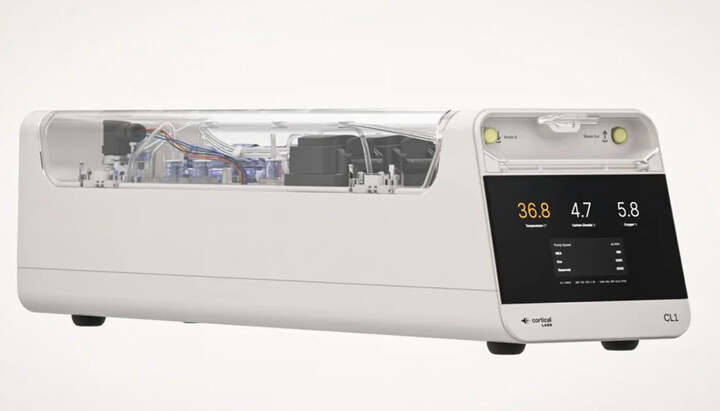
A computer based on the symbiosis of human neurons and a chip. Photo: Gizmodo
The Australian biotechnology company Cortical Labs has unveiled CL1 — the world’s first commercial biological computer that combines human neurons with silicon chips. The device, about the size of a shoebox, was officially released on March 2, 2025, and is already available for pre-order at around USD 35,000, with mass shipments set to begin in June of this year.
Cortical Labs' Chief Scientific Officer Brett Kagan claims that CL1 is powered by lab-grown neurons placed on a flat electrode grid. The lab-created piece of brain tissue is connected to 59 electrodes, which form a stable neural network. This is linked to a "life support unit" and a proprietary software system.
The system includes a cellular life support complex with waste filtration, temperature control, gas mixing, and circulation pumps. The computer will function for about six months, as long as the neurons remain alive.
However, the emergence of this technology has sparked serious ethical debates among scientists. While the CL1 system is much simpler than a human brain, it has caused discussions about the nature of consciousness and the potential for future biological AI systems to experience suffering.
Experts point out that although the neurons in CL1 are lab-grown and lack consciousness, their use in computation raises ethical concerns. At the same time, the creators of the technology assure that the systems are used in compliance with strict regulations and standards.
The technology promises significant advantages in energy efficiency compared to traditional artificial intelligence. While a silicon-based server might consume several megawatts of power, a single CL1 rack uses just 850 to 1000 watts.
As this field progresses, scientists urge the development of clear regulatory and ethical frameworks to govern the creation and use of artificial neural systems, especially as they become more complex and closer to mimicking the higher functions of the human brain.
Earlier, the UOJ reported that Elon Musk developed a neural chip that could help blind people regain their vision.
Read also
Zelensky says 9.5M Ukrainians expected to return home from abroad
Zelensky stated that 9.5 million Ukrainians who left abroad are expected to return home to rebuild the country.
German theologian criticizes Ukrainian authorities' pressure on UOC
German theologian Regina Elsner has said that pressure from the authorities on the Ukrainian Orthodox Church places an additional heavy burden on believers during the war.
Poland bans entry to Lviv official over SS Galicia and UPA glorification
Polish Foreign Minister initiates entry ban on Lviv Regional Council deputy who proposed declaring 2027 the Year of the UPA.
OCU award winners stage provocations at UOC court hearings, media report
Rallies outside courts hearing UOC cases are organized by activists who received awards from Dumenko.
Khust Eparchy priest who shot people in Vyshkovo banned from ministry
The Khust Eparchy of the UOC has notified police that it has banned from ministry a priest suspected of killing three people in Vyshkovo, Transcarpathia.
Metropolitan Onuphry congratulates Georgia on 1,700 years of Christianity
The Primate of the UOC sent a message to Patriarch Shio III on the anniversary of Christianity becoming the state religion in Georgia.