What happened between the Lord's Resurrection and Ascension
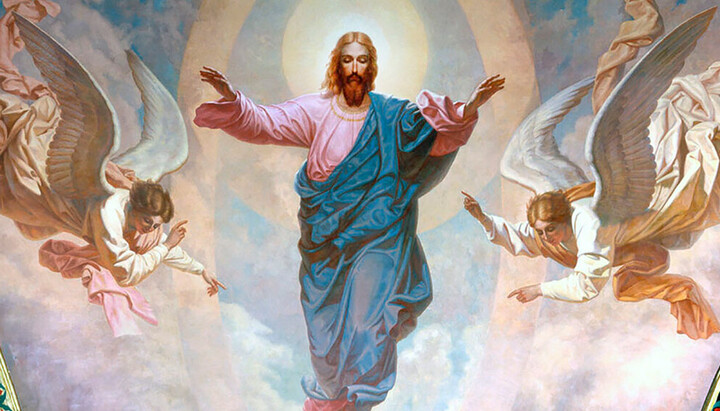
A fresco of the Ascension of the Lord. Photo: open sources
The period after the Resurrection of Christ until His Ascension is the most mysterious time for me. The Gospels tell us in detail about the life, preaching, and death of the Savior, bringing their narrative to the story of the Resurrection, but for some reason, they speak very little about what happened afterward.
Why did Christ not ascend to heaven immediately after the Resurrection but took a forty-day pause? Where did He stay during this time, what did He teach, and what did He talk about with the apostles?
It would seem that these conversations should be the most important, revealing the essence and meaning of the entire previous three-year preaching of the Savior. And who were the people who rose after Christ and appeared to many? Why is this mentioned only in passing? After all, if the resurrection of Lazarus caused so much commotion in Jerusalem, then a whole uprising of the dead should have had a stunning effect. And where did they go afterward?
The interpretations of the Holy Fathers do not provide an answer to this question. I do not think that such an event could have passed unnoticed by pagan contemporaries, but even Josephus Flavius says nothing about it. Whatever we think about this and whatever we imagine, there are no answers to these questions. But we can draw certain conclusions based on the events that unfolded after the Ascension of Christ.
What did Jesus Christ not tell His disciples?
The Lord clearly did not explain two things to the apostles, and again, I do not know why.
Firstly, the disciples did not know that Christ's Sacrifice has universal significance and applies not only to the Jewish people but to all humanity. This is evidenced by the disputes that began to arise in the first Christian communities (consisting of Jews) regarding how to deal with believing Gentiles. We see that the apostles did not have a ready answer to this question. It became more or less clear after the baptism of Cornelius the Centurion’s household and after the manifestations and revelations of the Holy Spirit, which gradually led the apostles to understand the universality of the Christian religion.
Secondly, as we see from the Book of Acts and from the preaching of the Apostle Paul, the Second Coming of Christ was expected literally any day. Therefore, Christians sold their possessions, created the first Christian commune, and awaited the quick return of the Savior to earth to judge the world. Moreover, they did not expect that any significant amount of time would pass before this event. I am sure that if they had been told that they would have to wait at least another two thousand years, their behavior would have been completely different.
And the Apostle Paul, who believed in Christ through a special revelation of the Lord, thought the same way. All his epistles speak of this. He did not think that the world would continue to exist for so long. Therefore, he gave corresponding instructions. Apparently, the Second Coming of Christ, from the apostles’ perspective, was expected to occur after the Gospel had been spread throughout the oikoumene—that is, within the Roman Empire and its neighboring regions..
What the apostles presumably learned from Christ after His Resurrection
We see that after the Resurrection of the Lord, the apostles rethought their understanding of who the Messiah was and what He was supposed to bring to the world. For them, He was not just a man, a descendant of David, but God who became Man. They understood that His mission was not to free the Jews from Roman oppression and make them "the head and not the tail" for other nations (Deut. 28:13). The apostles realized that the crucifixion and death of the Teacher were not a defeat but part of a "cunning" divine plan that trapped the devil.
The apostles dramatically changed their attitude toward life and death. Death itself, as a transition from the reality of earthly life to another reality where they could meet Christ again, made them fearless bearers of the Truth. Physical death ceased to be a threat to them and no longer caused the fear that was present in their souls during the trial of the Savior.
And thirdly, all the apostles received a certain mandate to go and preach the Gospel to all corners of the earth. This was their main task. It can be assumed that Christ's conversations concerned the structure of the new Church, the principles of its existence. Ordinations and hierarchical degrees appeared immediately with the formation of new communities and did not cause any disagreements.
It seems to me that the Divine pedagogy was such that the apostles were given only the minimum that former fishermen – people who were generally uneducated – could grasp. Because everything they learned after the Resurrection of Christ radically changed their life values, beliefs, and understanding of God and humanity. And that was more than enough for the apostles to continue their mission.
Everything else they needed for preaching and salvation was supplied by the Holy Spirit, who abundantly poured out His gifts on the early Christian communities.
Read also
A shepherd boy with a letter from Christ to French king
In the summer of 1212, thousands of pilgrims carrying staffs waited for the sea to part before them. Later chroniclers added ships, slave traders, and a pope's lament to their story.
Facade of bones and facade of light
Antoni Gaudí spent forty-three years building a church in Barcelona, knowing that this construction was for the ages.
Trial of a dead pope
Once in Rome, the body of a deceased pope was seated on the throne and put on trial. The accusation relied on a church canon that had once saved his see.
Monastery built in defiance of king
When Orthodox believers in Minsk were left with just one church, townspeople decided to build another – and even a royal decree did not stop them.
Young Mother and Sleeping Christ
Michelangelo carved a Virgin Mary who looks younger than her Son – and signed his name in marble for the only time in his life. Neither of these peculiarities was accidental.
Orthodox books from a Uniate printing press
In the 18th century, Uniate monks at Pochaiv printed books used in prayer by Orthodox Christians and Old Believers alike.