
Monastery built in defiance of king
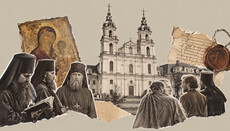
When Orthodox believers in Minsk were left with just one church, townspeople decided to build another – and even a royal decree did not stop them.
At the end of the 16th century, Minsk had ten Orthodox churches and one Catholic church. A few decades after the Union of Brest in 1596, the picture changed. The Ascension, St. Nicholas, Trinity, and Saints Cosmas and Damian monasteries passed one after another to the Uniates. All that remained to the Orthodox was the castle church of the Nativity of the Most Holy Theotokos.
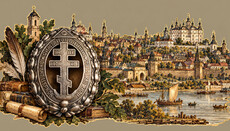
The changes did not come all at once but took place gradually, year after year. In 1613, the Church of the Nativity of the Theotokos was still successfully defended. Curiously, a Protestant, Prince Janusz Radziwiłł, helped in this. But in 1616 the city magistrate declared that the Orthodox brotherhood had dissolved, and the Uniates received its property. In 1622 the church burned down.
The Orthodox townspeople of Minsk had to decide: to submit to the oppression of those of other faiths, or to revive the Church anew. They chose the latter.
Three plots from a widow and an ignored decree
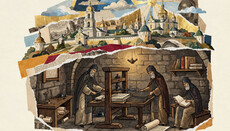
It all began with a gift. On November 23, 1611, a widow (according to some accounts, Princess Avdotya Drutskaya-Gorskaya) donated three city plots for a new monastery. The following year, townspeople gathered and signed a brotherhood charter. There were more than fifty signatures. The names of the first brethren are still commemorated in Minsk during divine services. Thus the Saints Peter and Paul Brotherhood came into being: a union of laymen who took upon themselves the care of the church, the school, and the poor.
The construction of the monastery immediately met with resistance. In October 1612, a court official handed the townspeople a royal decree: halt the work. But the magistrate simply ignored the order.
The builders were monks from Vilnius headed by Hegumen Paul (Domzhiva). By the end of 1613, the main church had already been erected. The new monastery was placed under the authority of the Vilnius Holy Spirit Monastery. Later, King Władysław IV, in his charter, would record two dates for the founding of the brotherhood: 1612, when the “inhabitants” decided to establish it, and 1613, when the church was built.
A brawl at the school gates
The brotherhood’s chief pride was its school. As early as 1617, monk-bachelors taught there, and Hegumen Gideon served as rector. The sons of the nobility and of townspeople sat at the desks. Some of the pupils lived at the school, in a dormitory.
The Uniates did not like such a neighbor. The school became one of the main causes of the dispute. And this discord sometimes showed itself in street scuffles.
On February 17, 1617, Hegumen Gideon complained to the magistrate that the pupils of the Uniate school “beat and mauled the pupils of the Saints Peter and Paul school.” In 1619, a more serious misfortune loomed over the brotherhood. Voivode Piotr Tyszkiewicz intended to close the church, the monastery, and the school. The brethren lodged a protest. The monastery survived.
The charter of permission
The turning point came in 1633. On March 18, King Władysław IV granted the brotherhood a privilege: a charter of rights. It recognized the Saints Peter and Paul Brotherhood as the heir of the old Orthodox brotherhood. From then on, it could maintain schools, an almshouse, and even a printing house. And the brethren’s houses were exempted from taxes.
True, something strange happened with the printing house. The brotherhood had permission for it, but not a single book printed in Minsk by the brethren has been found to this day. Perhaps their press never started working. Or perhaps the books simply have not survived. Historians do not yet have an answer to this question.
The Siege and Destruction of the Brotherhood's Creation
The royal charter protected the brotherhood on paper, but it did not always save it in real life. In 1691, the Uniate priest Salgan Yurevich burst into the monastery with a mob. Archimandrite Peter (Pashkevich) and the brethren fought them off with weapons and stones for three days.
We know of this siege thanks to one witness, whose name is known to everyone. Saint Dimitry of Rostov recorded this incident in his diary.
More than forty years later, in 1734, something even more savage occurred. Noblemen rode into the church on horseback, shot at the altar, and burned the monks' eyes with candles.
In the second half of the 18th century, the monastery fell into decline. After a fire, the vaults collapsed, and in winter snow lay inside the church. The monks moved into the cells of the women's monastery and lived on alms.
The brethren grew ever fewer. In 1766, only the hegumen, two monks, and two novices remained here. And the school, for which the brotherhood had once fought and protested, ceased to exist. On August 30, 1748, the brethren wrote to the Synod in just these words: "The school has been destroyed."
Names Remembered Through the Centuries
It would seem that the story ended in defeat for the Orthodox. There is no school, the church lies in ruins, and only five monks remain. But the church that the townspeople built in defiance of the royal decree survived both the Uniate attacks and the fires and the desolation. Today it is the Cathedral of Saints Peter and Paul in Minsk.
It is in this very church that the signatories of the 1612 brotherhood charter are still commemorated by name during the services. The ordinary townspeople, merchants, craftsmen, and a few noblemen were not saints or national heroes. They simply did not want to be left without a place for prayer, and they did everything to prevent it.ов.