Can a panicker be a Christian?
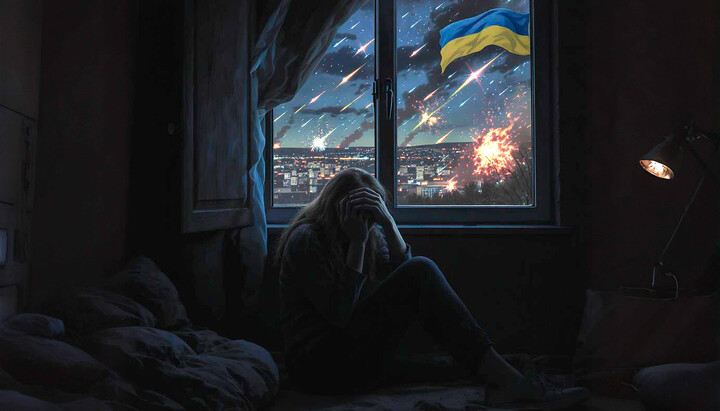
Many Ukrainians live under constant stress. Photo: UOJ
Millions of people around the world suffer from panic attacks. In our country, there is a staggering increase in mental disorders linked to post-traumatic stress. This wave began during the COVID-19 pandemic and has only intensified with the war and a growing sense of hopelessness. Among those affected are many Christians. What are we to do, and how should we respond when we or our loved ones experience panic attacks? Are they signs of weakness or cowardice – or simply natural reactions of our physical body? This article offers a reflection on the subject.
The first thing I want to stress is that the “mantras” many priests repeat in confession – “Pull yourself together, don’t be a coward, you’re a Christian, everything is God’s will, be humble, endure, stop whining…” – are nothing more than “a resounding gong or a clanging cymbal.” Not only are such words meaningless and ineffective, they are deeply harmful. By burdening people with guilt and spiritual inadequacy, these misguided pastors only increase their anxiety and plunge their souls deeper into depression.
Panic attacks – and most psychological reactions to life’s events – are entirely involuntary. They occur automatically, beyond the reach of our will or intentions. Here is one first-hand account:
“I went in for an MRI of the spine. I was perfectly calm, heart steady – nothing seemed threatening. But the moment I was placed in the enclosed scanner and saw the walls close in, a sudden wave of claustrophobia hit. My heart pounded violently. Attempts to calm myself with the Jesus Prayer were futile. A terrible, growing fear gripped me. My muscles tensed to the point of spasms. Cold sweat, blue flashes in my eyes, the feeling I was going insane. The panic grew stronger. I screamed in terror. There was no way to control it.”
The body acts in such cases without our conscious participation. This may involve stimulation of the “locus coeruleus” (a small nucleus in the brainstem containing about half the brain’s norepinephrine neurons), which activates the sympathetic nervous system and triggers the release of stress hormones. But we won’t delve here into the neurochemical mechanisms of panic.
I know people who suffer panic attacks simply from hearing a siren or the sound of explosions. And these reactions can occur even without any clear trigger. One man I know experienced relentless panic attacks decades ago during peacetime:
“It was like recurring death agony. The very anticipation of the attacks was torturous – a constant heaviness in my chest, a crushing sense of despair, nearly to the point of madness. An episode would begin with arrhythmia, trembling, nausea, shortness of breath, rapid breathing, numb limbs – and worst of all, the fear of dying and going insane. But ‘fear’ isn’t the right word. It was a paralyzing inner dread, a frozen terror. I felt like I was plunging at high speed into a black abyss. There was no control. Prayer, confession, the sacraments – they did nothing to stop it. Afterward came crushing exhaustion, emptiness, and lingering fear. As a believer, I experienced it as a foretaste of hell.”
Why do I describe all this in such detail? So that we – especially clergy – can understand that it is not only physical illnesses that are the cross a soul may bear. Mental illness can be no less a burden – and often far greater.
Therefore, we must never accuse those suffering from depression of the sins of despondency or faint-heartedness. If a person enduring severe clinical depression has not taken their own life out of fidelity to God’s commandments, then that in itself is a feat equal to the greatest martyrdom.
And even if they have fought but ultimately succumbed and taken their own life, that is no reason to condemn them or deny them a Church funeral or prayers. The same applies to all forms of mental illness.
To those Christians currently bearing the weight of depression, panic attacks, or other mental disorders, I say this: Do not blame yourselves for the despair and gloom that reside in your soul regardless of your will. Sin exists where there is freedom of choice – where we can change our behavior through an act of will. Where such freedom is absent, there is no sin – only the burden of illness. And we should treat this burden as we would any other disease: as suffering allowed by God for our salvation. Bearing it with humility and thanksgiving is a direct – and one might even say guaranteed – path to salvation. Only someone who has personally experienced such torment can fully understand it, for these states are often beyond the reach of human language.
Church tradition teaches us that even demonic possession was seen by the Holy Fathers as a path to salvation permitted by God. The righteous responded not with condemnation or fear but with understanding, compassion, and trust in Divine Providence. Whatever the cause of mental illness – our physiology or demonic influence – it can become a means of saving the soul.
The most terrifying fate for a Christian (and the most desired by the world) is a comfortable, wealthy, pleasure-filled life of perfect health that ends in an easy death.
Whether we like it or not, there are no uncrucified souls in paradise. This short earthly life has one purpose: to walk the narrow path of following Christ, so that we may enter His eternal joy – where there is no fear, no pain, and no suffering.
Read also
Honest atheism vs. spiritual hypocrisy
The 70th anniversary of Albert Camus’s Nobel Prize recalls an uncompromising challenge to Christianity. An honest unbeliever brings theology back to the mystery of the Cross.
The valley of trouble and the gateway of hope
One soldier buried an expensive cloak and some gold beneath his tent. Because of this, all Israel lost a battle. Why did one man’s sin bring disaster upon an entire nation?
From love spells to bishop's throne
Antioch’s most powerful sorcerer sent demons against a devout young Christian woman three times – and failed every time. In the end, a demon himself revealed the truth that led to his conversion.
The Weeping Queen of Blachernae
On the night of the Feast of the Protection, only two people witnessed the miracle in the Church of Blachernae. Everyone else prayed and saw nothing. Yet they, too, received grace.
Deadly spiral of human hatred
The tragedy of Lebanon's civil war lays bare how dehumanization and fear can turn human beings into monsters.
Woe to expectant mothers – or to those of little faith?
God commanded one prophet not to have children, yet told his people in exile to bear sons and daughters. What does this apparent contradiction tell us today?