Christians and Power: Why the broken resent the unbroken
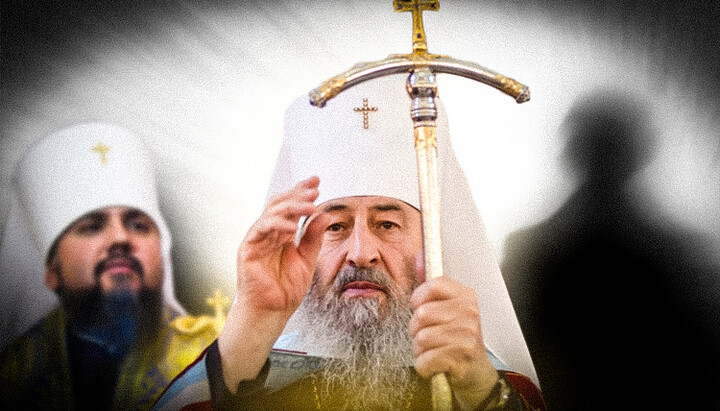
Photo: The OCU and state act in concert against the UOC. Source: UOJ
A popular saying on the internet sums it up: “The ones who bowed will hate most not those who made them bow, but those who refused to.” This reflects the psychology of people who, having lost their inner freedom, feel compelled to justify themselves – not to their oppressors, but to those who chose not to submit.
In Ukraine’s current religious landscape, this dynamic is clearly visible: the OCU, fully molded by the state, directs its hostility not at the government, but at the UOC, whose clergy and faithful refuse to conform to political demands.
This article is less about why this is happening and more about how church structures fused with state power become instruments of ideological cleansing – and why true freedom in Christ provokes the fiercest hatred from those in power and their proxies.
Who are the “submissive”?
In the Church context, the “submissive” are those who have sacrificed the Gospel for political gain. They replace love with hatred, prayer with power tools and crowbars. Rather than battling spiritual evil, they wage war against flesh and blood. Above all, they act based on the demands of the political moment.
The OCU fits this description. Having received its tomos of autocephaly from Constantinople in 2019, it entered the orbit of state interests.
Thus, under the pretext of the “Law on Freedom of Conscience and Religious Organizations,” authorities began forcibly re-registering UOC parishes in favor of the OCU. With the help of local officials and activists, churches are seized. State TV and major online outlets flood the public with myths of the UOC’s “pro-Russian” influence. The OCU is framed as the “national Church,” and any criticism is labeled a threat to national security.
This state “assistance” comes with expectations. And the OCU, under Dumenko’s leadership, obediently complies. Be it closing churches during lockdowns, banning an entire Church, or changing liturgical dates – the OCU is always “in favor.” Should the state demand altering the Liturgy or abolishing fasting, the OCU would likely comply, not just due to spiritual poverty, but because it knows it cannot exist without state backing.
As a result, the OCU has placed itself in a position where it cannot – even hypothetically – act as a moral conscience or voice of criticism against state wrongdoing.
Why the state broke the OCU but couldn't break the UOC
Resistance to evil is a mark of true spiritual freedom. Despite immense pressure, the UOC remains the only denomination consistently refusing to carry out state orders that violate the Gospel, Church canons, or Christian conscience.
We are not perfect. At times, we are indecisive. But when it comes to principle, obedience to God takes precedence over obedience to men. As the apostles once said to the authorities: “We must obey God rather than men” (Acts 5:29). This principle informs most UOC decisions: opposing COVID restrictions that endangered the sacraments, resisting digital IDs, maintaining traditional processions – even when banned.
Without any dependency on the state, the UOC faces enormous pressure to sever its canonical (not administrative) ties with the Russian Church. Yet despite persecution, over 6 million believers have remained faithful to the UOC. This speaks volumes.
Having no hope for “benefits” from the state, the faithful live within the Church with a true sense of spiritual freedom.
So why does the UOC provoke such visceral hatred from the OCU and the authorities? The answer lies in the internal logic of dependency and self-justification. Several psychological mechanisms are at play:
1. The Projection of Guilt
Those who surrender their freedom to please the powerful often experience cognitive dissonance: “I did wrong, but I must prove I was right.” That guilt is projected onto those who refused to submit – accused of fanaticism or division, they become the scapegoat for the conformist’s discomfort.
2. Living Reproach
Christ called His followers the “salt of the earth” (Matt. 5:13). Salt preserves and gives flavor. The UOC, through sacrificial service, preserves the people’s spiritual integrity and awakens a taste for Truth. It reminds others that Christianity is about service to God – not to the state. That witness is intolerable to the spiritually compromised.
3. Labeling
The OCU, beholden to the state, cannot speak the Gospel freely – of loving enemies or transcending national divisions. Instead, it speaks the language of politics: hate, slogans, and accusations – “Kremlin agents,” “FSB outposts,” and the like. The Truth is replaced with propaganda.
4. Hatred of Freedom
Freedom in others torments the enslaved. In darkness, the light burns the eyes. The UOC lives a genuine liturgical and sacramental life, without catering to political demands. And for this, it is hated.
Historical parallels
This is not new. In the 1920s, the Soviet-supported “Renovationist” Church denounced the traditional Orthodox as “fanatics” and “reactionaries,” justifying Soviet repression. Renovationists enjoyed state protection, while confessing clergy were imprisoned and executed.
Yet by the 1930s, the state discarded the Renovationists too. Their churches were empty, their movements dead. People wouldn’t attend the “correct” Church on command – because spiritual authenticity cannot be faked.
Today, we see the same: OCU churches are often empty. Not merely due to a lack of spiritual depth, but because a Church tied to the state can never be the moral conscience of society.
Conclusion
The UOC today stands as a guardian of living faith – faithful to the Gospel and the words: “Seek first the Kingdom of God.” The hatred it faces from the OCU and the authorities is the price for bearing witness that Christianity is not about identity politics, but Christ Himself.
The path of the UOC is one of sacrificial service – recalling the ideals of the saints of the Lavra, the martyrs Boris and Gleb, Hieromartyr Vladimir (Bogoyavlensky), and many others. As long as there are those who live by these ideals, hope for the spiritual renewal of our people endures.
Read also
The Council of Crete: a decade of unity in name only
Constantinople marked the anniversary of the Council of Crete with a theological conference in France. They spoke about the unity of Orthodoxy, although over the past years there has noticeably been less of it.
Yelensky’s plan: Why is DESS demanding what the UOC has already done?
DESS is demanding that the UOC take steps it has already taken, while offering no assurance that further demands will not follow. What is behind Yelensky’s ultimatum?
Why OCU hierarchy lacks canonical ordination: what Local Churches say
The OCU head refuses to address invalidity of his ordinations. But almost all Local Churches speak of it – even those that recognized the OCU.
Why nation-first advocates do not call for peace
Ukraine’s population is declining by nearly one million people a year, and experts are warning of the nation’s demographic extinction. Yet the leaders of the Orthodox Church of Ukraine (OCU) and the Ukrainian Greek Catholic Church (UGCC) continue to call for war and mobilization.
The deception that decided the fate of the Tomos
In 2008, the "Filaret problem" derailed Yushchenko's plan. In 2018, Poroshenko solved it in just one hour – with a police escort for the Greeks and verbal promises to Filaret.
Lawyers in the crosshairs: How UOC is being stripped of its right to defense
Activists harass UOC lawyers outside courthouses, call them “traitors” on air, and promise them a “warm welcome” at hearings. The Church’s right to a legal defense is at stake.