Forgiveness that changed thousands of hearts
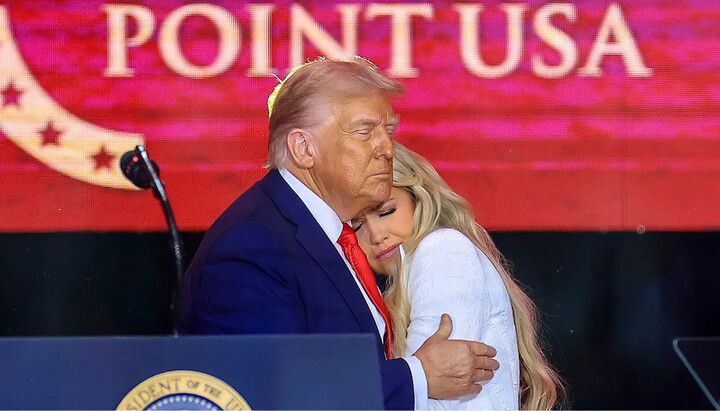
Trump and Erica Kirk. Photo: White House Press Office
At a memorial service for American politician Charlie Kirk, murdered by a young radical, something astonishing happened. Kirk’s widow, Erica, said she forgives her husband’s killer.
“I forgive him. I forgive him because it was what Christ did and is what Charlie would do. The answer to hate is not hate. The answer we know from the gospel is love and always love. Love for our enemies and love for those who persecute us,” Erica said, and she began to weep.
Her words stirred the hearts of the thousands who had come to the stadium to bid farewell to Charlie. They rose to their feet and applauded. Many wept as well.
And this moment is in fact far deeper than it might appear at first glance. The murder of Charlie Kirk – a remarkable man, a loving father, a Christian – is a profoundly unjust event. A person’s first impulse in the face of injustice is revenge. Very many Americans, including the country’s top leadership, declared that Kirk’s killer should not simply be punished but put to death. Surely a large share of those at the ceremony also felt hatred for Charlie’s murderer and wished him dead.
And suddenly the woman from whom this killer tore away her beloved – the father of her children – the very one who, by all logic, should be crying out loudest for hatred and revenge, declares that she forgives him.
As the camera showed people rising to their feet and applauding after Erica’s words, it was plain they were shaken. A second earlier their hearts burned with “righteous fury,” and then, in an instant, everything inside them turned over simply because someone found the strength to forgive. It was as if the lid were lifted off a boiling cauldron in a single moment.
The human soul by its nature is Christian. Its natural state is not hatred but love – we are all subconsciously drawn to it. And hatred can be destroyed only by love, not by answering with more hatred.
Why is this episode in distant Arizona so important for us Ukrainians? Because today we live in a state of hatred. We are being told that the more we hate – the better it will be for us. But that is not true; one cannot live in hatred. It is the very thing that destroys us more than any enemy.
And so each of us must find the strength to speak the words Erica Kirk spoke: “I forgive him because it was what Christ did.”
Read also
Who destroyed and restored Kyiv Lavra? MinCulture's video reveals the truth
The Culture Ministry’s propaganda about the Kyiv-Pechersk Lavra has inadvertently revealed the truth.
Ternopil post on Feast of Intercession: Has calendar reformn failed?
A significant number of believers have rejected the new church calendar introduced by the OCU and UGCC with government support.
Shoulder straps or a cassock: who writes the script for UOC "fighters"?
Everything indicates that both Veliar and Pshenychny are ordinary performers of someone else's script. There is only one question – does the scriptwriter wear shoulder straps or a cassock?
Why is it legal to kill a person before birth but not after?
Children are the most privileged members of society. Yet that same society officially permits children to be killed – and on a massive scale.
Honoring the Bolsheviks’ successors at Kyiv Lavra
It was under the Reserve that the relics of the saints were desecrated, Lavra churches were turned into an atheism museum, and toilets were installed in sanctuaries.
"Degenerates" and "stupid animals": anti-UOC activists turn on children
Future historians will wonder how a vast country’s information agenda could have been shaped for so long by people so petty, vicious, and utterly contemptible.