The sins of life "Instagram": a dialogue with St. John Climacus on pride
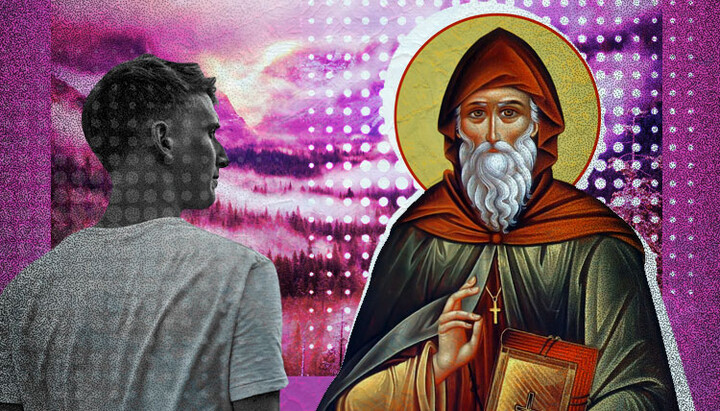
Vainglory breeds pride. Photo: UOJ
"The Internet – a wonderland: you log in for an hour, and vanish for the span," this saying can often be found on the web. At first glance, it sounds humorous, but in reality, the situation is far from amusing. Modern psychologists frequently encounter the phenomenon of Internet addiction. At its core lies an "escape from reality" (psychological escapism), driven by unresolved internal issues and high levels of stress.
In today's critical living conditions, this problem has become even more pressing. When you ride public transport, you can see how the vast majority of passengers are literally glued to their smartphones, sometimes even missing their stop because of it. Indeed, in our world, the internet has transformed from a servant into a master of human souls.
Internet addiction as a spiritual disease
Internet addiction develops rapidly. The process of personality enslavement looks as follows:
- Escaping problems: A person begins to use the Internet as the main means of avoiding stress and anxiety. Virtual reality starts to dominate the consciousness.
- Formation of addictive behavior: An uncontrollable urge to go online appears, followed by aimless browsing of websites and a loss of sense of time. A person begins to ignore their direct responsibilities and basic needs (sleep, food).
- «Withdrawal» syndrome: When trying to break away from the network, physical and mental discomfort (anxiety, irritability) arises, which forces the dependent person to return to the harmful addiction.
Doesn't this sequence resemble the stages of how passions affect a person, as described by the holy fathers? I think it very much does. The Internet enslaves the will, depriving a person of the ability to freely and godly manage their life. A person loses the freedom given by God, which cannot but be a sin, just like any other passion that separates us from God.
At the same time, the person themselves may not realize the harmfulness of this addiction. By publishing lifestyle posts, posting selfies processed through filters on social networks, they try to show themselves as a "superhero", even though their real life often flows monotonously and sadly.
In real life, there is also its own "Instagram", where we try to show ourselves better than we really are.
The owners of this social network are long-known passions – pride and vainglory. Today we will talk with the abbot of the Sinai monastery, Venerable John Climacus, about these sins, mentally applying his teachings to the canvas of our lives.
Vainglory – the beginning, pride – the end
The elder begins his word by stating that these two passions go hand in hand:
"For who that has conquered vainglory has pride within him?" he asks. "The only difference between them is such as there is between a child and a man, between wheat and bread; for the one is the beginning and the other the
end."
At the same time, the saint notes an important feature: vanity overtakes not only a secular person boasting of worldly achievements but also a spiritual, virtuous person.
"The spirit of despair rejoices at the sight of increasing vice, and the spirit of vainglory at the sight of increasing virtue. The door of the first is a multitude of wounds, and the door of the second is a wealth of labours," the elder believes.
Indeed, very often we put our good deeds in a "spiritual piggy bank", misinterpreting the apostle's words that "faith without works is dead" (James 2:26). Wanting to justify ourselves before God by deeds, we differ little from the Pharisees, who put the literal fulfillment of the law at the forefront.
"Every lover of self-display is vainglorious. The fast of the vainglorious person is without reward
and his prayer is futile, because he does both for the praise of men," St. John said.
Humility and love for critics
The opposite of vainglory is humility. But even this virtue we can understand incorrectly. What the holy fathers call "humble-mindedness", for people without a spiritual foundation, also becomes a reason for vanity.
St. John reveals another side of humility, which he sees in perfecting love for our critics. Yes, besides friends and enemies, there are also critics in our lives. Friends criticize to make us better, and enemies – to defame us. Nevertheless, the elder shows us the right example of attitude towards criticism:
"It is not he who depreciates himself who shows humility (for who will not put up with himself?) but he who maintains the same love for the very man who reproaches him."
John Climacus compares vainglory and pride to a caterpillar and a butterfly: as a caterpillar grows wings and becomes a butterfly, so vainglory gives birth to pride, and pride, in turn, breeds all other sins.
"Where a fall has overtaken us, there pride has already pitched its tent; because a fall is an indication of pride," warns the abba.
Spiritual degradation of an Orthodox blogger
Considering Internet addiction in the light of the teachings of the Sinai hegumen, you understand that the passions of vainglory and pride are often inherent in us, Orthodox journalists and bloggers. We start our professional path with a sincere desire to share the joy of faith, but over time, a vain "beast" begins to grow in the soul.
Thus, the soul of the preacher can gradually degrade. He cares more not about internal work but about external effect: the number of subscribers, likes under photos, or comments praising his "wisdom". He begins to show himself as deeply believing, publicly discussing sins to appear more righteous than others.
Vainglory steals from him the fruits of true spiritual life. His prayer becomes showy. When a real-life trial comes, such a person finds himself spiritually unprepared because all his faith was just a façade. Ultimately, he may face despair upon realizing that his virtual image is far from his real, empty soul.
In general, after today's dialogue with St. John, we all have something to think about. And the elder gives such an admonition as a farewell:
"Vainglory makes those who are preferred, proud, and those who are slighted, resentful."
```
Read also
Faith is not a checker piece in a spectator sport
Arguments about faith on social media increasingly resemble no-holds-barred fights. We turn to a saint who, sixteen centuries ago, knew how to speak to those interested only in turning theology into a combat arena.
The metropolitan who fought with a pen
St. Cyprian of Kyiv was robbed, expelled, and barred from his see. He answered with letters, books, and canons – and before his death, forgave everyone.
Loneliness under one roof
Spouses can share a home for years, raise children, and faithfully attend church – yet remain strangers to each other.
The cross – the deepest healing of the human soul
Emotional exhaustion and anxiety have become a way of life. Ancient Christian tradition offers an unexpected way out – embracing one's own cross.
The Prophet Elisha and the mystery of the Bethel massacre
The story of the prophet Elisha and the two bears seems to be the harshest in the Bible. But in reality, it carries a profound theological meaning.
Why does God remain silent in times of trial?
After months of praying for a loved one’s healing and salvation, we hear nothing from the Creator but agonizing silence. How can we endure the long wait for an answer?