The Church commemorates the Apostle John the Theologian
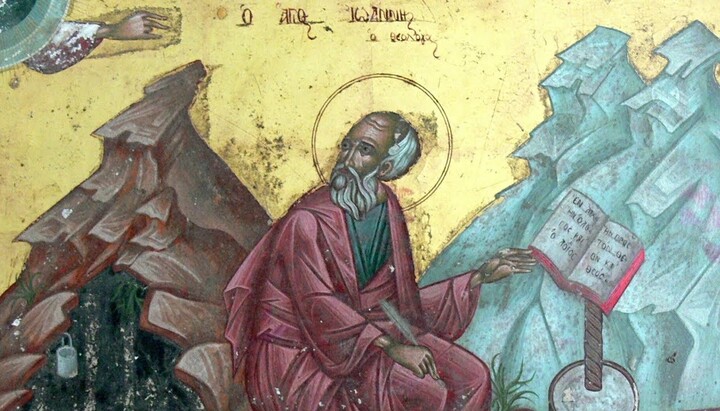
The Apostle John the Theologian. Photo: open sources
On October 9 (September 26 according to the Julian calendar), the Church commemorates the repose of the Apostle John – the beloved disciple of Christ, author of the Fourth Gospel and the Book of Revelation.
The Apostle John was the son of the fisherman Zebedee and Salome, and the younger brother of the Apostle James. Together with his brother, he was called by Christ on the shore of the Sea of Galilee, where they were engaged in fishing. Leaving everything behind, the brothers followed the Teacher and became among His twelve closest disciples.
John belonged to the circle of apostles closest to Christ. Along with Peter and James, he was present at the Transfiguration of the Lord on Mount Tabor, at the raising of Jairus’s daughter, and witnessed the prayer in Gethsemane. Christ called the sons of Zebedee the “sons of thunder” for their fiery zeal for the faith.
The Savior’s special trust in John was revealed at the Last Supper, when the young apostle reclined on the Teacher’s breast. John was the only disciple who remained at the Cross during the Crucifixion, and to him Christ entrusted the care of His Mother. From that moment, the Apostle John, as a loving son, served the Most Holy Theotokos until Her Dormition and burial.
After the Ascension of the Lord and the descent of the Holy Spirit, John remained close to the Apostle Peter. Following the Dormition of the Theotokos, he preached in Asia Minor. Under Emperor Nero, the Apostle was summoned to Rome for trial and condemned to death. He was thrown into a cauldron of boiling oil, but the Lord preserved His chosen one unharmed. Then John was exiled to the island of Patmos, where he received a revelation about the destiny of the world and the Church – a book known as the Apocalypse (Revelation).
After the death of his persecutor, Emperor Nerva released the Apostle from exile, and he returned to Ephesus, where he wrote his Gospel. In his deep old age, when he could no longer walk and his disciples carried him to gatherings, he constantly repeated the same words: “Children, love one another.” When asked why he always said the same thing, the Apostle replied: “This is the Lord’s chief commandment. If you keep it, you will fulfill the entire law of the Gospel.” For this preaching of love, John came to be called the Apostle of Love.
The Apostle John reposed at the age of more than one hundred years. According to Church tradition, he was buried in Ephesus, but when his tomb was opened the next day, his body was not found. The Church believes that the Lord took His beloved disciple to Himself.
John the Theologian is venerated as the author of the Fourth Gospel, three Catholic Epistles, and the Apocalypse. His Gospel is distinguished by special theological depth and reveals the divine nature of Christ. For this reason, the Apostle was called Theologian – the only evangelist to be granted this title.
Earlier, the UOJ explained why John the Theologian is called the Apostle of Love.
Read also
Receding Dniester in Khmelnytskyi region exposes foundation of flooded church
The foundation of St. John the Theologian Church, submerged during the construction of a hydroelectric power plant, has emerged for the first time in 45 years.
Kyiv’s Vvedensky Monastery damaged in shelling, two injured
A cluster munition struck the monastery, injuring a cook and a kitchen assistant and damaging the facade, the roof of the monks’ residential building, and several monastic cells.
Medieval сhurch сrumbles as Culture Ministry сites missing agreement
The 14th–15th-century St. Nicholas Church in Chesnyky, Ivano-Frankivsk Region, is falling into disrepair.
Poland сondemns Lviv Regional Council's decision to declare 2007 year of UPA
Polish Prime Minister Donald Tusk says the Lviv Regional Council's decision to dedicate 2027 to the UPA and Roman Shukhevych is harmful to Ukraine.
OCU seeks court recognition of ownership of seized Cherkasy cathedral
The Cherkasy Regional Commercial Court will hear an OCU lawsuit seeking ownership of St. Michael's Cathedral, which was seized from UOC believers.
Lithuanian bishop: Ukraine is no model for believers' rights
Vicar of Vilnius Diocese voices concern over attempts to import Ukraine's religious conflict into Lithuania.