Austrian parliament abolishes “gender language” in official documents
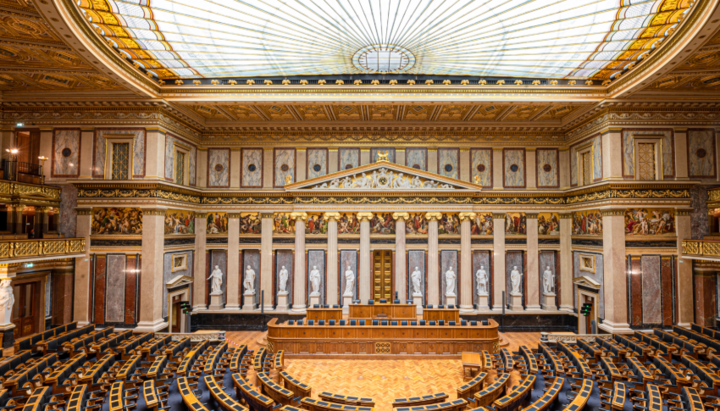
Austrian Parliament. Photo: Tribune Chretienne
On October 19, 2025, the Austrian parliament decided to abandon the use of so-called “gender-inclusive language” in official texts. According to Die Presse, lawmakers ruled that all National Council documents must now conform to the classical norms of the German language, as established by the Council for German Orthography.
President of the National Council Walter Rosenkranz stressed that the parliament is returning to linguistic clarity and naturalness: “True equality is achieved not through punctuation marks, but through education, equal opportunities, and respect. Parliament is a place of democracy, not of linguistic experiments.”
The decision ends the use of symbols such as asterisks, colons, and internal capitals – devices previously employed to denote “non-binary” and “transgender” forms. These elements, imposed by activist groups according to critics, had been repeatedly condemned by the German Language Association for violating grammar and obscuring meaning.
Austria’s move follows similar decisions in Germany and Switzerland, whose national councils have already rejected “gender writing.” Polls indicate that up to 90 percent of citizens in Austria and Germany consider such linguistic reforms unnecessary and ideologically driven.
Rosenkranz’s initiative reflects a broader European trend toward restoring traditional linguistic norms and resisting the politicization of language. Similar steps have been taken in Italy and France, where officials emphasize that language is not a tool for political experimentation but part of cultural heritage.
Earlier, the UOJ reported that the EU plans to legalize gender transition for minors within five years.
Read also
SBU told Phanar many UOC bishops would join OCU in 2018, report says
According to a Phanar representative’s account, Ukrainian security services told the Constantinople delegation that many UOC representatives were prepared to attend the OCU’s “Unification Council.” In the end, only two did.
Catholic cardinal visits Ukrainian POWs during trip to Russia
During three days of consultations in Moscow, Cardinal Matteo Zuppi discussed prospects for ending the war in Ukraine.
Ukrainians help restore Serbian Orthodox church in Paris
Orthodox Ukrainians have become regular parishioners of St. Sava Church in Paris and have taken part in its restoration.
Bulgarian Church clergy and laity oppose Phanar head’s visit
More than 2,000 clergy and laity have called for the Ecumenical Patriarch’s visit to be canceled, citing disagreement with his actions and concerns that the visit could legitimize schism.
Unknown intruders break down doors at two UOC churches in Sloviansk
Archbishop Paisiy said OCU activists are suspected of breaking into the churches in Sloviansk, and police have launched an investigation.
Sviatohirsk Lavra prays for murdered monk on 40th day after death
The brethren of the Sviatohirsk Lavra held a memorial service for murdered Monk Varsonofiy, calling on the faithful to pray for the newly departed monk.