What happens if you start counting all the Metropolitans of Kyiv
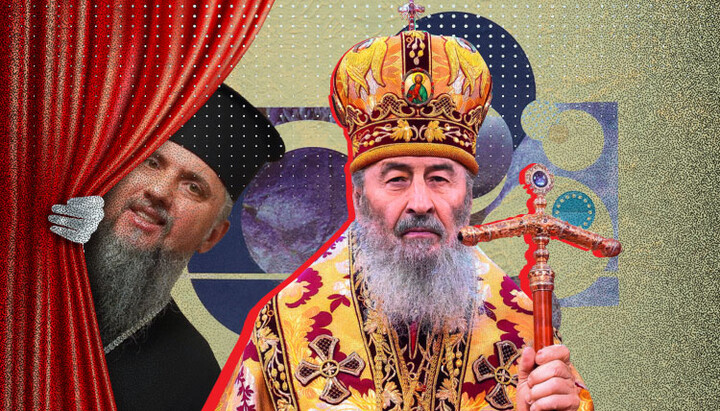
Whose successor is Epifaniy Dumenko as “Metropolitan of Kyiv”?
When in 1990 the Ukrainian Exarchate was transformed into the Ukrainian Orthodox Church (UOC), its primate became Metropolitan of Kyiv and Galicia Filaret (Denysenko). His title was thus changed to “Metropolitan of Kyiv and All Ukraine.” He was the 120th Metropolitan of Kyiv, counting from the Baptism of Rus’ in 988.
But in 1992, Filaret broke away from the UOC, declared himself “Patriarch,” and created a new church structure – the UOC of the Kyiv Patriarchate (UOC-KP). Alongside it existed the Ukrainian Autocephalous Orthodox Church (UAOC). Each of these bodies maintains its own count of Metropolitans of Kyiv.
In 2018, the Ecumenical Patriarch of Constantinople Bartholomew “dissolved” the UOC, UOC-KP, and UAOC, and ordered them to unite into one church. The UOC refused to take part in what it saw as an absurdity, while the UOC-KP and UAOC merged into the Orthodox Church of Ukraine (OCU). Soon after, however, Filaret loudly withdrew from the new body and revived the UOC-KP – but that is another story.
Meanwhile, the UOC continues to exist. None of the 15 universally recognized Local Orthodox Churches has ever stated that it no longer considers the UOC a canonical Church. Likewise, no one (except the Phanar) has claimed that His Beatitude Metropolitan Onuphry is no longer Metropolitan of Kyiv. At the same time, four “Greek” Churches today call Epifaniy Dumenko the Metropolitan of Kyiv. This raises the question: which number is he in the sequence, and whose successor is he really?
The UOC line of succession
Filaret Denysenko was the 120th canonical Metropolitan of Kyiv. On May 27, 1992, the Council of Bishops of the UOC in Kharkiv deposed him from the Kyiv See – a decision entirely lawful under canonical law.
Among the charges were:
- authoritarian governance of the UOC and the Kyiv diocese;
- disregard for the conciliar voice of the Church;
- cruelty and arrogance toward fellow hierarchs, clergy, and laity;
- a lifestyle unbecoming of a hierarch (he had a wife and children);
- perjury, having violated his oath given before the Cross and Gospel.
The following canons were among those violated by Filaret: Apostolic Canons 25 and 27; Canon 3 of the First Ecumenical Council; Canon 6 of the Second Ecumenical Council; Canon 5 of the Quinisext (Trullan) Council; Canon 88 of St. Basil the Great, and others.
The deposition of Filaret was recognized by all Local Orthodox Churches, including the Ecumenical Patriarchate of Constantinople.
The Kharkiv Council then elected Metropolitan Volodymyr (Sabodan) as his successor – the 121st Metropolitan of Kyiv. All Local Churches (again, including Constantinople) recognized him as such and sent congratulatory messages.
The same occurred in 2014, when after Metropolitan Volodymyr’s repose, Metropolitan Onuphry (Berezovsky) was elected Primate of the UOC.
Thus, the canonical and universally recognized 122nd Metropolitan of Kyiv is Onuphry.
The UOC-KP line of succession
Here, things get more complicated. In 1992, the defrocked Filaret formed the UOC-KP by merging his few followers with the UAOC, which was then led by “Patriarch” Mstyslav Skrypnyk, living in the U.S. and Canada. Mstyslav learned about this “union” after the fact and called on his followers not to recognize it.
Nonetheless, the UOC-KP considers him its first primate, while Mstyslav himself and the UAOC do not. So, in the UOC-KP’s own count, Mstyslav Skrypnyk is the 121st head of the Ukrainian Church (with the title “Patriarch,” though we set that aside for now).
In 1993, after Mstyslav’s death, Volodymyr Romaniuk became head of the UOC-KP – number 122 by their reckoning. He died in 1995 under unclear circumstances and was succeeded by Filaret Denysenko, number 123.
The UAOC line of succession
Here, too, the picture is tangled. The UAOC originated in 1921, when, against all canons, Vasyl Lypkivsky was “consecrated” as “Metropolitan of Kyiv” by priests and laypeople.
At that time, the canonical Metropolitan of Kyiv (the 115th) was Metropolitan Mykhail (Yermakov). Thus, along the UAOC line, Lypkivsky would be the 116th “primate” of the Kyiv See.
He was followed by Mykola Boretsky (117), then Ivan Pavlovsky (118). Between 1930 and 1937, the UAOC was virtually destroyed by the Soviet regime, leaving only Bishop Ioann (Theodorovych), who, for lack of other bishops, may be considered 119th.
In 1942, under Nazi occupation, the UAOC was revived and led by Polycarp Sikorsky (120). During this period, the UAOC’s administration was chaotic – some sources list Nikanor Abramovych as an administrator in parallel, but most omit him, so he is not numbered here.
After Sikorsky, Mstyslav Skrypnyk became head of the UAOC in 1953 (121), though by then the Church existed only in the diaspora.
In 1989, the UAOC was revived in Ukraine; its primate was Ioann Bodnarchuk (122). In 1990, he ceded the position to Mstyslav Skrypnyk, who, logically, would then be 123rd (though this is disputed).
He was succeeded by Dmytriy Yarema (124), Methodius Kudryakov (125), and Makariy Maletych (126).
Which number is Epifaniy Dumenko?
Epifaniy cannot be the successor of what he himself calls a “church of the FSB” – the UOC. That leaves two hypothetical options:
He would be the 124th, if he inherits from the UOC-KP;
Or the 127th, if he inherits from the UAOC (or 126th if Mstyslav Skrypnyk is not counted twice).
But all these calculations belong more to the realm of dark comedy than of ecclesiology. Neither the UAOC nor the UOC-KP possessed real apostolic succession, since they arose from nothing, while their “primates” functioned concurrently with the canonical hierarchy of the Church.
Conclusions
Dumenko, of course, gives little thought to such inconvenient questions. But perhaps the Patriarchate of Constantinople should. For there, they are enamored of their ancient diptychs and venerable lists of Metropolitans – that Byzantine obsession with order and legitimacy. They like everything in its place, numbered and sanctified by time.
So let them tell us plainly: whose successor is Serhiy (Epifaniy) Dumenko meant to be?
In the end, this farce only underscores what has long been evident: the OCU project stands on no religious, canonical, or even historical ground.
Read also
Yelensky’s plan: Why is DESS demanding what the UOC has already done?
DESS is demanding that the UOC take steps it has already taken, while offering no assurance that further demands will not follow. What is behind Yelensky’s ultimatum?
Why OCU hierarchy lacks canonical ordination: what Local Churches say
The OCU head refuses to address invalidity of his ordinations. But almost all Local Churches speak of it – even those that recognized the OCU.
Why nation-first advocates do not call for peace
Ukraine’s population is declining by nearly one million people a year, and experts are warning of the nation’s demographic extinction. Yet the leaders of the Orthodox Church of Ukraine (OCU) and the Ukrainian Greek Catholic Church (UGCC) continue to call for war and mobilization.
The deception that decided the fate of the Tomos
In 2008, the "Filaret problem" derailed Yushchenko's plan. In 2018, Poroshenko solved it in just one hour – with a police escort for the Greeks and verbal promises to Filaret.
Lawyers in the crosshairs: How UOC is being stripped of its right to defense
Activists harass UOC lawyers outside courthouses, call them “traitors” on air, and promise them a “warm welcome” at hearings. The Church’s right to a legal defense is at stake.
How to respond to persecution: Lessons from St. Silouan the Athonite
The Church can and should be defended, but without malice. Why love for persecutors is not weakness but the only way to preserve the Spirit of Christ in the midst of the struggle.