What is “new creation”? Apostle Paul on the chief rule of Christian life
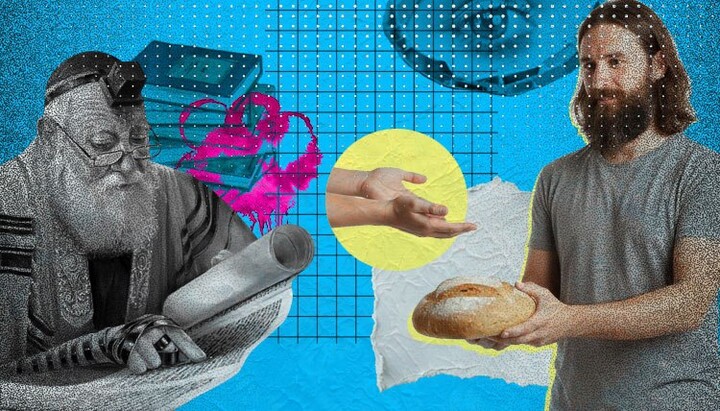
Christian mercy stands in opposition to legalism. Photo: UOJ
Anyone who has lived within the Church for some time realizes that Christianity is an active faith. No matter how much we may wish to “hide behind” belief and avoid the labor of inner change, genuine spiritual life will not allow it.
At times, in a surge of inspiration, we may echo the words of a famous musician: “Our hearts demand change.” But when we read the Gospel, which calls us to actual transformation, we often shamefully retreat from the front line of the spiritual struggle.
Our ancestors went into battle against visible enemies, crying fervently, “Not a step back!” Yet in our battle with the invisible foe, we often act according to another principle: “One step forward, two steps back.”
The saints subdued their passions through fasting and prayer, while we often find it easier to bow before temptation than to repel it instantly with a cry to God.
Deeds, not words
The fervent Epistle of the Apostle Paul to the Galatians overflows with calls to courage in the fight against the powers of evil. Paul did not set himself the goal of defeating all the enemies of Christianity, of which there were plenty in his time. He did not urge his followers to heated debates with the God-opposing world.
Instead, he gave them what is perhaps the most precious spiritual counsel of all – to live according to the Gospel, daily and hourly transforming their way of life for the better.
He understood that there were many gifted orators in the ancient world, but most of them, after descending from lofty podiums, surrendered to gluttony, lust, and debauchery. That is why it was crucial for the Apostle that the words of his disciples not diverge from their lives – so that, seeing their good deeds, both Jews and pagans alike would glorify the Heavenly Father, the one true God, the Creator of all that exists.
The “inconvenient” rule: the new creation
To the Galatian community, Paul dictates the fundamental rule of spiritual life – one that may seem quite “inconvenient” to modern Christians. He writes: “For in Christ Jesus neither circumcision nor uncircumcision counts for anything, but a new creation” (Gal. 6:15).
With these words, the Apostle overturned a central tenet of Judaism, one that had long been a stumbling block between Jews and other nations. Circumcision was the sign of belonging to the chosen people, of participation in the covenant God made with Abraham.
Paul makes what was, for his time, a revolutionary statement.
In essence, he erases the boundary between the descendants of Abraham and the “outsiders,” reinterpreting the very notion of being chosen by God. The New Testament message defines divine election not by external membership in a religious community, but by one’s inner response to Christ’s saving mission.
What does it mean to become “above-the-heavens”?
What, then, is this “new creation” Paul speaks of? “Life in Christ is a new creation,” writes Blessed Theophylact of Bulgaria, “for your souls, worn and aged by sin, are now renewed by baptism; and in the age to come we shall be made worthy of incorruption and glory.”
According to St. John Chrysostom, “The Cross of Christ, having equated circumcision and uncircumcision, has taught us to seek new deeds – wondrous and above the heavens.”
With such an understanding of the “new creation” in Christ, each of us should compare it with our own life.
Has our life after baptism become “above the heavens,” or do our thoughts still revolve around earthly well-being?
Do we build for ourselves the perspective of eternal life, or do we remain content with short-term plans for the few years we have on earth?
That is why the commandment to become a “new creation” often seems to us a heavy burden – because Christianity calls us to aims that transcend temporal existence.
Having embraced the Apostle Paul’s “golden rule,” let us strive to follow it – moving from beautiful words to fruitful deeds. Then the Apostle’s next promise will come true for us: “Peace and mercy be upon all who walk by this rule” (Gal. 6:16).
Read also
Collapse of Babel's tower of globalism
October 24 is United Nations Day. An analysis of the crisis of secular institutions and the ideology of globalism through the prism of biblical Babylon and Pentecost.
Archpastor's word for weary city dwellers
When exhaustion weighs us down, we turn to ancient sermons to ask profound questions about human destiny and the nature of existence.
Brother of tax collector and brother of Lord
The Gospel is silent about the son of Alphaeus, and commentators have argued for centuries over who he was. And the Church commemorates two apostles named James in close proximity.
Prayer commemorations instead of loving embraces
At every Orthodox wedding, the choir sings a hymn to the martyrs. For families separated by war, these words carry a special meaning.
Honest atheism vs. spiritual hypocrisy
The 70th anniversary of Albert Camus’s Nobel Prize recalls an uncompromising challenge to Christianity. An honest unbeliever brings theology back to the mystery of the Cross.
The valley of trouble and the gateway of hope
One soldier buried an expensive cloak and some gold beneath his tent. Because of this, all Israel lost a battle. Why did one man’s sin bring disaster upon an entire nation?