In Greece, believers urge the Church to oppose digital passports
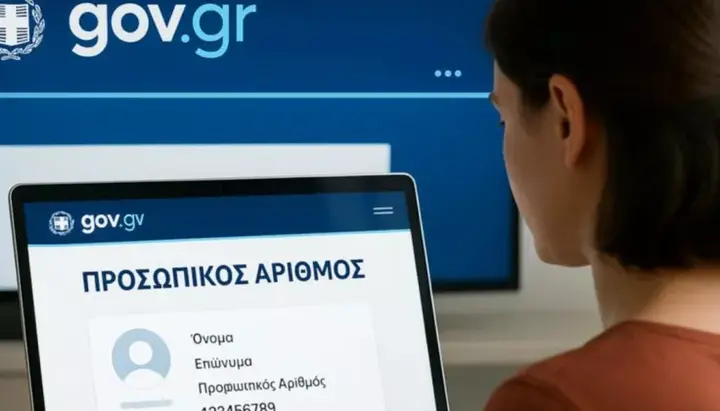
Citizen's personal number interface on the gov.gr platform. Photo: vima orthodoxias
On November 13, in Greece, some Orthodox believers publicly addressed the Greek Orthodox Church, requesting it to take a stance on implementing a personal digital citizen number. This was reported by the portal vimaorthodoxias.gr.
According to the publication, the reaction was prompted by the automatic assignment of a new identification number to citizens through the gov.gr platform without full public discussion. For many Greeks, this became not only a technical but also a socio-spiritual issue, as the digital identifier combines a person's personal data and accompanies them throughout their life.
Priests of southern and island Greece, commenting on the situation unofficially, express concern about the lack of open dialogue. Some note that such decisions cannot be made without "prior complete information and spiritual consultation". Others add: "Apart from the bureaucracy and the technical part, there is also the dimension of personal freedom. The State must listen, not just impose."
Some believers are turning to human rights defenders and church structures, expressing concern about the concentration of confidential data. “I don’t want a number that follows me everywhere and connects all my information without me knowing who sees it and when,” says one citizen who contacted the site. Another adds: “The state has deprived us of the right to choose. They gave it to us without us asking for it. That alone says a lot.”
The reactions are not limited to those with intellectual reservations. They also involve people with technical knowledge, lawyers, doctors, and workers who are concerned about issues of transparency, privacy, and government surveillance.
At the same time, opinions of spiritual leaders and Athonite monks, warning about the risks of excessive digitalization of personality, are heard. Mount Athos circles state that "man should remain free and not surrender his entire existence to a single and mandatory state registration."
Amid the government's decision on the "digital transition", more and more citizens are demanding that the Church clearly express its stance. According to believers, the issue of the digital passport concerns not only politics but also conscience, pastoral responsibility, and the protection of human personality.
Earlier, the UOJ reported that fake priests holding a drug lab in a church were exposed in Athens.
Read also
Khust Eparchy honors memory of St. Job of Uholka
A Liturgy is served in Mala Uholka, a birthplace of St. Job of Uholka, on the saint's feast day.
UOC parish in Cologne donates ultrasound machine to Kharkiv region hospital
In Cologne, UOC believers raised funds for an ultrasound machine for the Kehychivka district hospital in the Kharkiv region.
Shevchuk tells Pope Leo of Ukraine's preparations for "another harsh winter"
The head of the UGCC expressed "special gratitude" to the Pope for his phone calls with Putin and Zelensky.
Berlin hierarch comments on Phanar document published by UOJ-USA
Metropolitan Mark called the information about the 2018 "Unification Council" alarming if confirmed, and expressed hope that Patriarch Bartholomew will reconsider his position.
UOC marks Synaxis of All Saints of Volyn Land at Lutsk cathedral
Metropolitan Serhiy of Ternopil and Kremenets led the Liturgy on the feast day of the Lutsk cathedral of All Saints of the Volyn Land.
SBU detains OCU cleric who organized draft evader's escape for money
In Transcarpathia, law enforcement officers detained a clergyman of the OCU who arranged for a draft evader to be smuggled into Slovakia for $15,000.