“Spiritual neurosis”: Elder Paisios on the right to make mistakes
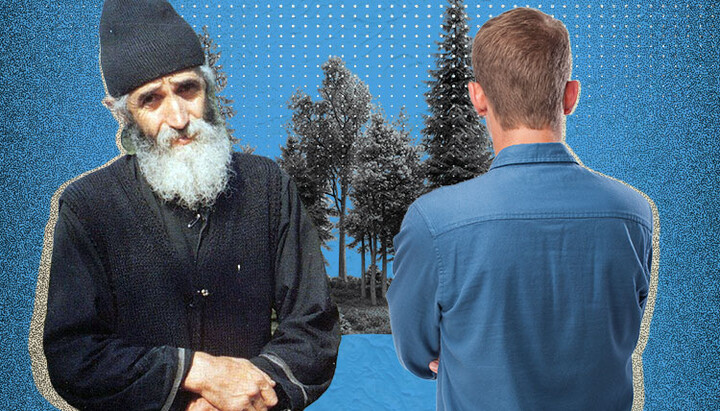
“God looks at what is in a person’s heart.” Photo: UOJ
Modern people live under the constant pressure of perfectionism. We fear making a misstep at work; we fear looking foolish on social media. Even our desire for repentance can turn into something unhealthy. Often, by harshly condemning ourselves for every sin, we imagine God as a severe inspector who keeps a tally of all our falls.
But is this really who God is?
Let us listen to St Paisios the Athonite, who explains why God loves the diligent rather than the “flawless,” and how to tell saving repentance from egocentric hysteria.
The trap of “holy perfectionism”
We tend to think of spiritual life as a vertical staircase we must climb without slipping. Every fall, every lapse in fasting, every burst of anger throws us into panic.
“I’m a bad Christian,” “I can’t do anything right,” “God has abandoned me” – these thoughts plague many, especially beginners who step over the threshold of the church and immediately want to become perfect believers.
But Elder Paisios warns sternly: this state is not piety. It is “spiritual anxiety,” a condition rooted not in love for God but in wounded pride. We want to be “straight-A students” in our own eyes. Yet God awaits something very different.
“Spiritual life is not like pressing a button: press it – and you come out a saint. God does not demand things beyond our strength. He is not a tyrant but a loving Father. Some tighten the bolts so hard that they strip the threads. Don’t do this. Do what you can, with joy and hope, and leave the rest to God,” said the geronda.
Indeed, when we strive for perfection solely by our own power, we attribute divine qualities to ourselves. At every Liturgy we hear the words “Holy things to the holy,” yet driven by sincere zeal for holiness, we distort that holiness, leaving no room for God Himself – the One who alone is Holy – to act in our lives.
God loves the earnest, not the “spotless”
How does God respond to our mistakes? Many imagine a heavenly office where God, like a faceless servant of Themis, oversees a team of angel-clerks who sternly record our misdeeds in judicial files. Elder Paisios offers a completely different image – that of a loving mother watching her infant learn to walk.
“A small child, learning to walk, falls, stands up, falls again, hurts himself, cries, and then stands up once more. And God, as a tender Father, sees His child’s effort and rejoices. He does not demand that we never fall – that is impossible for a human being – but He wants us not to lie in the mud, but to rise and walk toward Him.”
The key word here is effort – the heart’s intention. If a person has a good will and strives according to their strength, the elder assures us that God covers that person’s weaknesses with His grace.
“God looks at what is in a person’s heart, not at how flawlessly he has fulfilled an external rule,” St Paisios teaches.
Sorrow after a fall: repentance or pride?
Why do we sink into depression after committing a sin? We think we are repenting deeply, confessing “properly.” But in reality, this is not humility – it is wounded ego. The egoist is upset not because he grieved God, but because his “ideal image” of himself collapsed before his eyes.
The elder draws a clear line between genuine “humility” before God and its counterfeit – a self-pitying, theatrical humility performed for oneself or others.
“There is humility that comes from grace, and there is a ‘humility’ from the enemy, which leads to despair. When a person falls and immediately falls into despair – this comes from pride. The proud man says: ‘How could I do such a thing? How could I fall so low?’ But the humble man says: ‘Lord, I am a weak human being. Forgive me, I have fallen again. Help me to rise.’ And he rises and continues with hope, without losing inner peace.”
The elder calls this distorted state “spiritual masochism.” We poke at our wounds instead of healing them. And in this substitution, the devil is always involved. Everything that comes from God brings consolation and peace, not anxiety and nervous agitation.
Discernment – the spiritual “brakes”
To avoid the breakdowns for which we later torment ourselves, we need the primary virtue of discernment. Elder Paisios often compared a person to a car, and discernment to its steering wheel and brakes.
“A person must know his measure. If a little car has a tiny engine and you load it like a truck, it will break down. Discernment shows us how much we can carry. A small rule performed with joy and attention is better than a great rule done with grumbling and strain.”
Discernment also helps us respond correctly to criticism. We often depend painfully on the opinions of others. Someone criticizes us – and we drive ourselves even deeper into self-torment.
“How should we respond to reproach?” we might ask Elder Paisios. And he answers:
“If you are criticized justly – correct yourself and give thanks. If unjustly – rejoice even more! You are collecting heavenly currency. Those who accuse us unjustly clean our soul for free. Do not waste energy trying to justify yourself or prove yourself right. Leave judgment to God.”
The right to make mistakes
Accepting one’s imperfection does not mean giving oneself permission to sin. It means acknowledging that we are human, not angels. We are not self-sufficient – therefore we need a Savior.
A “spiritual neurosis” appears when we try to save ourselves through our own achievements. But divine power is made perfect in weakness, not in the illusion of human strength. To allow God to forgive and heal us, we must first allow ourselves to be imperfect – not flawless, but faithful, surrendered to His all-good will.
And finally, Elder Paisios leaves us with his central counsel for preserving inner peace:
“Keep your mind in hell (meaning, be aware of your sinfulness – Ed.) and do not despair. Above all, place your hope in God and do not trust your thoughts.”
Read also
Brother of tax collector and brother of Lord
The Gospel is silent about the son of Alphaeus, and commentators have argued for centuries over who he was. And the Church commemorates two apostles named James in close proximity.
Prayer commemorations instead of loving embraces
At every Orthodox wedding, the choir sings a hymn to the martyrs. For families separated by war, these words carry a special meaning.
Honest atheism vs. spiritual hypocrisy
The 70th anniversary of Albert Camus’s Nobel Prize recalls an uncompromising challenge to Christianity. An honest unbeliever brings theology back to the mystery of the Cross.
The valley of trouble and the gateway of hope
One soldier buried an expensive cloak and some gold beneath his tent. Because of this, all Israel lost a battle. Why did one man’s sin bring disaster upon an entire nation?
From love spells to bishop's throne
Antioch’s most powerful sorcerer sent demons against a devout young Christian woman three times – and failed every time. In the end, a demon himself revealed the truth that led to his conversion.
The Weeping Queen of Blachernae
On the night of the Feast of the Protection, only two people witnessed the miracle in the Church of Blachernae. Everyone else prayed and saw nothing. Yet they, too, received grace.