Metropolitan Arseniy and the Kremenchuk deputy: what is common?
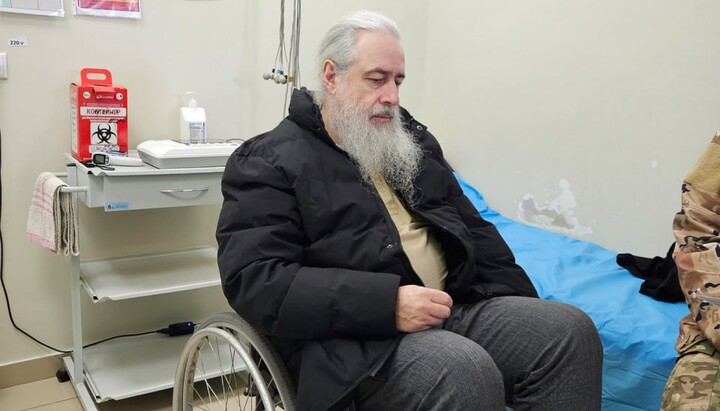
Metropolitan Arseniy. Photo: the Sviatohirsk Lavra
As is known, Metropolitan Arseniy has been in a pre-trial detention center for more than a year and a half for mentioning a checkpoint near the Sviatohirsk Lavra in a sermon. The prosecution interprets his words as harmful to the Armed Forces of Ukraine (AFU), as Russia could have struck the checkpoint. However, there was no strike, nor could there have been, as the archbishop did not specify any exact coordinates. He mentioned the checkpoint only briefly, in the context that the police and military refused to let pilgrims into the monastery.
And now we will tell you another story. On December 7, the Russians launched a massive strike on Kremenchuk, during which an almost completed energy-related facility was destroyed. Equipment worth tens of millions of dollars turned to dust, and people's hope for a winter with electricity vanished. Local media report that on the eve of the strike, information about this enterprise, with photos and location details, was publicly announced by one of the deputies of the Kremenchuk City Council.
Coincidentally, this deputy is very concerned about the "transitions" of UOC churches to the OCU and regularly lobbies for the interests of Dumenko's structure. In particular, he demands that the police allow the OCU into two "transferred" churches in Kremenchuk before the court proceedings are over.
By another coincidence, this deputy's father provides legal support for these very fake transitions. That is, in the church matter, the father and son, working on the side of the "right" confession, have a family contract.
We in no way wish the talkative deputy the fate of Bishop Arseniy, and there have already been many similar "deputy" cases in Ukraine, including those with human casualties.
The example in Kremenchuk is just another testimony to the double standards of the authorities. Therefore, we have the right to say that the Sviatohirsk Metropolitan is behind bars not because he committed a crime. He simply chose the "wrong" Church. And he refuses to change his choice.
As we can see, today, this is already enough for imprisonment.
Read also
Ternopil post on Feast of Intercession: Has calendar reformn failed?
A significant number of believers have rejected the new church calendar introduced by the OCU and UGCC with government support.
Shoulder straps or a cassock: who writes the script for UOC "fighters"?
Everything indicates that both Veliar and Pshenychny are ordinary performers of someone else's script. There is only one question – does the scriptwriter wear shoulder straps or a cassock?
Why is it legal to kill a person before birth but not after?
Children are the most privileged members of society. Yet that same society officially permits children to be killed – and on a massive scale.
Honoring the Bolsheviks’ successors at Kyiv Lavra
It was under the Reserve that the relics of the saints were desecrated, Lavra churches were turned into an atheism museum, and toilets were installed in sanctuaries.
"Degenerates" and "stupid animals": anti-UOC activists turn on children
Future historians will wonder how a vast country’s information agenda could have been shaped for so long by people so petty, vicious, and utterly contemptible.
Zelensky sees murder of Polish priest but not of Sviatohirsk monk
Why does Zelensky react so emotionally and swiftly to the murder of a Catholic cleric while remaining completely silent about the murder of an Orthodox monk?