Why Jesus of Nazareth is the Christ – a two-thousand-year debate
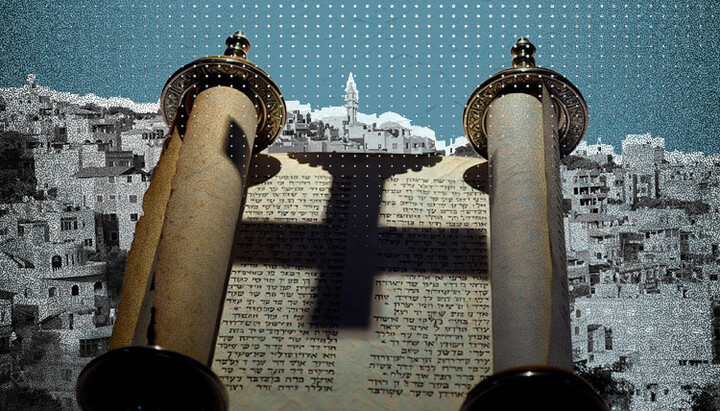
Ancient prophecies about Christ have been fulfilled. Photo: UOJ
Jews, appealing to Old Testament prophecies, argue that Jesus of Nazareth does not correspond to them. But it is useful for Christians to understand why the Jews are mistaken.
In the podcast “Christianity and Judaism: Do We Seek the Same God?” Andriy Dudchenko, secretary of the theological–liturgical commission of the OCU and an associate professor at a theological academy, claims that Christians and Jews have one and the same Messiah, while Torah teacher Yuri Radchenko says that the historical Jesus cannot be recognized as the Messiah of the Jewish people.
The question of whether Jesus of Nazareth fulfilled all the prophecies about the Messiah has been a subject of dispute between Christians and Jews throughout the entire history of the Christian Church.
Why did the Jews not recognize – and stubbornly still do not recognize – Jesus as the Christ? Perhaps they truly have serious grounds for this?
After Jesus Christ healed the paralytic at the Sheep Pool in Jerusalem, He entered into a dispute with the Jewish leaders. It was the Sabbath, and the Jews said that even good deeds must not be done on that day. Their anger grew so fierce that they wanted to kill Jesus, despite the obvious miracle of His healing a man who had endured a cruel illness for thirty-eight years.
Explaining His action, the Lord said, “My Father is working until now, and I am working” (John 5:17) – to which the Jews responded with an even greater explosion of hatred and a thirst for murder. In this situation Jesus Christ pointed them to the Holy Scriptures and proposed that they draw conclusions about His Messiahship on the basis of prophecy: “Search the Scriptures, for you think that in them you have eternal life; and these are they which testify of Me” (John 5:39).
Let us follow this counsel and look at what indications of the Messiah exist in the Old Testament. Since there are quite a few of them, we will consider only those that specifically point to the historical Jesus of Nazareth, who lived on earth two thousand years ago.
Seed of the Woman
In that same conversation with the Jews, the Lord says, “If you believed Moses, you would believe Me; for he wrote about Me” (John 5:46). Indeed, there are many Messianic passages in the Pentateuch of Moses, but most give general, rather indistinct indications, for example: “I will raise up for them a Prophet like you from among their brethren, and will put My words in His mouth, and He shall speak to them all that I command Him. And whoever will not hear My words, which He speaks in My name, I will require it of him…” (Deuteronomy 18:18–19).
But there are two places in the Pentateuch that point to specific circumstances.
The first is when, at the expulsion of Adam and Eve from paradise, God gives them a promise concerning the “seed of the woman” – that is, the Savior who will be born of a Virgin without the participation of a husband: “I will put enmity between you and the woman, and between your seed and her Seed; He shall bruise you on the head, and you shall bruise Him on the heel” (Genesis 3:15).
Later the Prophet Isaiah repeats this foreshadowing: “Therefore the Lord Himself will give you a sign: Behold, the Virgin shall conceive and bear a Son, and shall call His name Immanuel” (Isaiah 7:14).
The Scepter of Judah
The second points to a concrete historical circumstance connected with the birth of the Savior: “The scepter shall not depart from Judah, nor a lawgiver from between his feet, until the Reconciler comes; and to Him shall be the obedience of the peoples” (Genesis 49:10). That is, the Messiah will be born when a foreigner comes to reign over Judea.
Jesus Christ was born during the reign of Herod I the Great, who was not a Jew but an Idumean, the son of Antipater, the Roman governor of Judea. Herod understood that he held the throne unlawfully and feared that the true King of the Jews would overthrow him. That is precisely why he ordered the slaughter of the infants of Bethlehem.
The Old Testament Evangelist
The Prophet Isaiah described the entire course of Jesus Christ’s life in such detail that Christians called him the Old Testament evangelist.
He clearly pointed to the preaching of John the Forerunner, the Nativity of Christ, the Savior’s preaching in Galilee, the sufferings of the Cross, death and Resurrection, the outpouring of the Holy Spirit upon the apostles, the Last Judgment, and the resurrection of the dead.
Here, for example, is how Isaiah describes the sufferings of Christ and the meaning of those sufferings:
“Who has believed our report? And to whom has the arm of the Lord been revealed?
For He shall grow up before Him as a tender plant, and as a root out of dry ground.
He has no form or comeliness; and when we see Him, there is no beauty that we should desire Him.
He is despised and rejected by men, a Man of sorrows and acquainted with grief.
And we hid, as it were, our faces from Him; He was despised, and we did not esteem Him.
Surely He has borne our griefs and carried our sorrows; yet we esteemed Him stricken, smitten by God, and afflicted.
But He was wounded for our transgressions, He was bruised for our iniquities;
the chastisement for our peace was upon Him, and by His stripes we are healed.
All we like sheep have gone astray; we have turned, every one, to his own way;
and the Lord has laid on Him the iniquity of us all.
He was oppressed and He was afflicted, yet He opened not His mouth;
He was led as a lamb to the slaughter, and as a sheep before its shearers is silent,
so He opened not His mouth.
He was taken from prison and from judgment, and who will declare His generation?
For He was cut off from the land of the living; for the transgressions of My people He was stricken.
And they made His grave with the wicked – but with the rich at His death,
because He had done no violence, nor was any deceit in His mouth.
Yet it pleased the Lord to bruise Him; He has put Him to grief.
When You make His soul an offering for sin, He shall see His seed, He shall prolong His days,
and the pleasure of the Lord shall prosper in His hand.
He shall see the labor of His soul and be satisfied.
By His knowledge My righteous Servant shall justify many, for He shall bear their iniquities.
Therefore I will divide Him a portion with the great, and He shall divide the spoil with the strong,
because He poured out His soul unto death, and He was numbered with the transgressors,
and He bore the sin of many, and made intercession for the transgressors” (Isaiah 53:1–12).
Prophet Daniel's mathematics
In the Old Testament there is also a precise chronological indication of the time of the Messiah’s coming into the world. This prophecy is contained in chapter 9 of the Book of Daniel. It describes how Daniel, in the Babylonian captivity, prayed to God, confessed the sins of the Jewish people, and asked for mercy. The Archangel Gabriel appeared to Daniel and said the following:
“Seventy weeks are determined for your people and for your holy city, to finish the transgression, to make an end of sins, to make reconciliation for iniquity, to bring in everlasting righteousness, to seal up vision and prophecy, and to anoint the Most Holy.
Know therefore and understand, that from the going forth of the command to restore and build Jerusalem until Messiah the Prince, there shall be seven weeks and sixty-two weeks; the street shall be built again, and the wall, even in troublesome times. And after the sixty-two weeks Messiah shall be cut off, but not for Himself; and the people of the prince who is to come shall destroy the city and the sanctuary. The end of it shall be with a flood, and till the end of the war desolations are determined.
Then he shall confirm a covenant with many for one week; but in the middle of the week he shall bring an end to sacrifice and offering. And on the wing of abominations shall be one who makes desolate, even until the consummation, which is determined, is poured out on the desolate” (Daniel 9:24–27).
Calculating the date
A “week” here means seven years – that is how this word is used elsewhere in Scripture, for example in Leviticus 25:8. The point of reference for these weeks is the decree to restore Jerusalem. It was issued by the Persian king Artaxerxes I in 457 B.C.
The first seven weeks, that is, forty-nine years, are the period of Jerusalem’s restoration – “troublesome times” – lasting until 408 B.C. Then come sixty-two weeks, that is, 434 years “until Messiah the Prince,” which conclude in A.D. 27. It is precisely at this time that Jesus Christ begins to preach after being baptized by John. The three-year difference from the Gospel, which says that Jesus was “about thirty years of age” (Luke 3:23), is explained by the fact that scholars cannot determine the year of His birth with exact certainty, and this difference fits within an acceptable margin of error.
Then Daniel speaks of the death of the Christ and the destruction of the Jerusalem Temple and the cessation of sacrifice, which followed in A.D. 70.
The material and the spiritual
After reading such clear indications of Jesus Christ as the Messiah, a question arises: why did the Jews reject Him? The reason lies in the fundamental difference between the Christian and Jewish views of the Messiah.
If for Christians He is first and foremost the Victor over sin and death, then for Jews He is an earthly king from the house of David, who must gather all scattered Jews, defeat all earthly enemies, and establish a glorious kingdom of Israel.
In other words, the Christian view is spiritual, and the Jewish view is material. Isaiah prophesied about this hardening of the heart (Isaiah 6:10), and Christ repeated it: “In them the prophecy of Isaiah is fulfilled, which says: ‘Hearing you will hear and shall not understand, and seeing you will see and not perceive; for the hearts of this people have grown dull. Their ears are hard of hearing, and their eyes they have closed, lest they should see with their eyes and hear with their ears, lest they should understand with their hearts and turn, so that I should heal them’” (Matthew 13:14–15).
Accordingly, the path to a correct understanding of the prophecies about Christ lies in rejecting crude material desires for earthly glory and well-being, and in striving to restore the bond with God that was lost as a consequence of sin.
Read also
Facade of bones and facade of light
Antoni Gaudí spent forty-three years building a church in Barcelona, knowing that this construction was for the ages.
Trial of a dead pope
Once in Rome, the body of a deceased pope was seated on the throne and put on trial. The accusation relied on a church canon that had once saved his see.
Monastery built in defiance of king
When Orthodox believers in Minsk were left with just one church, townspeople decided to build another – and even a royal decree did not stop them.
Young Mother and Sleeping Christ
Michelangelo carved a Virgin Mary who looks younger than her Son – and signed his name in marble for the only time in his life. Neither of these peculiarities was accidental.
Orthodox books from a Uniate printing press
In the 18th century, Uniate monks at Pochaiv printed books used in prayer by Orthodox Christians and Old Believers alike.
The story of the honey brotherhood
The Mogilev Brotherhood began with members pooling money to brew honey drinks for feast days – and eventually grew to have its own printing press.