
Stories about the early Church: The state of clergy in the first centuries
Sources from this period present a rather mixed picture of the state of the clergy. To form a clearer understanding of it, let us examine three aspects: education, morality, and material support.
Education
As noted in previous publications, in the apostolic age Christianity spread through itinerant charismatic preachers: apostles, prophets, and didaskaloi.
Bishops and later presbyters were not required to possess special learning. What was required was sincere and true faith and high moral character. Instructing the flock in the faith was among the duties of bishops, but it was not the foundation of their activity. Accordingly, there was no system of Christian education or schools where those who wished could acquire knowledge about Christianity.
Almost immediately, Christian preachers had to engage in polemics with both Jews and pagans in a language understandable to them.
The Jews fairly quickly rejected Christianity, while pagan philosophers began to reflect on it intellectually. This required Christian preachers to know philosophy, and consequently led to the establishment of schools.
However, in the second century attitudes toward the establishment of Christian schools were far from uniform. Many Christian leaders regarded “external learning” and pagan philosophy with deep suspicion. Thus, around the year 200, Tertullian, in his treatise De praescriptione haereticorum, posed his famous question: “What indeed has Athens to do with Jerusalem? What has the Academy to do with the Church? What have heretics to do with Christians?” In Tertullian’s view, learning was almost tantamount to heresy. Why was that?
The reason was that at that time in the Greek-Roman world, many philosophical schools interpreted Christian teaching too “creatively,” combining it with various philosophical theories and thus becoming hotbeds of different Gnostic heresies. For example, one of the best-known in the mid-second century was the school of Marcion in Rome. It taught that a cruel Demiurge created the visible world, while Christ was the Son of a good but transcendent God.
Christian schools arose out of the needs of the time, especially as the work of itinerant charismatic missionaries declined. In the second half of the second century, a catechetical school was established in Alexandria. Its founder was Pantaenus, a former Stoic philosopher who later converted to Christianity. His successor was the renowned Clement of Alexandria, who wrote: “Philosophy was to the Greeks as the Law of Moses was to the Jews – a paidagogos to bring them to Christ” (Stromata).
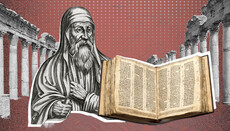
The Alexandrian school reached its greatest flourishing under Origen (c. 185–253), who developed a comprehensive program of theological education that included the study of Holy Scripture, Greek philology, rhetoric, and philosophy.
The work of Origen had a significant impact on shaping the intellectual character of the Christian clergy.
In addition to the Alexandrian school, a similar institution arose around 231 in Caesarea in Palestine, becoming an important center of theological study in the East. In Antioch, by the end of the third century, Lucian of Antioch established his own school, which became, so to speak, a theological competitor to the Alexandrian school. In Rome and Carthage, leading preachers such as Hippolytus, Tertullian, and Cyprian fostered theological circles that, though not formal schools, were highly influential.
Thus, the education of the clergy in this period was not centralized: it depended on individual teachers and local traditions and reached only a small portion of the clergy.
Moral state of the clergy
In the second and third centuries, the moral state of the clergy was ambiguous. Contemporary sources abound with descriptions of the holy life that pastors were expected to lead. For example, Hermas (mid-second century), in his book The Shepherd, writes: “Bishops and deacons must be holy and blameless, serving God with a pure heart.” In contrast, Ignatius of Antioch, in his Letter to the Magnesians, states: “Your bishop presides in the place of God, and your presbyters in the place of the assembly of the apostles….”
Compassion, self-sacrifice, and a sincere desire to preserve the true faith and not be led astray by the many false teachings often appear in descriptions of pastors of that time.
The persecutions of Christians, which periodically occurred in various parts of the Roman Empire, revealed both holy martyrs and apostates. Christians found to believe in Jesus Christ were not executed immediately. Typically, they were given time to reflect, an opportunity to renounce their faith, and thus save their lives. If they did not take this opportunity, they were subjected to torture and only then put to death. Numerous accounts attest to Christian pastors visiting these martyrs, strengthening them in their faith, and warning them against betrayal. Ordinary believers visited them in prison, brought food, and tended their wounds.
During this period, such pillars of the Church as Ignatius of Antioch the God-Bearer, Polycarp of Smyrna, Justin Martyr, Cyprian of Carthage, Pope Sixtus I, Lawrence of Rome, Dionysius of Alexandria, and many others faced persecution.
But many Christians and pastors during the persecutions turned out to be apostates. Often, the cause of this was their unworthy conduct during times of peace.
Thus, Cyprian of Carthage (third century), in his epistles, bitterly wrote about clerics who, in peaceful times, “did not maintain proper discipline” and during persecutions “instead of being an example for the flock, became a cause for stumbling.” There were cases when bishops themselves led their congregations into pagan temples to offer the required sacrifices to idols.
There is ample evidence that pastors sometimes served not so much Christ as personal gain and ambition. Such reports become particularly frequent in the third century. For example, Cyprian of Carthage comments on bishops: “Very many bishops, ceasing to care for the Divine, began to care for the worldly; abandoning their sees and leaving their people, they wander through foreign regions, trying not to miss market days for selfish profit, and when the brethren in the church are in need, they, driven by greed, cunningly seize the brethren’s, that is, the church’s, resources, and by lending them more often, increase their own gains.”
Eusebius of Caesarea characterised late third-century bishops as follows: “Our so-called pastors, disregarding the Christian law, became inflamed with mutual quarrels, multiplying only one thing – discord and threats, envy, hostility toward one another, and hatred – and earnestly sought preeminence, desiring to wield unlimited power.”
The church historian Anton Kartashev sees the main cause of this lamentable state in the fact that “in the third century, pastoral service ceases to be a vocation and, to a certain extent, becomes a profitable profession….” However, this cannot be considered the primary cause. The root of evil (as well as of good) lies, ultimately, in the human heart itself, not in external circumstances.
Probably the most controversial phenomenon of the time was the fairly widespread practice of cohabitation between men and women who had devoted themselves to spiritual life.
This was called a “spiritual marriage”, and it was supposed that sexual relations would not occur. Yet often, such “spiritual” brothers and sisters not only lived under the same roof but even slept under the same blanket. Hermas, in his book The Shepherd, describes a situation when a pastor allowed Hermas to spend the night together with “virgins”:
“So I remained alone with those virgins, and they were cheerful and affectionate toward me, especially the four most beautiful of them. <…> ‘You will sleep with us,’ they said, ‘as a brother, not as a husband, for you are our brother, and afterwards we will live with you, for we have grown very fond of you.’ I, however, was ashamed to remain with them. But she who seemed to be the first embraced me and began to kiss me. And the others, seeing that she had embraced me, also began to kiss me and play with me. Some of them sang and danced in a circle. And I walked silently, but joyfully, with them, and it seemed to me that I had grown younger. Evening came, and I wanted to go home, but they held me back. So, I spent that night with them near the tower. They spread their tunics on the ground and placed me in the middle <…> I took great pleasure in staying with them.”
For the record, this is supposed to illustrate the height of “dispassion” and “spirituality.” It is clear that under such conditions it would be extremely difficult, if not impossible, to avoid sin. Numerous saints and church writers, both of the third and fourth centuries, condemned this practice, which in itself indicates how widespread it had become. The First Ecumenical Council (325) prohibited this custom in its Canon 3.
Thus, the moral state of the clergy in the second and third centuries cannot be described in purely black or white terms. Great holiness could coexist with vice and greed. Nevertheless, the status of Christianity as a prohibited religion largely restrained the manifestation of the clergy’s and believers’ vices. Those who chose to join the Church understood that this path could lead them to Golgotha.
Material support of the clergy
The Apostle Paul, in his epistles, affirms the right of church pastors to “receive their living from the gospel” (1 Cor. 9:14), that is, to receive material support from the Christian community. However, he did not make use of this right himself: “Yes, you yourselves know that these hands have provided for my necessities, and for those who were with me” (Acts 20:34).
It seems that combining professional work with church service was typical in the early centuries. A bishop, presbyter, or deacon continued to practice their usual trade, which provided their means of subsistence. This meant that their material situation was roughly the same as that of other members of the community. Considering that early Christians were mostly poor people (“Brothers, consider the time of your calling: Not many of you were wise by human standards; not many were powerful; not many were of noble birth” 1 Cor. 1:26), the clergy were likewise in a similar condition.
In the second century, many clerics continued to work and earn a living independently. For example, Justin Martyr supported himself through teaching philosophy while already engaging in active church work. Gradually, however, there was a shift toward a model in which the clergy received material support from the community. Sources generally do not distinguish them as a separate category or mention any special provision for the clergy. There is no evidence of fixed salaries or income sources assigned to the clergy. Justin Martyr and Tertullian wrote that money collected by the community should first and foremost be used to aid the poor and needy. From this, it can be inferred that clerics, in terms of material support, were considered part of these categories.
By the middle of the third century, the situation began to change. The number of communities grew, as did the number of members in each. Liturgical, teaching, and administrative duties increased for the clergy, particularly for bishops. For example, in Rome under Bishop Cornelius of Rome (251–253), the clergy included 46 presbyters, 7 deacons, 7 subdeacons, 52 readers, an exorcist, and a doorkeeper. At the same time, the Roman community supported about 1,500 widows and needy persons. Clearly, under such circumstances, it was difficult – and largely unnecessary – to combine church duties with a trade, since communities in large cities, especially the imperial capital, were well provided for materially.
The Apostolic Constitutions (late third–early fourth century) state: “We ordain that the bishop have authority over the goods of the Church. <…> He is therefore to administer them all of his own authority, and supply those who need, through the presbyters and deacons, in the fear of God, and with all reverence. He may also, if need be, take what is required for his own necessary wants, and for the brethren to whom he has to show hospitality, so that he may not be in any want” (Canon 41). This reflects a model in which the clergy lived not on their own means but at the community’s expense. Nonetheless, cases of combining church ministry with other professional activities were still common. For example, Cyprian of Carthage, in his epistles, mentions clerics managing economic affairs and even engaging in trade.
Thus, in the first three centuries, the material situation of the clergy differed little from that of ordinary believers. By the end of this period, clerics ceased combining church duties with a trade and generally relied entirely on support from the community. However, no separate privileges or designated sources of income were assigned to them at this time.
The clergy of the first three centuries were an organic part of the Christian community, not yet distinguished from it and not yet transformed into a separate social class.
Clerics shared the same virtues and vices as other Christians. Holiness coexisted with weakness and timidity, compassion with greed, and education with illiteracy.
As long as Christianity remained a persecuted religion, the clergy lived the same life as the community. However, by the end of the third century, processes began to emerge that, in the following century, would change the very position of the clergy in society. This will be discussed in subsequent publications on the history of the early Church.