
Buried alive: How hegumen Athanasius outwitted kings and Jesuits
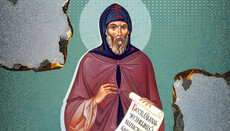
He was killed three times – defrocked, put in shackles, and shot. We reconstruct the chronicle of the saint's feat based on documents.
A September night of 1648. A pine forest near the village of Gershanovichi outside Brest. Hajduks are leading the hegumen to a pit that he has just dug with his own hands. Before pushing him down, one of the soldiers fired but only wounded him. The wounded priest was pushed into the pit and covered with earth.
This event is recorded in a document whose title deserves special attention: "On the death of glorious memory of the late father Athanasius Filipovich, hegumen of Brest Orthodox, a tale written by his novices during the time of interregnum." The text was written by novices who were not present at the execution. But the date is precise: the hegumen was killed during the interregnum, in a legal void between the death of one sovereign and the oath of the next. And this is no coincidence.
What it meant to be Orthodox in the Polish-Lithuanian Commonwealth
The Union of Brest in 1596 created a system in the Grand Duchy of Lithuania whose logic is difficult to understand without documents. Churches legally passed to the Uniates, but were actually leased to private individuals – and often to people of other faiths. To perform the Liturgy or baptisms, an Orthodox priest was obliged to buy keys from the lessee. Thus the sacraments became a subject of bargaining. In Brest itself, Orthodox Christians were forbidden to build stone churches, conduct processions, and hold significant positions.
This was not discrimination in the modern sense of the word – this was systematic legal liquidation.
Abbot Athanasius (Filipovich) headed the Brest Simeon Monastery from 1640 and from the first day waged a continuous struggle for the return of seized churches. By 1643, he had been in prison three times, was defrocked and reinstated. This, however, did not stop him. Rather the opposite – it strengthened his faith and loyalty to the Church.
The interrupted session of the Sejm
On March 10, 1643, Abbot Athanasius entered the Senate Hall of the Warsaw Sejm, where a court case was proceeding in the presence of King Władysław IV, and interrupted the session. Not with a petition through lawyers, not with a collective complaint through the metropolitan. He entered with the Kupyatichi icon of the Mother of God in his hands. He gave the king, senators, and noble members of the Sejm cloths with images of the icon. To each of them was attached a written complaint about the situation of Orthodox Christians and a warning about God's wrath for the imposition of the union.
The Kupyatichi icon – small, painted in the form of a cross – became in his hands something like an official document on behalf of an authority that no chancellor could certify with a seal.
The reaction was unexpected. The Orthodox hierarchs present at the Sejm became frightened before the Catholic authorities. They arrested Athanasius themselves – for them he was too unpredictable and too loud. The hegumen escaped from arrest, ran through the Warsaw streets wearing only his klobuk, beat himself with his staff and shouted: "Woe to the cursed and unfaithful!" After this, the church court defrocked him.
The case came to Metropolitan Peter Mohyla, the founder of the Kyiv-Mohyla Academy and perhaps the most skillful church politician of his time. Mohyla knew how to negotiate with the authorities and valued this ability. He reinstated Abbot Athanasius but took him away from Warsaw and kept him at the Kyiv Caves Monastery. There, in the Lavra, the abbot in 1646 finished writing his "Diariusz" – one of the first autobiographical texts in Belarusian literature, a unique polemical autobiography. Mohyla died on January 1, 1647, and a few months later Abbot Athanasius returned to Brest.
The voivode who cut bait
In the summer of 1648, an uprising led by Hetman Bohdan Khmelnytsky burst out. All Orthodox Christians were suspected of sympathizing with the Cossacks. In July, on the denunciation of Captain Shumsky of the royal guard, the hegumen was arrested and charged with connections to the rebels. The charge was not confirmed. Then the judges asked another question: "Did you curse the union?" "Yes," Athanasius answered firmly, "because it is indeed cursed." This proved sufficient.
The case was entrusted to Brest Voivode Masalsky. He did not wish to take responsibility and uttered a phrase that also entered the documents: "Why did you bring him to me? He is already in your hands – so do with him what you want!" This was a sanction without a signature.
This is exactly how in the 17th century, as now, cases were fabricated against clergy that could not be made official.
The night near the village of Gershanovichi
On the night of September 4-5, 1648, Hajduks led the hegumen to a pine forest near the village of Gershanovichi. Before this, a Jesuit student came to his cell with a proposal to renounce what he had said. Athanasius replied: "Let the Jesuits know that just as it is pleasant for them to remain in the delights of this world, so it is pleasant for me to go now to death."
In the forest they forced him to dig a pit. Then they tortured him with red-hot iron, demanding that he renounce. He did not renounce.
"I said what I said, and with that I die," the saint declared confidently.
One of the Hajduks shot the priest. Sources note that the shooter was crying at the time. The wounded man was pushed into the pit and covered with earth.
For eight months the body lay in the forest without church burial. In May 1649, a boy showed the monks of Simeon Monastery the place of his burial. The monks dug up the body and transferred it to the monastery.
Literary heritage
The "Diariusz" by Athanasius of Brest was supplemented by the monks themselves after his death – with a description of the final interrogations and execution. The manuscript was closed, its text remained. It is preserved, translated, and studied.
At the site of the execution in 1893, a church was built. In the village, now called Arkadia, the Saint Athanasius Monastery eventually arose. The head of the venerable martyr was transferred to St. Petersburg by order of Peter I. In 1815, the copper reliquary with the relics melted in the fire of the Simeon Church. Thus God took the body of the holy defender of Orthodoxy from the world, to leave the memory of his feat in eternity.