Blogger in seclusion: Why Theophan the Recluse is the best coach for introverts
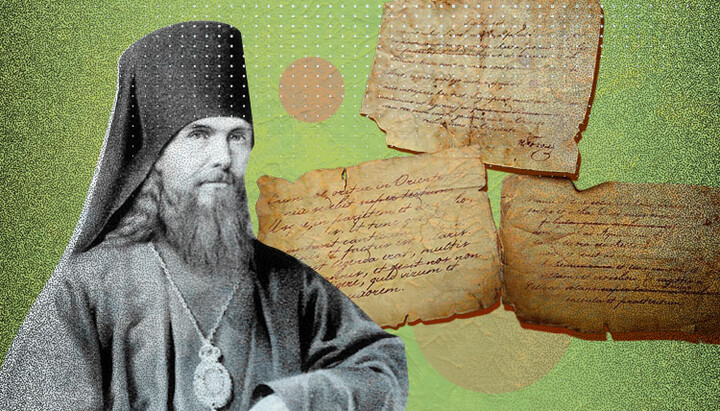
St. Theophan the Recluse – a model of spiritually transfigured introversion. Photo: UOJ
1872. Bishop Theophan Govorov stands at a crossroads. He is 55, with a brilliant career behind him – rector of a theological academy, Bishop of Tambov, then of Vladimir. He is known in the capitals, respected in the Synod. Ahead lies the prospect of becoming a metropolitan.
And then, suddenly, he submits a petition to retire. He leaves for the remote Vysha Hermitage (Tambov Province) and locks himself in a cell. For twenty-two years.
The Holy Synod is stunned. Colleagues roll their eyes: “He broke. Burned out.”
But time passes, and something strange becomes clear. From that sealed cell begins to flow an influence that drowns out the noise of the capitals.
Letters pour in to this “downshifter” from across the empire – from peasants to countesses. He answers everyone. Every day he writes up to forty letters. He translates the Holy Fathers, writes books that will become bestsellers. He builds the largest “social network” of the nineteenth century – without a phone, without the internet, from within the four walls of a cell.
Theophan the Recluse did what seems impossible: he turned off the external “noise” to increase the bandwidth of his heart. And the result is staggering.
Why did he choose seclusion?
In one letter, Theophan explains it honestly and simply:
“Episcopal life is full of turmoil and distractions. I saw that in such a life one can come to the point of teaching others how to be saved – while remaining unsaved oneself. That is why I decided to withdraw.”
This was not flight. It was surgery on his own soul. Theophan understood: to help people, you must first be saved yourself. You cannot pull a drowning person out if you are standing on quicksand.
Imagine a radio receiver trying to catch a hundred stations at once. What will you hear? Only white noise. Theophan switched off ninety-nine stations to tune in to one – the main one. The frequency of Eternity.
He did not work less. He worked with sharper focus. Here is his daily schedule in seclusion (from the recollections of contemporaries):
- 5:00 – rising, prayer.
- 6:00–12:00 – letters. He answered all letters personally, by hand – up to forty a day.
- 12:00–13:00 – dinner (he cooked himself, ate alone).
- 13:00–17:00 – translations of the Holy Fathers (he translated the Philokalia – five volumes), and he wrote books.
- 17:00–19:00 – handiwork: woodcarving, icon painting, playing the violin. 19:00–21:00 – evening prayers, reading.
- 21:00 – sleep.
He worked twelve to fourteen hours a day. This was not “escaping the world.” This was concentration on what matters most.
What did he write in those letters?
Theophan did not produce abstract theological treatises. He replied to concrete questions from real people. A few examples from his correspondence:
- To a peasant complaining of poverty:
“You write that you have nothing. But do you have God? If you do – you have everything. If you do not – then you have nothing, even if you had millions.”
- To a young woman who wanted to enter a monastery but her parents would not allow it:
“Do not rush. God sees your desire. But while you live in the world – live with God in the world. A monastery is not walls; it is a state of the soul. One can live in a monastery and still be worldly. And one can live in the world and be a monk in spirit.”
- To a civil servant exhausted by the bustle of service:
“With your hands, do your work – but with your mind and heart, be with God. That is inner work. Outwardly you are an official; inwardly you are a monk. God does not look at your papers – He looks at your heart.”
- To a mother who had lost her child:
“Weep – that is natural. But do not weep like those who have no hope. Your child has not died – he has gone ahead of you to the place where we are all going. He is waiting for you. Live in such a way that you may meet him.”
These are not dry instructions. They are living, warm, profoundly human words. Theophan knew how to speak to people in their own language.
The technology of “abiding within”
Theophan’s chief discovery is what he called abiding within. What does that mean?
Imagine a submarine. Outside – a storm, pressure, war. The ocean tries to crush the hull. But inside the submarine there is an autonomous system. The lights are on, there is air and warmth. The crew is calm because the vessel is sealed.
Theophan taught that our mind must not dangle everywhere, snatching at every external stimulus. The mind must come home – into the heart. “The Kingdom of God is within you” (Luke 17:21) is not a poetic slogan. It is a technical instruction.
He wrote: “The chief work is to stand with the mind in the heart before God. That is the one work; everything else is merely an attachment.”
What does it mean in practice? Theophan explains simply:
“When you wash the floor – think not about the floor, but about God. When you write a letter – think not about the words, but about the fact that God is looking at you right now. A short prayer (‘Lord, have mercy,’ ‘Glory to You, O God’) is an anchor that holds your mind with God.”
It is the principle of a two-thread processor. The outer thread deals with daily life – washing dishes, writing reports, fixing the car. But the inner thread is occupied at the same time with something else – maintaining contact with the Command Center.
An instruction for our time
Today many of us have found ourselves “in seclusion” against our will. Someone cannot leave the country. Someone is bound to a wheelchair after a wound. Someone lives in a somebody else's apartment as a refugee. The walls press in. It feels as if life is passing by elsewhere.
The Vysha recluse gives a paradoxical answer:
“Walls press only when there is emptiness within. If you are empty, even a palace will feel cramped. But if you have learned to build the Kingdom within yourself, then even the smallest room will become infinite.”
He proved it with his own life. He lived in a cell three by four meters. Yet in that cell he was freer than many a traveler who had circled half the world.
Freedom is not the ability to move one’s body from point A to point B. Freedom is the ability not to depend on external coordinates.
St. Theophan wrote: “One can sit in a cell and be at a celebration; and while the body is confined, one can, in spirit, flow around the universe – and thus wander through the whole world.”
Physical isolation does not guarantee silence. The main work is focusing the lens. How do you hold a mind that has learned to leap like a crazed monkey?
The saint gives a concrete algorithm:
- Morning and evening – prayer. At least ten minutes. This is a system reboot.
- Throughout the day – short prayers: “Lord, have mercy,” “Glory to You, O God.” This is the anchor that keeps the mind with God. With your hands do the work; with mind and heart be with God. This is the principle of “two-threaded” living. Outwardly you work; inwardly you pray.
- In the evening – examine the day. Where did you lose God? Where did you get distracted? Where did you sin? This is a debriefing for the soul.
This does not require a monastery. It can be done in an apartment, in an office, in a trench.
St. Theophan the Recluse proved by his own example that introversion is not a diagnosis and not a defect. It is a resource. The ability to be alone is a qualification necessary for meeting God. Because God speaks in a whisper – and in the roar of a marketplace you will not hear Him.
If today you feel lonely, or locked inside circumstances, do not rush to smash your head against the walls. Try to use this time the way the Vysha recluse used it.
Turn your room into the cockpit of a spacecraft. Establish the connection. Check the settings of the heart.
Perhaps that is precisely why God put your active outward life on pause – not to punish you, but so that you would finally go on air at the right frequency.
Read also
A shepherd boy with a letter from Christ to French king
In the summer of 1212, thousands of pilgrims carrying staffs waited for the sea to part before them. Later chroniclers added ships, slave traders, and a pope's lament to their story.
Facade of bones and facade of light
Antoni Gaudí spent forty-three years building a church in Barcelona, knowing that this construction was for the ages.
Trial of a dead pope
Once in Rome, the body of a deceased pope was seated on the throne and put on trial. The accusation relied on a church canon that had once saved his see.
Monastery built in defiance of king
When Orthodox believers in Minsk were left with just one church, townspeople decided to build another – and even a royal decree did not stop them.
Young Mother and Sleeping Christ
Michelangelo carved a Virgin Mary who looks younger than her Son – and signed his name in marble for the only time in his life. Neither of these peculiarities was accidental.
Orthodox books from a Uniate printing press
In the 18th century, Uniate monks at Pochaiv printed books used in prayer by Orthodox Christians and Old Believers alike.