Damaged icon: a dogma on why we are not "biomass"
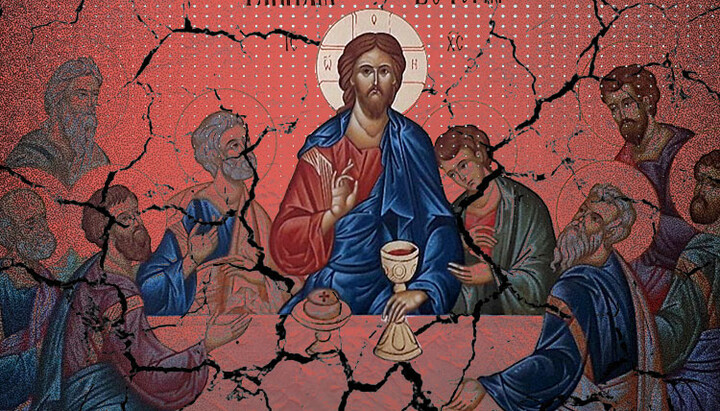
A human is a cracked image of God. Photo: UOJ
We are used to constantly counting things. Money, calories, calibers, loan interest. But the most frightening of all – we have learned to count people. A person has been reduced to a “resource unit”. To a bare number in a news report. To “manpower”. To “human capital”.
When death turns into arithmetic, conscience falls asleep. It's easier for us this way. For example, to look at people in line as an annoying obstacle, as a mass of bodies preventing us from passing through. We have imperceptibly adopted this language – the language of inventory, where a person stands in the same row as spare parts for machinery or sacks of grain.
Christianity today is not about "good behavior". It's about radical sabotage against impersonal statistics.
Fireproof safe
The Church has a teaching that prevents us from finally turning into cannibals – the dogma of the image of God.
In theology, there is a clear distinction: image and likeness. We often confuse them, but the difference is fundamental.
The image of God is "built" into us by the Creator from the beginning. Our reason, freedom, creative principle, our immortality – this is a fireproof safe inside human nature.
Likeness is what we build on this foundation. This is our kindness, holiness, our resemblance to God in love.
Likeness can be lost. It can be drunk away, lost in cards, stained by betrayal or hatred. A person can lose human appearance, turn into a beast. But the image is a constant. This is a file protected from deletion by the Author himself.
The image of God is like a canvas. Likeness is the painting. It can be a daub, it can be stained with soot or flooded with blood. But the canvas beneath it is God's. It has not become worse from what we have painted on it.
Statue in the mud
In the 4th century, Saint Gregory of Nyssa engaged in heated debates about what it means to be human. In his treatise On the Making of Man, he used an image that, in today’s reality, sounds like a report from the front lines.
Imagine a statue of an emperor carved from stone. Enemies burst into the city and smash it. They throw it into a muddy puddle and pile it with garbage and manure. Will the fragments lose their belonging to the image of the king?
“As by the imprint of the king’s image, plain clay is made precious in the mint, so too… you, being mortal by nature… become surpassingly great, because you bear the image of the King of all,” wrote Saint Gregory.
Even if a person has fallen to the very bottom, we have no right to call him "biomass". We see a fragment in the mud. It can be cleaned, it can be restored, but it cannot be written off as garbage. Because it bears the imprint of God.
Eyes of a surgeon in holy orders
Metropolitan Anthony (of Sourozh) experienced the value of this dogma in practice. During World War II, he served as a surgeon in the French Resistance. He had to operate on people in conditions where a human seemed like nothing more than a piece of bloodied flesh.
Bishop Anthony recalled how he learned to see Christ in dying soldiers. Regardless of what language they screamed in pain and what uniform they wore. He looked through the "daub" of war, through faces distorted by agony, and saw that very shining "canvas".
For him, there was no "enemy resource". There were only icons. Broken, defiled, covered with soot, but – icons.
"We must learn to look at a person and see in him that beauty which perhaps no one else sees," he said later.
If we stop seeing this beauty in our neighbor or in our enemy, we stop being Christians. We become users of "human resources".
Value of our dignity
In wartime, it often seems to us that we are deprived of everything – freedom, stability, and future. We feel like cogs in a huge soulless machine of history.
But the image of God is the point where the machine breaks down.
If we stop for even a moment in the mad rhythm of vanity, we can understand that we are not the sum of biological components, not the result of a genetic lottery. We are the Creator's project. When Scripture says: "Let us make man in our image, after our likeness" (Gen. 1:26), – this is not about biology. This is about our dignity, which is higher than any systems.
Restoring the image
We look in the mirror and see a tired, disappointed face. It seems to us that we are nothing, but we make a serious mistake. Looking at the "painting", we forget about the "canvas".
We are used to judging by appearances and trusting numbers. We are used to despising the weak. But Christ says, “Truly I tell you, whatever you did for one of the least of these brothers and sisters of mine, you did for me” (Matt. 25:40). He did not say “for the good people.” He said “for the least of these” — those who are reduced in the statistics to a common denominator.
The image of God is like a seed beneath the asphalt. The layer of asphalt is thick; tanks roll over it, yet the seed is alive. It can overcome the hardness of this stone.
Christianity does not call us to become an "improved version of ourselves". It urges us to remember who we really are.
We don't need to invent value for ourselves – we need to return it. Stop calling each other "manpower". See in the person standing next to us in line not an obstacle but a mystery. Understand that even the most broken among us is a royal safe in which the gold of Eternity is still stored.
Read also
Prayer commemorations instead of loving embraces
At every Orthodox wedding, the choir sings a hymn to the martyrs. For families separated by war, these words carry a special meaning.
Honest atheism vs. spiritual hypocrisy
The 70th anniversary of Albert Camus’s Nobel Prize recalls an uncompromising challenge to Christianity. An honest unbeliever brings theology back to the mystery of the Cross.
The valley of trouble and the gateway of hope
One soldier buried an expensive cloak and some gold beneath his tent. Because of this, all Israel lost a battle. Why did one man’s sin bring disaster upon an entire nation?
From love spells to bishop's throne
Antioch’s most powerful sorcerer sent demons against a devout young Christian woman three times – and failed every time. In the end, a demon himself revealed the truth that led to his conversion.
The Weeping Queen of Blachernae
On the night of the Feast of the Protection, only two people witnessed the miracle in the Church of Blachernae. Everyone else prayed and saw nothing. Yet they, too, received grace.
Deadly spiral of human hatred
The tragedy of Lebanon's civil war lays bare how dehumanization and fear can turn human beings into monsters.